When we decide to invest in an inverter generator, it’s essential to analyze our actual power needs carefully, considering both continuous and surge wattage. Beyond raw output, factors like fuel efficiency, runtime, noise levels, and portability directly impact usability and cost-effectiveness. We also need to evaluate safety features and maintenance demands to guarantee long-term reliability. Understanding these elements helps us make an informed choice—but what specific criteria should guide us in balancing performance with practicality?
Key Takeaways
- Calculate total wattage of devices and ensure the generator’s output exceeds this by 10-20% for safe operation.
- Compare fuel types and efficiency to balance cost, runtime, and power consistency based on your usage needs.
- Choose a generator with noise levels below 50 decibels to comply with local regulations and minimize disturbances.
- Prioritize portability with compact size, lightweight design, and ergonomic features for easy transport and storage.
- Consider maintenance needs, warranty, and brand reliability to ensure long-term performance and cost-effectiveness.
How Much Power Do You Really Need From an Inverter Generator?
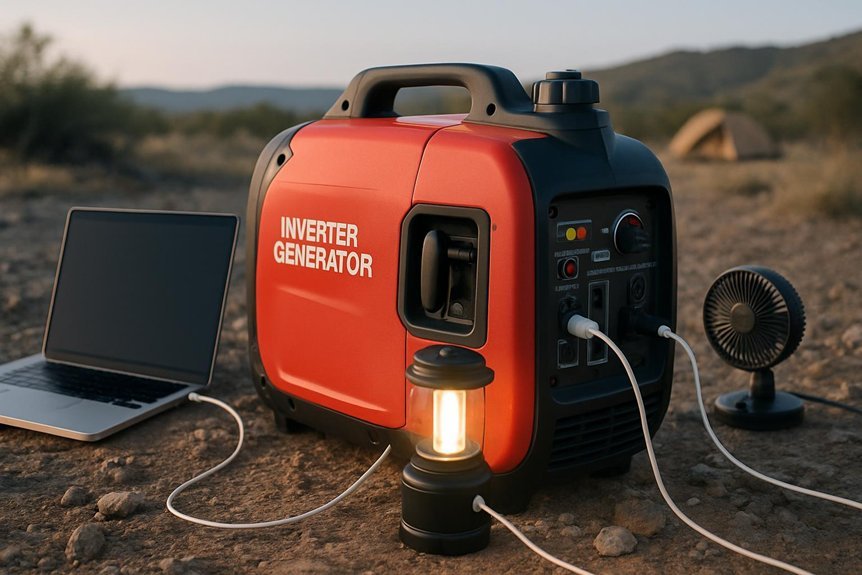
How much power do we truly require from an inverter generator to meet our specific needs? To determine this, we must analyze our power requirements carefully. First, let’s list all devices we plan to run simultaneously. Next, we perform a wattage calculation by noting each device’s rated wattage—both running and starting watts, if applicable. Summing these values gives us the total power demand. Since inverter generators provide clean, stable power, matching their output closely to our wattage calculation guarantees efficiency without oversizing. We should also consider a margin—typically 10-20% above the calculated load—to accommodate transient spikes. This analytical approach assures that we select an inverter generator with adequate power, avoiding underperformance or unnecessary expense.
Why Fuel Type and Efficiency Matter for Your Generator
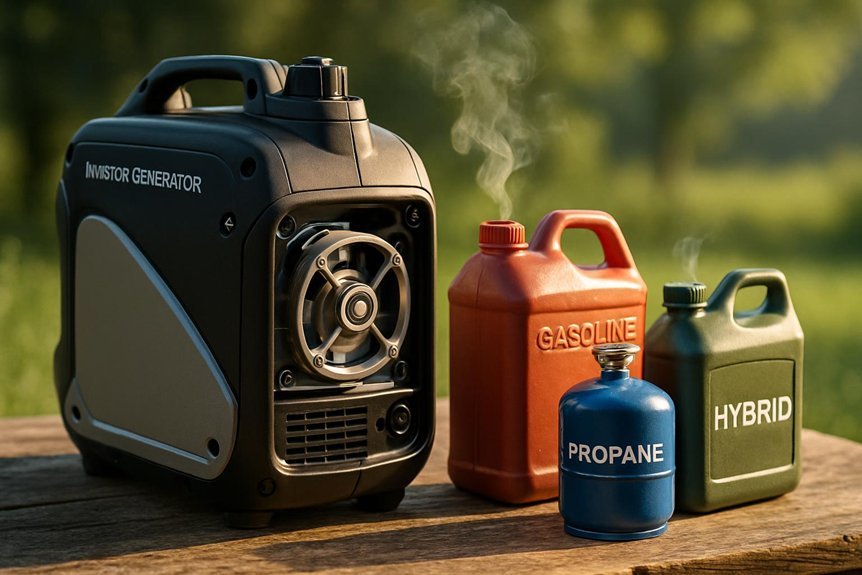
Why does the choice of fuel type greatly impact the performance and cost-effectiveness of our inverter generator? The fuel type determines the energy source’s combustion efficiency, affecting power output consistency and operational costs. Different fuels—gasoline, propane, diesel—possess varying energy densities and combustion characteristics, influencing runtime and emissions. Selecting a suitable fuel type guarantees the generator operates at peak thermal efficiency, minimizing fuel consumption while maximizing power delivery. Additionally, fuel availability and storage stability factor into overall efficiency. For example, propane offers cleaner combustion and longer shelf life but may deliver slightly less energy per unit volume compared to gasoline. Understanding these technical distinctions helps us choose a fuel type aligned with our usage patterns, ensuring the inverter generator runs efficiently, economically, and reliably in diverse scenarios.
How Long Should Your Inverter Generator Run on a Single Tank?
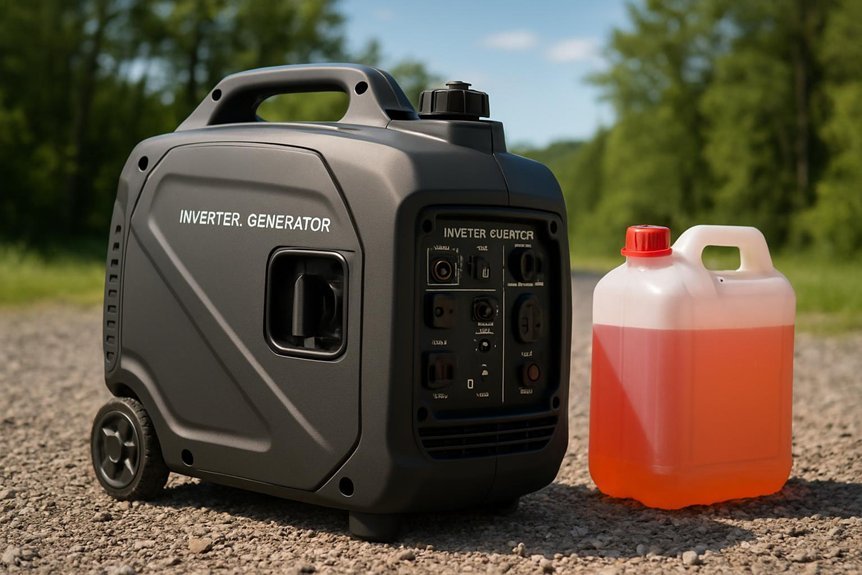
To determine how long an inverter generator runs on a single tank, we need to analyze fuel efficiency metrics alongside tank capacity. Average run time varies greatly based on these factors and the generator’s load. Let’s examine how these elements interact to optimize operational duration.
Fuel Efficiency Metrics
Although inverter generators vary widely in design and capacity, their fuel efficiency remains a critical factor in determining overall performance and operational cost. To evaluate fuel efficiency accurately, we focus on fuel consumption rates and efficiency ratings provided by manufacturers. These metrics quantify how much fuel the generator uses relative to its power output, typically measured in gallons or liters per hour at specific load percentages. By analyzing these figures, we can predict operational expenses and environmental impact more precisely. Efficiency ratings also help us compare models objectively, highlighting generators that maximize energy output while minimizing fuel use. Understanding these metrics allows us to select units that balance power needs with economical fuel consumption, ensuring longer run times per tank and reduced refueling frequency under varied operating conditions.
Average Run Time
Run time on a single tank stands as a pivotal specification when evaluating inverter generators, directly impacting their practicality and convenience in real-world use. To accurately assess performance, we must analyze average runtime comparisons across models, focusing on how power efficiency translates into longer operational periods without refueling. Higher efficiency engines optimize fuel consumption, enabling extended run times even under variable loads. When reviewing specifications, consider inverter generators that maintain consistent power output while maximizing fuel economy, as this balance dictates overall runtime. Understanding these metrics allows us to select units that align with our usage patterns, ensuring uninterrupted power during critical operations. By prioritizing power efficiency in conjunction with average runtime comparisons, we can make informed decisions that enhance generator reliability and user experience.
Tank Capacity Impact
Understanding average runtime naturally leads us to examine the role tank capacity plays in determining how long an inverter generator can operate on a single fill. Tank size directly influences operational duration, but it’s vital to balance capacity against fuel consumption rates. A larger tank size extends runtime but may increase generator weight and reduce portability. Conversely, smaller tanks require more frequent refueling, which can interrupt critical power supply. Fuel consumption varies based on load demand; higher loads accelerate fuel use, shortening runtime regardless of tank size. As a result, evaluating how your typical power needs align with fuel consumption patterns is essential. By analyzing tank size in conjunction with expected fuel consumption, we can select an inverter generator that provides ideal runtime without compromising efficiency or convenience.
What Noise Levels Are Acceptable for Your Usage Environment?
When evaluating acceptable noise levels for your inverter generator, we need to take into account decibel limits set for residential areas to avoid disturbances. We also have to factor in the potential impact of noise on local wildlife, which can be sensitive to sound pollution. Additionally, understanding regulations for public spaces guarantees compliance and prevents fines or restrictions during use.
Decibel Limits for Residential
How loud is too loud for an inverter generator in a residential setting? We need to take into account residential noise standards and local decibel regulations carefully. Typically, residential noise limits range between 50 to 65 decibels during the day and lower at night, often around 45 decibels or less. When selecting an inverter generator, we must guarantee its noise output stays within these thresholds to avoid disturbances and potential violations. Measuring noise at a standard distance—usually 7 meters—is essential for accurate comparison. Generators rated above these decibel limits can cause discomfort and attract complaints. Consequently, evaluating decibel ratings alongside local regulations helps us choose a generator that balances power needs with acceptable noise levels, preserving neighborhood tranquility while meeting our power requirements efficiently.
Noise Impact on Wildlife
Although inverter generators offer quieter operation compared to conventional models, we must carefully assess their noise levels to minimize disruption to local wildlife. Wildlife disturbance depends not only on decibel levels but also on sound frequency, which can affect animal behavior differently. Lower frequencies tend to travel farther and may cause more stress to certain species, while higher frequencies might be less intrusive but still disruptive. We should aim for generators producing noise below 50 dB at the source, with sound frequencies outside the most sensitive ranges for local fauna. By selecting an inverter generator with optimized sound frequency output and minimal noise emission, we can reduce adverse effects on wildlife, ensuring our energy solutions coexist responsibly with the surrounding environment.
Regulations in Public Spaces
Since public spaces often have strict noise regulations, we need to understand the permissible sound levels for our intended usage environment before selecting an inverter generator. Public parks, for instance, typically enforce noise limits ranging from 50 to 65 decibels to protect visitor experience and wildlife. Compliance with these noise regulations often requires obtaining generator permits, which specify acceptable operational parameters. Event guidelines and community standards further influence allowable noise thresholds and dictate safety protocols to minimize disturbances. When evaluating inverter generators, we must analyze their decibel ratings at various loads to guarantee alignment with these standards. By doing so, we ensure that our equipment meets legal requirements, preserves public comfort, and avoids penalties. This proactive approach streamlines approval processes and supports responsible generator use in shared environments.
How Portable Does Your Inverter Generator Need to Be?
Where will we be using our inverter generator most frequently? Identifying this helps us assess weight considerations and size options critical for portability. If we plan frequent transport, compact units with ergonomic handle designs and integrated wheel features offer ease in loading and maneuvering. Rugged materials contribute to durability, especially when storing outdoors or traveling across rough terrain. Evaluating transport methods—whether by hand, vehicle, or backpack—guides us toward models with travel compatibility suited to our needs. Storage solutions also influence portability; generators that nest or stack efficiently reduce space demands. By analyzing these factors systematically, we guarantee our choice balances power output with practical portability, optimizing utility without compromising convenience during transport or storage.
Which Features Enhance Safety and Protect Your Electronics?
After determining the portability requirements for our inverter generator, we need to focus on features that guarantee safety and safeguard our electronics. Surge protection prevents voltage spikes that could damage sensitive devices. Voltage regulation maintains consistent output, essential for stable performance. Circuit breakers act as fail-safes, immediately cutting power during faults. Overload protection prevents the generator from running beyond capacity, reducing fire risks and equipment damage.
| Feature | Benefit |
|---|---|
| Surge Protection | Shields electronics from voltage spikes |
| Voltage Regulation | Guarantees stable, consistent power output |
| Circuit Breakers | Cuts power during electrical faults |
| Overload Protection | Prevents damage from excessive load |
Prioritizing these features guarantees both our safety and the longevity of our connected electronics.
What Maintenance Should You Expect With Different Models?
Although inverter generators generally require less maintenance than conventional models, the specific upkeep varies considerably depending on the design and components used. To guarantee peak performance, we should follow maintenance tips such as regular oil changes and routine checks of air filters and spark plugs. Cleaning procedures are crucial to prevent dust accumulation, especially around vents and cooling fins. Battery care is essential for models with electric start; monitoring charge levels and terminal condition helps avoid starting issues. Proper storage guidelines, including draining fuel and storing in a dry environment, prolong generator life during inactivity. We must also familiarize ourselves with troubleshooting issues common to each model. Reviewing warranty information is important to understand coverage and authorized service requirements, ensuring we maintain the generator’s reliability over time.
How to Match Your Budget With Quality and Performance
When selecting an inverter generator, we must carefully balance our budget constraints with the desired quality and performance levels. Achieving the right quality balance without overspending requires a strategic approach:
- Assess Power Needs Precisely – Calculate the exact wattage required to avoid paying for excess capacity, which strains the budget constraints unnecessarily.
- Prioritize Key Features – Focus on essential features like fuel efficiency and noise reduction, ensuring performance criteria align with your practical needs.
- Evaluate Brand Reliability and Warranty – Investing in reputable brands with robust warranties can reduce long-term costs, providing a quality balance that offsets initial expenses.
Where to Buy Reliable Inverter Generators and Get Support
Where can we find reliable inverter generators that also offer solid customer support? First, we should explore reputable retailers and local dealerships, as they often provide hands-on assistance and direct access to warranty options. Online marketplaces offer convenience and broad brand comparisons but require careful scrutiny of customer reviews to verify product reliability and seller credibility. Evaluating warranty terms across sellers helps guarantee long-term support. Local dealerships may offer personalized service and immediate technical support, which is invaluable for troubleshooting. Combining insights from customer reviews with technical specifications enables us to make data-driven decisions. Ultimately, purchasing from sources that balance thorough warranty coverage, responsive support, and verified user feedback minimizes risk and maximizes the value of our inverter generator investment.
Frequently Asked Questions
Can Inverter Generators Be Used Indoors Safely?
We can’t use inverter generators indoors safely because exhaust emissions contain harmful gases. Prioritizing indoor safety means always operating these generators outdoors, away from windows and vents, to prevent carbon monoxide poisoning and guarantee proper ventilation.
Do Inverter Generators Require Special Storage Conditions?
We don’t need special storage conditions for inverter generators, but following maintenance tips like draining fuel and storing in a dry, ventilated area prevents damage. Fuel considerations are essential to avoid degradation and guarantee reliable performance.
How Do Inverter Generators Perform in Extreme Weather?
We understand inverter generators can drop up to 15% in performance metrics below freezing. Temperature effects like cold reduce battery efficiency, while heat stresses components. However, proper ventilation and insulation help maintain ideal output in extreme weather.
Are Inverter Generators Compatible With Solar Power Systems?
Yes, we find inverter generators compatible with solar panel integration, allowing seamless hybrid setups. When analyzing power output comparison, inverter generators provide stable AC power, complementing solar systems’ variable DC output efficiently for consistent energy supply.
What Warranties Are Typically Offered for Inverter Generators?
Of course, inverter generators never come with warranties—just kidding! Typically, you’ll find warranty durations of 2-3 years, covering defects and sometimes parts. We recommend scrutinizing coverage details to avoid surprises and guarantee reliable protection.
Conclusion
As we wrap up, consider this: choosing the right inverter generator isn’t just about power—it’s about balancing efficiency, noise, portability, and safety with your unique needs. Overlooking even one factor could compromise performance or cost you more long term. So, before you decide, take a moment to analyze your priorities carefully. The perfect generator is out there, but can you pinpoint it before your next power demand? Let’s explore smart choices together.