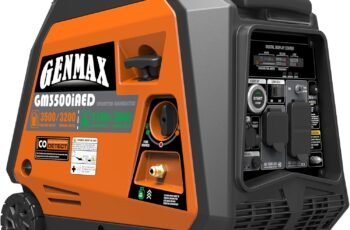
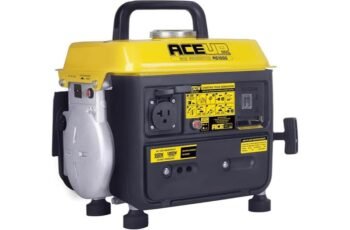
The PowerSmart 3800-watt inverter generator delivers different output on gasoline and propane, a trade-off that can shape which appliances we can run at once. We get up to 3,300 running watts on gasoline or 3,100 on propane, plus quiet operation and long propane runtime. But its 120V-only design limits heavier-duty use. Let’s look at how its fuel options, safety features, and practical drawbacks affect its value.
Key Takeaways
- The PowerSmart delivers 3,800 starting and 3,300 running watts on gasoline, or 3,500 starting and 3,100 running watts on propane.
- Dual-fuel operation offers flexibility, but gasoline lasts up to eight hours at 25% load, while a 20-pound propane tank runs up to 24 hours.
- At 59 dBA under 25% load, it’s relatively quiet; Eco Mode can help extend runtime with lighter loads.
- Six outlets, clean inverter power under 3% THD, and safety protections suit camping and essential backup, but it cannot power 240V equipment.
- Weighing 50.7 pounds, it’s portable but tiring to carry far; modest output and a small gasoline tank limit extended or heavy-duty use.
Dual-Fuel Power and Runtime
Whether you’re powering a campsite or preparing for an outage, the PowerSmart offers different output levels on gasoline and propane. On gasoline, we get 3,800 starting watts and 3,300 running watts; propane provides 3,500 starting watts and 3,100 running watts. This modest reduction matters when we plan which appliances to run together. Fuel flexibility lets us choose between readily available gasoline and propane, depending on access and preference. For runtime efficiency, gasoline lasts up to eight hours at 25% load, while a standard 20-pound propane tank supports up to 24 hours. Eco Mode helps extend operation, making either option practical for lighter loads.
Detailed features
Beyond its dual-fuel capability, the PowerSmart includes practical controls and safety features for everyday use. We get six outlets for appliances, tools, and USB devices, plus low-oil shutdown and overload protection. Its carbon monoxide sensor adds another layer of monitoring. Cold start technology supports starting in colder conditions, while the parallel ready design allows connection to a compatible generator.
| Feature | Details |
|---|---|
| AC outlets | 30A twist-lock; 20A duplex |
| Other outlets | 12V DC; two USB ports |
| Protection | CO sensor; overload and short-circuit protection |
| Compliance | ANSI/PGMA G300, ANSI/UL2201, EPA |
At 50.7 pounds, it’s relatively portable, though its dimensions still require storage space.
Pros and Cons
We’ll weigh the PowerSmart’s strengths, including dual-fuel flexibility, low noise, and useful safety features, against its limitations. Its 3,300-watt gasoline running output and 1.3-gallon tank may constrain heavier loads or extended gasoline use. Let’s assess which trade-offs matter most for your needs.
Pros
For a compact generator, the PowerSmart HB5040DC offers useful flexibility: it runs on gasoline or propane, delivers up to 3,800 starting watts on gas, and produces clean power with less than 3% THD. We can choose gasoline for up to eight hours at 25% load or propane for up to 24 hours with a standard 20-pound tank. Eco Mode helps conserve fuel, while 59 dBA operation at 25% load supports quieter use around campsites or homes. Six outlets, including USB ports and a 30A twist-lock connection, broaden charging options. We also value its CO sensor, overload protection, and two-year warranty.
Cons
Despite its strengths, the PowerSmart HB5040DC has limits to weigh. Its 50.7-pound weight creates Portability limitations: we can move it between a vehicle and campsite, but carrying it over longer distances may prove tiring. The 1.3-gallon gasoline capacity also restricts convenience; although runtime reaches eight hours at 25% load, heavier use will require more frequent refueling. Propane extends operation with a 20-pound tank, but users must transport and connect that fuel supply. Output falls to 3,100 running watts on propane, so we’ll need to check appliance demands carefully. Its 120V-only design also won’t suit equipment requiring 240V power.
Concluding thoughts
The PowerSmart HB5040DC-AIUS-2 offers a practical balance of portability, quiet operation, and flexible fuel options for camping or limited residential backup. Its 3,800-watt gasoline starting output, clean inverter power, and six outlets suit essential appliances and electronics, while Eco Mode helps conserve fuel. At 50.7 pounds, it’s manageable to transport, and its 59 dBA rating supports quieter operation. However, its modest gasoline tank and limited running wattage make it less suitable for heavy loads or extended whole-home backup. We’d also weigh its two-year Warranty coverage and lifetime customer support when comparing value. Overall, it’s a capable option for modest, portable power needs.
Frequently Asked Questions
Can This Generator Power Sensitive Electronics Like Laptops and Televisions?
Yes, you can power laptops and televisions: its inverter delivers clean power with under 3% total harmonic distortion, suitable for sensitive electronics. We’d still use surge protection for added electronics protection against unexpected voltage fluctuations.
Is the Generator Suitable for RV Use?
Yes, we find it suitable for RV use: its 120V, 30A twist-lock outlet supports RV power compatibility, while 3,300 gasoline running watts handle many essentials. At 50.7 pounds, campsite portability requires some effort.
Can It Be Connected to a Home Transfer Switch?
Yes, we can connect it to a home transfer switch, but only with a compatible 120V setup and qualified installation. Its 3,300 running watts demand careful load planning. Transfer switch compatibility and Electrical connection requirements should be verified first.
How Should the Generator Be Stored Between Uses?
Store the generator upright in a dry, ventilated place, protected from moisture. For Fuel storage, we recommend draining gasoline or using stabilizer before long storage; disconnect propane, let the unit cool, and follow its manual.
What Maintenance Does the Engine Require?
We should prioritize regular engine oil changes and spark plug inspection, following the manual’s schedule. Check oil before operation, keep the air filter clean, and inspect for leaks or damage; the supplied spark-plug wrench helps maintenance.
Conclusion
On a quiet campsite, we might hear the PowerSmart settle into its 59 dBA hum just as a phone needs charging—a useful coincidence for its clean inverter power. Gasoline or propane adds flexibility, and the runtime suits modest loads. We wouldn’t mistake its 120V-only output for whole-home backup, though, or expect it to run demanding equipment. At 50.7 pounds, it’s manageable to move. For camping and light-duty power, we find it a practical, safety-conscious option.