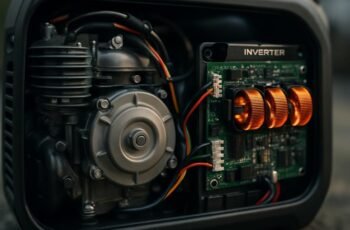
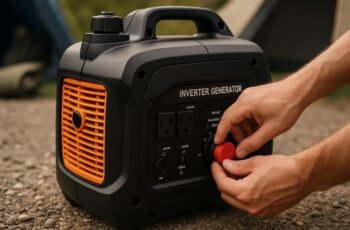
When we compare inverter generators, it’s essential to analyze several technical factors that impact performance and usability. We need to match power output precisely to our devices, considering both running and surge wattages. Fuel efficiency plays a significant role in operational cost and environmental footprint, while noise levels affect comfort during use. Portability often determines the generator’s practicality in real-world scenarios. But which combination of these factors truly defines the best choice?
Key Takeaways
- Calculate total running and surge wattage to match generator power output with your devices’ needs.
- Compare fuel efficiency ratings to reduce operational costs and environmental impact.
- Evaluate noise levels in decibels to ensure quiet operation for your environment.
- Assess portability by considering weight, handle design, and presence of wheels.
- Review runtime, startup reliability, brand reputation, and warranty for overall value and durability.
How to Match Inverter Generator Power to Your Needs
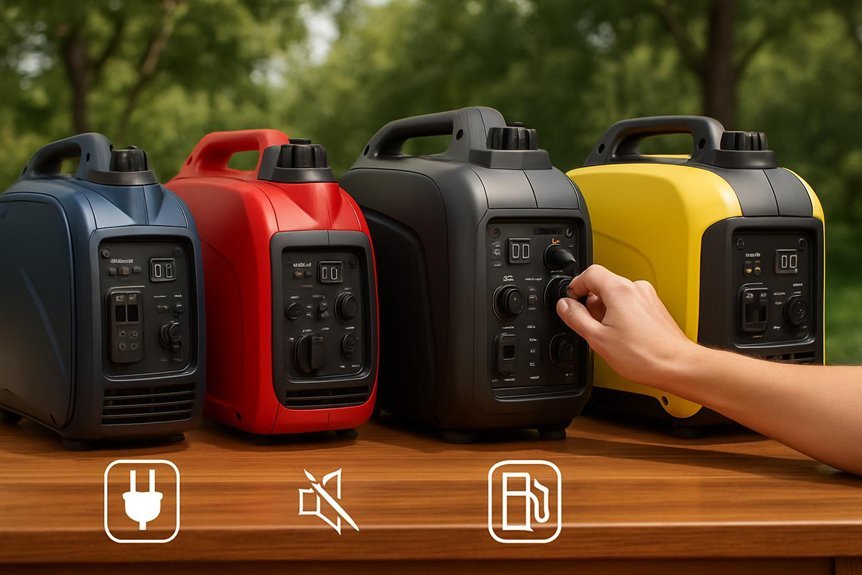
Before selecting an inverter generator, we need to analyze our specific power requirements carefully. This means determining the total wattage of all devices we plan to power simultaneously, considering both running and surge wattages. Understanding size requirements hinges on accurately evaluating these demands to avoid under- or over-sizing the unit. Additionally, we must distinguish between power types: continuous power, which supports steady operation, and surge power, which handles momentary spikes such as motor startups. Matching inverter generators to these specifications guarantees stable, efficient performance without risking overload. By systematically cataloging our equipment’s electrical characteristics and prioritizing critical loads, we can identify the ideal generator size. This precise approach safeguards both our devices and the generator, maximizing utility and reliability in diverse applications.
Why Fuel Efficiency Matters When Comparing Inverter Generators
Although inverter generators come with varying power outputs, fuel efficiency remains a critical factor when comparing their overall performance and cost-effectiveness. Different fuel types—gasoline, propane, or diesel—impact operational costs and emissions, so understanding their efficiency ratings is essential. We need to analyze how each generator converts fuel into usable power, as higher efficiency ratings indicate less fuel consumption for the same output. This efficiency directly influences runtime, refueling frequency, and long-term expenses. When evaluating models, we should consider both fuel economy and the compatibility of fuel types with our intended applications. Prioritizing fuel efficiency not only reduces operational costs but also aligns with environmental sustainability goals, making it a decisive criterion in selecting the best inverter generator.
What Noise Levels to Expect From Top Inverter Generators
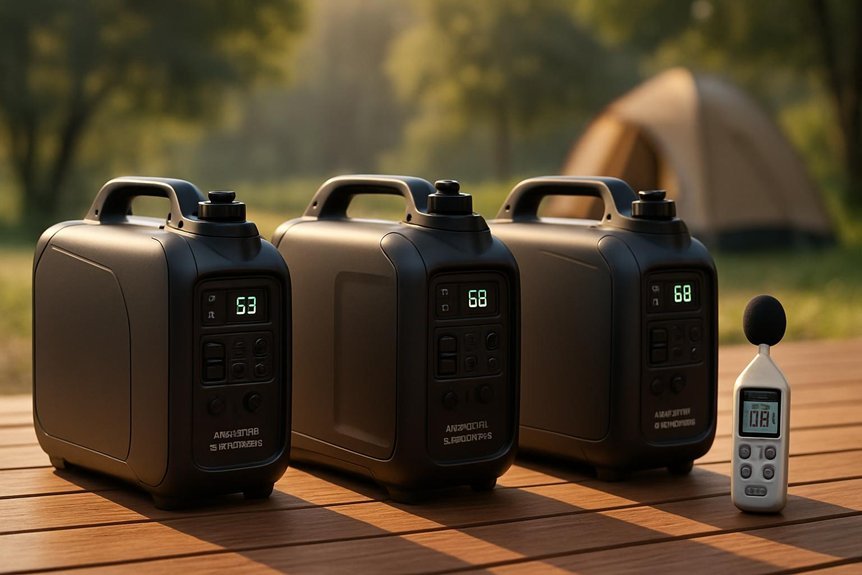
Fuel efficiency often grabs our attention when comparing inverter generators, but noise levels play an equally important role in evaluating their overall usability. Understanding sound ratings helps us assess noise reduction capabilities, essential for use in noise-sensitive environments. Top models typically range from 48 to 60 decibels, offering quiet operation without sacrificing power output.
| Generator Model | Noise Level (dB) | Noise Reduction Features | Rated Power (Watts) | Weight (lbs) |
|---|---|---|---|---|
| EcoFlow Delta | 52 | Advanced muffler | 1800 | 48 |
| Honda EU2200i | 53 | Sound-absorbing casing | 2200 | 47 |
| Yamaha EF2000iSv2 | 51 | Vibration isolation | 2000 | 44 |
| WEN 56200i | 60 | Standard muffler | 2000 | 48 |
| Champion 2000-Watt | 58 | Noise-reducing design | 2000 | 39 |
Sound ratings provide a clear benchmark for comparing noise reduction effectiveness across units.
How Portability Affects Your Inverter Generator Choice
Since inverter generators vary widely in size and weight, portability greatly influences our choice depending on how and where we plan to use them. Weight considerations are paramount; a lighter unit enhances ease of transport, especially for outdoor or emergency use. Compact design optimizes both portability and storage solutions, allowing us to fit the generator into limited spaces without sacrificing power. We carefully evaluate transport options, focusing on handle types—ergonomic grips improve maneuverability—and wheel features, such as durable, all-terrain wheels that simplify movement over rough surfaces. Selecting models with integrated handles and wheels can reduce physical strain and increase operational flexibility. Balancing these factors guarantees that the inverter generator meets our mobility requirements while maintaining convenience during transport and storage.
Which Features Set the Best Inverter Generators Apart?
Portability plays a significant role in selecting an inverter generator, but the features that truly distinguish the best models extend beyond ease of transport. We need to analyze power output carefully to guarantee the generator meets our energy demands without inefficiency. Start up performance is another critical factor; smooth and reliable ignition minimizes downtime and mechanical stress. Runtime duration directly impacts usability, so longer runtimes with optimized fuel consumption set superior units apart. We also weigh brand reputation heavily, as established manufacturers often deliver consistent quality and support. Warranty coverage reflects confidence in product durability and protects our investment. Finally, customer reviews offer real-world insights, highlighting performance trends and potential issues. By focusing on these aspects, we can confidently identify inverter generators that outperform the competition.
Frequently Asked Questions
How Do Inverter Generators Differ From Conventional Generators?
Inverter generators differ from conventional ones by offering superior power efficiency and markedly lower noise levels. They produce stable, clean electricity ideal for sensitive electronics, while conventional generators run less efficiently and generate more noise and emissions.
What Maintenance Is Required for Inverter Generators?
We recommend regular oil changes, filter cleaning, and fuel stabilization to guarantee peak performance. Don’t forget battery maintenance for electric start models. Proper upkeep also aids noise reduction, preserving inverter generators’ efficiency and longevity.
Can Inverter Generators Be Used Indoors Safely?
Though we wouldn’t bring a lantern indoors, we shouldn’t run inverter generators inside due to carbon monoxide risks. For indoor safety, we must guarantee proper ventilation and use carbon monoxide detectors to prevent dangerous buildup effectively.
How Long Do Inverter Generators Typically Last?
Inverter generators typically last 2,000 to 4,000 hours, but durability factors like maintenance, fuel quality, and usage intensity heavily influence lifespan expectations. We recommend regular servicing to maximize operational longevity and guarantee consistent performance over time.
Are Inverter Generators Compatible With Solar Power Systems?
Like puzzle pieces fitting perfectly, inverter generators offer solar compatibility by syncing with solar systems to enhance power efficiency. We can analyze their clean sine wave output, ensuring seamless integration and optimized energy flow in hybrid setups.
Conclusion
When comparing inverter generators, we focus on matching power output to your needs, optimizing fuel efficiency for cost and environment, minimizing noise for quieter use, and enhancing portability for easy transport. We analyze running and surge wattages, evaluate fuel types, measure decibel levels, and consider weight and design. By balancing these factors, we guarantee you choose a generator that delivers reliable performance, operational economy, user comfort, and practical convenience tailored precisely to your requirements.