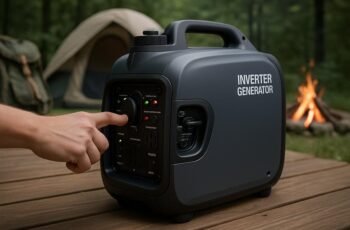
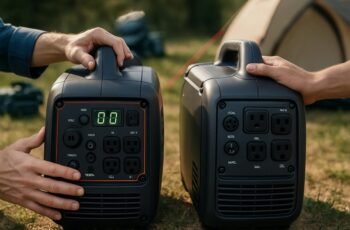
When we look for an inverter generator, it’s essential to focus on features like noise level, fuel efficiency, and portability to match our specific needs. Understanding exactly how much power we require helps prevent overbuying or underperforming units. With so many brands and models available, knowing what to prioritize can make all the difference. Let’s explore what really matters when choosing the right inverter generator for us.
Key Takeaways
- Choose an inverter generator for clean, stable power ideal for sensitive electronics and fuel-efficient operation.
- Prioritize low noise levels and eco-mode features for quieter, cost-effective performance.
- Calculate total wattage of devices to determine the appropriate generator size and power output.
- Compare brands like Honda, Yamaha, and Champion based on durability, noise, and fuel efficiency.
- Maintain regularly by changing oil, cleaning spark plugs, and avoiding overload to ensure longevity.
How an Inverter Generator Works and Why It Matters
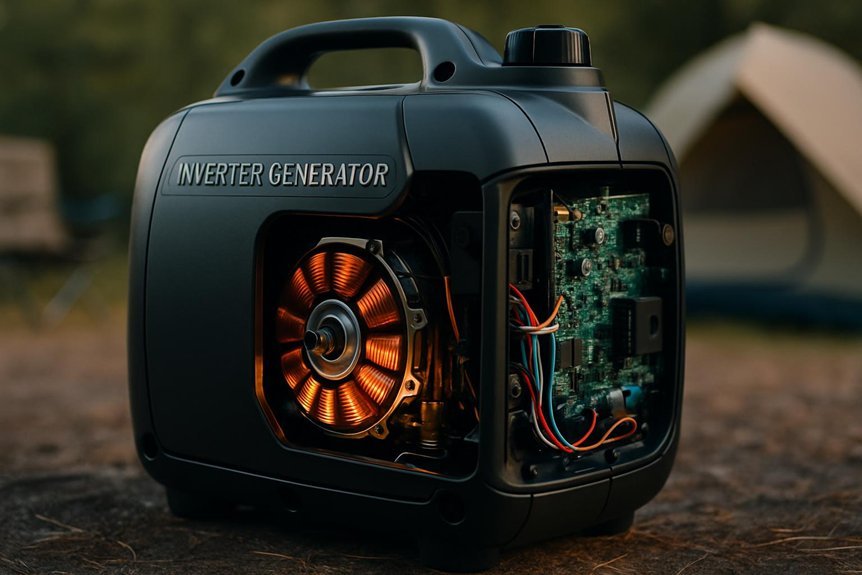
Many of us rely on inverter generators because they deliver cleaner, more stable power compared to traditional generators. This happens through advanced power conversion technology that converts raw engine output into consistent, high-quality electricity, ideal for sensitive devices. We appreciate their fuel efficiency, which reduces running costs and environmental impact. Lower noise levels make them perfect for camping or neighborhood use. Portability options vary, but most models are designed for easy transport without sacrificing power. Safety features, such as automatic shutoff during low oil levels, add peace of mind. User reviews often highlight these benefits, confirming value despite a higher cost compared to conventional generators. When we weigh cost comparison, the long-term savings and reduced emissions make inverter generators a smart, responsible choice for reliable power.
What Features to Look for in an Inverter Generator
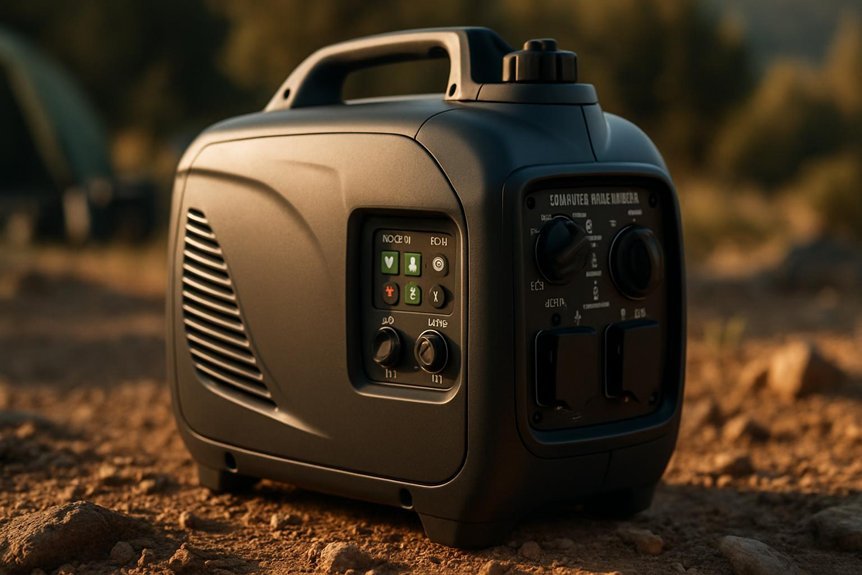
Choosing the right inverter generator means focusing on key features that match our specific needs and guarantee reliable performance. First, we should consider noise levels, especially if we plan to use the generator in quiet environments like campsites or residential areas. A low-decibel rating promotes minimal disturbance. Fuel efficiency is another essential factor; generators that optimize fuel consumption help us save money and extend run time during power outages or outdoor activities. Additionally, we want features like multiple outlets, including USB ports for versatile device charging, and an eco-mode that adjusts engine speed based on load to further improve efficiency. Portability matters too—look for compact, lightweight designs with convenient handles. These features combined promote an inverter generator that’s practical, efficient, and user-friendly.
Choosing the Right Size and Power Output for Your Needs
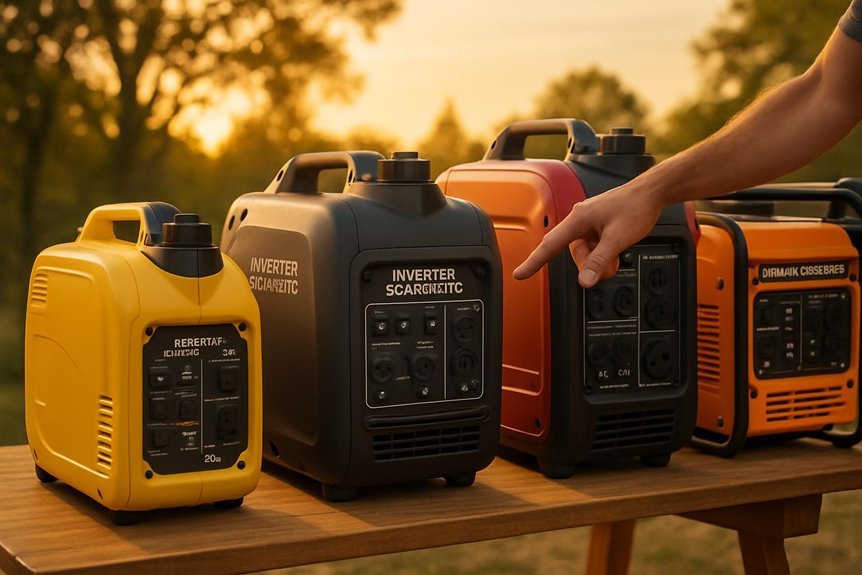
How do we determine the right size and power output for our inverter generator? First, we assess our power requirements by listing all devices we plan to run simultaneously. A precise wattage calculation helps us avoid underestimating the load. Considering usage scenarios—whether for camping, home backup, or job sites—guides us toward an appropriate power range. Portability factors matter too; smaller units offer ease of transport but may sacrifice runtime expectations. We also weigh noise levels since quieter models suit residential areas better. Balancing these elements guarantees we select a generator that meets our energy needs without unnecessary bulk or expense. Ultimately, understanding our specific demands allows us to pick an inverter generator that’s efficient, portable, and reliable for the tasks ahead.
Comparing Top Inverter Generator Models and Brands
Exploring five leading inverter generator models gives us a clear picture of what the market offers regarding performance, portability, and price. Honda models stand out for their quiet operation and fuel efficiency, ideal for sensitive electronics. Yamaha features emphasize durability and smooth power delivery, thanks to advanced inverter technology that guarantees stable output. Champion reliability is well-known, providing robust generators that balance cost and functionality, perfect for everyday use. Each brand brings unique strengths, but all excel in delivering clean power with inverter technology, minimizing fluctuations that can damage devices. By comparing these top models, we can better match a generator to your specific needs, whether it’s for camping, backup power, or job sites, assuring you invest in the best combination of quality and value.
Tips for Maintaining and Getting the Most From Your Inverter Generator
Keeping your inverter generator in top shape requires regular maintenance and smart usage habits. Let’s start by changing the oil and air filter on schedule to guarantee peak performance and fuel efficiency. Cleaning the spark plug and checking for wear also helps maintain smooth operation. When running your generator, avoid overloading it to prevent strain and reduce noise. Using a quality fuel stabilizer keeps the engine running clean and efficient, minimizing emissions and noise reduction. Store your generator in a dry, ventilated area to prevent rust and corrosion. Finally, run your generator monthly for about 20 minutes to keep parts lubricated and ready. By following these tips, we can extend our inverter generator’s life and maximize its fuel efficiency and quiet operation.
Frequently Asked Questions
Can Inverter Generators Be Used Indoors Safely?
We can’t use inverter generators indoors safely because they produce carbon monoxide, which poses serious indoor safety risks. To protect ourselves and others, we must always operate them outdoors in well-ventilated areas away from windows.
What Type of Fuel Is Most Cost-Effective for Inverter Generators?
We find gasoline the most cost-effective fuel for inverter generators due to its fuel efficiency and widespread availability. Regular generator maintenance guarantees peak performance, saving money by reducing fuel consumption and extending the generator’s lifespan.
Are Inverter Generators Compatible With Solar Power Systems?
Yes, inverter generators offer great solar compatibility due to their inverter efficiency, allowing seamless integration with solar power systems. We can efficiently combine both to guarantee stable, clean energy for our off-grid or backup power needs.
How Loud Are Inverter Generators Compared to Traditional Ones?
When camping last summer, we noticed inverter generators produce much lower noise levels and a smoother sound frequency than traditional ones. They’re quieter, making them perfect for peaceful environments without disturbing neighbors or wildlife.
Can Inverter Generators Power Sensitive Electronics Without Damage?
Yes, we can confidently say inverter generators provide excellent power quality and voltage stability, ensuring they safely power sensitive electronics without damage. Their clean, consistent output protects your devices better than traditional generators.
Conclusion
Choosing an inverter generator is like planting a garden: with the right seeds—noise level, fuel efficiency, and power output—and careful tending through maintenance, we guarantee a thriving harvest of reliable energy. By understanding our needs and exploring trusted brands, we can cultivate peace of mind and power wherever we go. Let’s nurture our choice with care, so our inverter generator grows into a dependable companion for every adventure ahead.