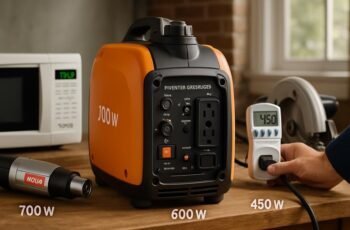
Let’s explore how inverter generators deliver clean, stable power through advanced technology. Unlike traditional generators, they don’t simply produce raw AC power. Instead, they convert it into DC and then invert it back to a refined AC waveform, ensuring precise voltage and frequency. This process, combined with dynamic engine speed control, optimizes efficiency and reduces noise. Understanding these mechanisms reveals why inverter generators are a superior choice for sensitive electronics.
Key Takeaways
- Inverter generators convert raw AC power to stable DC and then invert it back to clean AC electricity.
- They use advanced power electronics to regulate voltage and frequency for consistent, high-quality output.
- Engine speed dynamically adjusts based on power demand, optimizing fuel efficiency and reducing emissions.
- Multi-stage conversion filters voltage spikes and frequency fluctuations, providing near-sinusoidal waveforms.
- The technology ensures quiet operation and clean power, protecting sensitive electronic devices from damage.
What Is an Inverter Generator and How Is It Different?
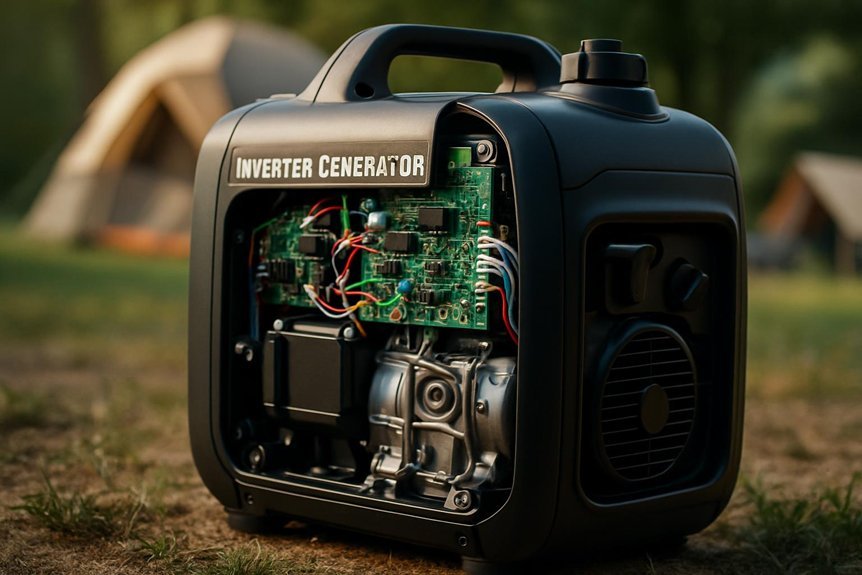
An inverter generator is a compact power source that converts raw AC power into stable DC current before inverting it back to clean AC electricity. This process, enabled by advanced inverter technology, distinguishes it from conventional generators, which provide raw alternating current without refining it. By managing the electrical output through precision electronics, inverter generators optimize power efficiency, reducing fuel consumption and emissions. Unlike traditional generators that run at a constant speed, inverter generators adjust engine speed dynamically based on power demand, enhancing efficiency and lowering noise levels. This adaptability guarantees that they deliver consistent voltage and frequency, essential for sensitive electronics. Understanding these fundamental differences helps us appreciate why inverter generators offer a more sophisticated, efficient, and reliable power solution compared to their conventional counterparts.
How Inverter Generators Produce Clean, Stable Power
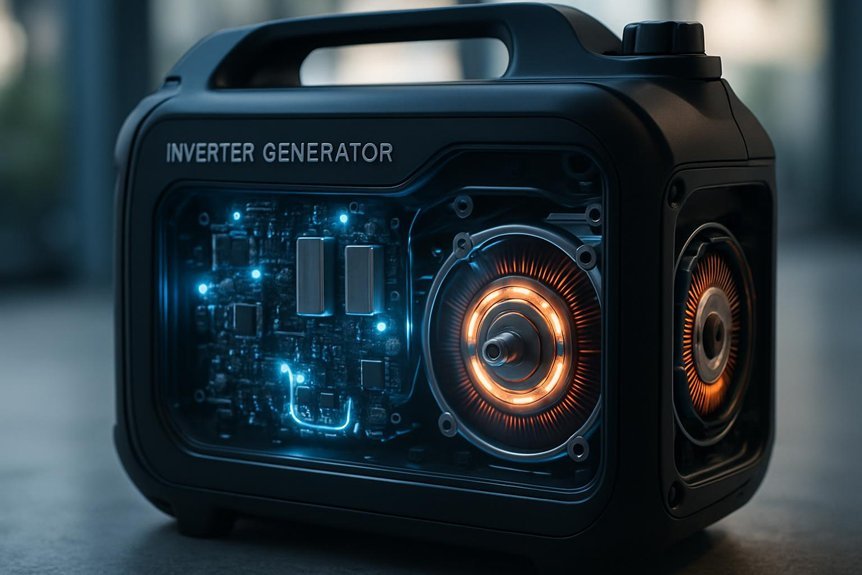
Because inverter generators convert raw power through multiple stages, they produce electricity with remarkably stable voltage and frequency. Initially, the engine generates AC power, which is then rectified into DC. This DC power undergoes inversion back into AC with tightly controlled waveform and frequency. This multi-stage conversion enables the generator to filter out voltage spikes and frequency fluctuations common in conventional generators. As a result, we achieve clean energy output with minimal harmonic distortion, suitable for sensitive electronics. The inverter’s sophisticated electronics continuously monitor and adjust the output, ensuring a stable output regardless of engine speed variations. This precision in power conditioning distinguishes inverter generators by delivering reliable, consistent energy that meets stringent performance standards, making them ideal for modern applications requiring both clean energy and stable output.
Why Engine Speed Control Matters in Inverter Generators
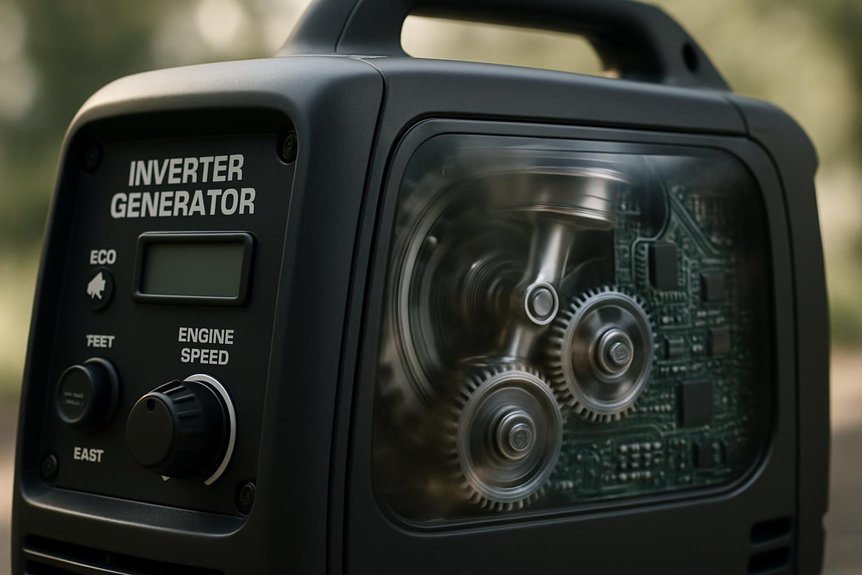
The stable and clean power output from inverter generators relies heavily on precise engine speed control. Maintaining a consistent engine speed guarantees that the generator produces a steady frequency and voltage, critical for sensitive electronics. When load demands fluctuate, the engine must respond quickly and accurately to maintain ideal engine efficiency. If the engine speed varies excessively, power quality degrades, causing voltage sags or frequency shifts. This precise speed regulation also minimizes fuel consumption and emissions by operating the engine only as fast as needed. Inverter generators use advanced control systems to monitor load changes in real-time, adjusting throttle settings instantly. By tightly controlling engine speed, these generators achieve superior load response and deliver clean, reliable power across varying conditions without sacrificing efficiency.
The Role of Power Conversion Technology Inside Inverter Generators
While precise engine speed control sets the foundation, power conversion technology plays an essential role in shaping the clean and stable electricity inverter generators deliver. At the heart of this process lie advanced power electronics components—semiconductor devices like IGBTs and MOSFETs—that convert raw AC output from the alternator into DC and then invert it back to a stable, regulated AC waveform. This multi-stage power conversion guarantees consistent voltage and frequency, regardless of engine speed fluctuations. By precisely controlling switching patterns, these power electronics optimize energy efficiency, minimizing losses during conversion. This tight integration between mechanical input and electronic control enables inverter generators to produce high-quality power suitable for sensitive electronics, all while maintaining compact size and robust performance. Understanding this interplay highlights why power conversion technology is crucial in modern inverter generators.
Benefits of Using Inverter Generators for Sensitive Devices and Quiet Operation
We’ve seen how advanced power conversion inside inverter generators refines raw electrical output into stable, clean energy. This precise regulation is vital when powering sensitive electronics, which demand consistent voltage and frequency to operate reliably without risk of damage or data loss. Unlike conventional generators, inverter generators deliver a near-sinusoidal waveform, minimizing harmonic distortion that can interfere with delicate circuitry. Additionally, inverter technology optimizes engine speed based on load, greatly enhancing noise reduction. This variable speed operation reduces unnecessary engine revving, making inverter generators strikingly quieter and more suitable for environments requiring low acoustic impact. By combining clean power output with effective noise reduction, inverter generators provide a technically superior solution for operating sensitive devices quietly and safely, enhancing both equipment longevity and user comfort.
Frequently Asked Questions
How Do I Maintain and Service an Inverter Generator?
We maintain and service an inverter generator by regularly performing an oil change, inspecting and cleaning or replacing the air filter, checking spark plugs, and ensuring all connections are tight to optimize performance and longevity.
What Fuel Types Are Compatible With Inverter Generators?
We find inverter generators primarily compatible with gasoline, propane compatibility varies by model, and diesel efficiency offers longer run times. Choosing fuel depends on availability, generator design, and desired performance, ensuring ideal operation and maintenance.
Can Inverter Generators Be Connected in Parallel for More Power?
We can link inverter generators in parallel operation, like synchronizing musicians in an orchestra, to meet higher power requirements. This precise connection boosts output without sacrificing efficiency, allowing us to tailor power seamlessly for complex needs.
What Safety Precautions Should I Take When Using an Inverter Generator?
We always operate inverter generators outdoors to avoid carbon monoxide buildup, maintain proper ventilation, and monitor noise levels to protect hearing. We also use carbon monoxide detectors and keep the unit away from living spaces for safety.
How Long Can an Inverter Generator Run Continuously on a Full Tank?
We can expect an inverter generator to run continuously for 8 to 12 hours on a full tank, depending on runtime efficiency and fuel consumption rates, which vary based on load and engine size during operation.
Conclusion
When we rely on inverter generators, we’re fundamentally harnessing a symphony of advanced electronics that transforms chaotic raw power into flawlessly stable energy. It’s like turning a roaring lion into a gentle whisper—power that’s both robust and refined. This precise control over engine speed and power conversion technology not only safeguards our sensitive devices but also delivers whisper-quiet operation. Inverter generators truly redefine efficiency and reliability in portable power solutions.