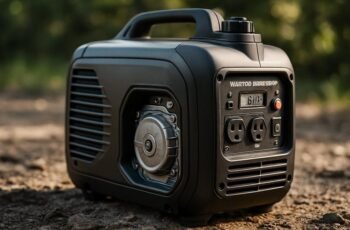
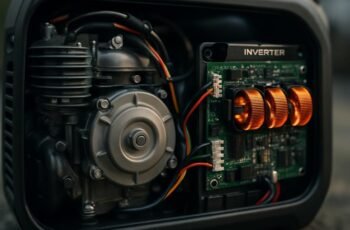
We often hear that inverter generators outperform traditional models in efficiency and power quality, but how exactly does this hold up under technical scrutiny? By converting AC to DC and back to AC, inverter generators regulate voltage with precision, but the implications of this process extend beyond simple power delivery. Understanding these nuances reveals why they’re preferred for sensitive electronics and fuel economy, yet there are critical factors that influence their overall performance and reliability.
Key Takeaways
- Inverter generators convert AC to DC, then invert it back to AC for consistent, clean power with minimal voltage fluctuations.
- Engine speed modulates dynamically based on load, enhancing fuel efficiency and reducing noise and emissions.
- They produce stable sine waves with low Total Harmonic Distortion, protecting sensitive electronics from power surges.
- Compact, lightweight designs improve portability and often support parallel operation for increased power output.
- Advanced microprocessor controls ensure continuous output monitoring and optimize performance for reliability and fuel savings.
How Inverter Generators Work Differently From Traditional Generators
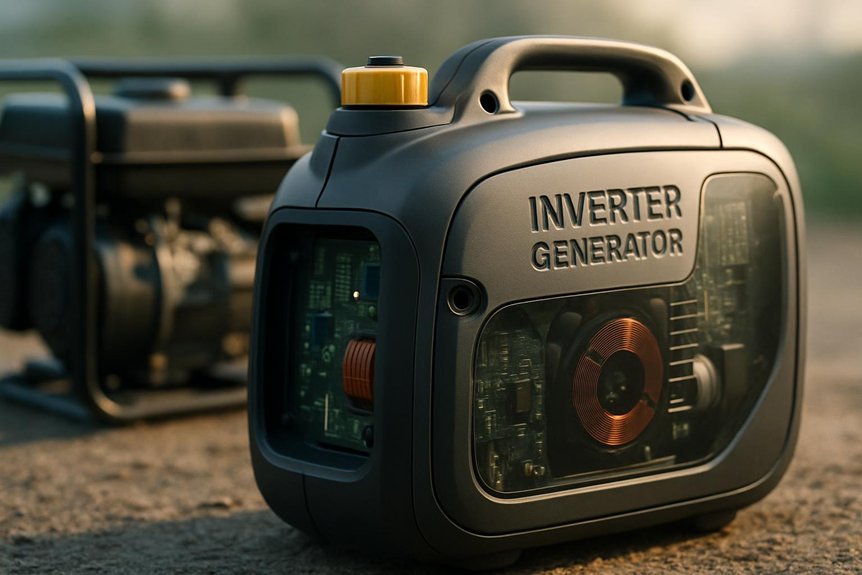
Although both inverter and traditional generators convert mechanical energy into electrical energy, they do so through fundamentally different processes that impact efficiency, power quality, and usability. Traditional generators produce AC power directly via a rotating alternator, maintaining a constant engine speed to guarantee stable frequency. In contrast, inverter technology first generates AC power, converts it to DC, and then inverts it back to a clean, stable AC output. This multi-stage process allows inverter generators to modulate engine speed based on load demand, greatly improving generator efficiency by reducing fuel consumption and emissions. Additionally, inverter technology delivers consistent voltage and frequency with minimal distortion, enhancing compatibility with sensitive electronics. Understanding these operational differences helps us appreciate why inverter generators offer a more precise and adaptable power solution compared to conventional models.
Key Benefits of Using Inverter Generator Technology
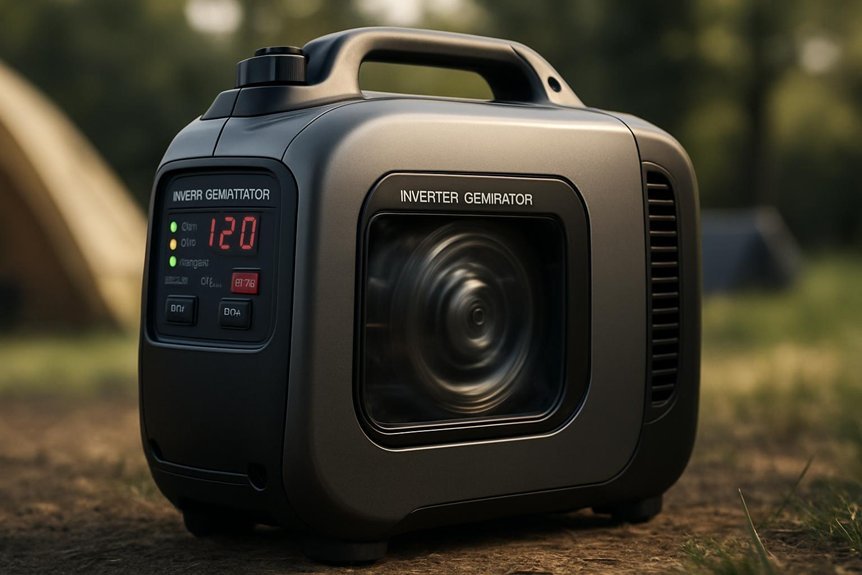
The operational distinctions between inverter and traditional generators directly translate into several significant advantages for users. Primarily, inverter generators deliver superior power efficiency by modulating engine speed to match load demand, minimizing fuel consumption without compromising output stability. This precise control guarantees cleaner, more consistent electrical waves, essential for sensitive electronics. Additionally, inverter technology enables compact, lightweight designs, expanding portability options beyond conventional models. These generators are easier to transport and deploy in varied environments, from recreational activities to emergency backup scenarios. Their modular construction also facilitates parallel operation, allowing scalable power solutions tailored to specific needs. By integrating advanced electronics and innovative design principles, inverter generators redefine user experience through enhanced efficiency and versatile mobility, setting a new standard for portable power solutions.
Why Inverter Generators Are Quieter and More Fuel-Efficient
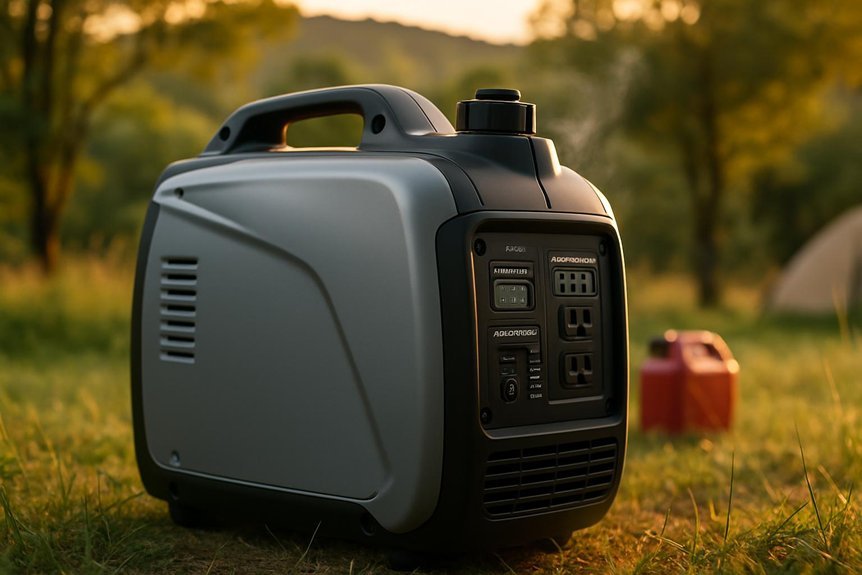
Because inverter generators adjust engine speed to match power demand in real time, they operate more quietly than traditional generators that run at a constant high RPM. This dynamic engine control considerably reduces noise levels by avoiding unnecessary high-speed operation. Additionally, by optimizing engine speed, inverter generators minimize fuel consumption, delivering power only as needed. This precise modulation translates into improved fuel efficiency compared to conventional models that waste fuel running at full throttle regardless of load. The combined effect of adaptive speed control and advanced electronic regulation results in effective noise reduction and lower operating costs. Therefore, inverter generators provide a more refined balance between performance and economy, making them ideal for applications where quiet operation and fuel savings are critical.
How Inverter Generators Produce Cleaner Power for Sensitive Devices
Power quality plays an essential role when running sensitive electronic devices, and inverter generators excel in delivering stable, clean electricity. Unlike conventional generators, inverter generators use advanced electronics to regulate voltage and frequency, ensuring power output remains within tight tolerances. This precision protects sensitive devices from damage caused by power surges or fluctuations.
Here’s how inverter generators produce cleaner power for sensitive devices:
- Pulse Width Modulation (PWM): Converts DC to AC with minimal distortion.
- Microprocessor Control: Continuously monitors and adjusts output in real-time.
- Stable Frequency Output: Maintains consistent 60 Hz or 50 Hz frequency.
- Low Total Harmonic Distortion (THD): Typically below 3%, preventing interference.
These features collectively provide clean power, reducing risk and enhancing device longevity.
Top Features to Look for When Buying an Inverter Generator
When choosing an inverter generator, we need to focus on key features that directly impact performance, efficiency, and suitability for our specific needs. First, evaluating portability options is essential—compact designs with ergonomic handles or wheels greatly enhance mobility, especially for frequent transport. Next, noise reduction capabilities are important; generators with advanced mufflers and sound-dampening enclosures minimize operational noise, which is critical in noise-sensitive environments. We should also assess power output and fuel efficiency to match device requirements without excess consumption. Additionally, inverter technology quality influences the consistency of clean power delivery. Other considerations include runtime duration, ease of maintenance, and integrated safety features like overload protection. Prioritizing these technical aspects guarantees we select an inverter generator optimized for reliable, quiet, and efficient operation.
Common Uses for Inverter Generators in Outdoor Activities
Let’s examine how inverter generators enhance outdoor activities by providing reliable, clean power for camping and tailgating events. Their compact design and low noise output make them ideal for powering essential devices without disrupting the environment. Understanding these applications helps us appreciate the technology’s practical advantages in various outdoor settings.
Camping Power Solutions
Although traditional generators have served campers for decades, inverter generators offer a more efficient and reliable solution for outdoor power needs. Their superior energy efficiency and compatibility with eco-friendly options like solar panels and battery storage make them ideal for off-grid camping. We rely on inverter generators to power essential camping appliances while maintaining low noise and fuel consumption.
Here are four common camping power solutions using inverter generators:
- Charging portable chargers and devices via power inverters for uninterrupted connectivity.
- Integrating with solar panels and battery storage to extend power availability sustainably.
- Operating sensitive camping appliances with stable, clean power output.
- Providing lightweight, compact power for remote, off-grid solutions where traditional power isn’t accessible.
This combination of technology guarantees reliable, efficient power tailored for modern campers.
Tailgating And Events
Because tailgating and outdoor events demand portable, reliable power, we turn to inverter generators for their quiet operation and stable electricity output. These units efficiently supply clean, consistent event power essential for sensitive electronics like speakers, LED lighting, and food warmers, which are tailgating essentials. Their compact design enhances mobility, allowing us to position power sources strategically without noise disruption or fuel inefficiency. Additionally, inverter generators adjust engine speed based on load, optimizing fuel consumption during fluctuating power demands typical at dynamic events. This technology reduces emissions and guarantees continuous operation without voltage spikes that could damage connected devices. By integrating inverter generators into tailgating setups, we enhance convenience and safety, delivering dependable power tailored to outdoor entertainment environments.
Comparing Inverter Generators to Conventional Generators: Which Is Better?
How do inverter generators stack up against conventional generators concerning performance and efficiency? When we analyze the performance comparison, inverter generators typically offer cleaner power output, making them ideal for sensitive electronics. User experiences often highlight their quieter operation and fuel efficiency. However, conventional generators tend to provide higher continuous power output at a lower initial cost. Here’s a concise breakdown:
- Power Quality: Inverter generators deliver stable sine waves; conventional units may have voltage fluctuations.
- Noise Levels: Inverter models operate quieter, enhancing user comfort in various settings.
- Fuel Efficiency: Inverters adjust engine speed based on load, reducing fuel consumption considerably.
- Cost and Maintenance: Conventional generators are less expensive upfront but may require more frequent upkeep.
How to Maintain and Care for Your Inverter Generator
Maintaining and caring for your inverter generator guarantees peak performance and extends its lifespan. First, we should use fuel stabilization to prevent gasoline degradation during storage, which avoids clogging the fuel system and guarantees reliable startups. Regularly inspecting and replacing the air filter keeps the engine running efficiently by maintaining proper airflow. Battery care is equally important; we need to check the battery terminals for corrosion and verify a full charge to support the electronic control systems. Periodic oil changes, following manufacturer guidelines, reduce engine wear and maintain ideal lubrication. Finally, cleaning the generator’s exterior and cooling vents prevents overheating. By systematically addressing these maintenance tasks, we protect our investment and assure consistent, efficient operation of the inverter generator.
Troubleshooting Common Inverter Generator Issues
When our inverter generator fails to operate as expected, identifying the root cause quickly allows us to apply effective solutions and minimize downtime. Troubleshooting common issues involves a structured approach:
- Starting Issues: Check the fuel system for blockages or stale fuel, and confirm engine maintenance is up to date to guarantee reliable ignition.
- Electrical Connections: Inspect for loose or corroded terminals affecting power output and stable inverter technology function.
- Overload Protection: Verify if frequent trips occur due to excessive loads; adjust connected devices accordingly.
- Noise Reduction: Assess mechanical components and mounting to eliminate abnormal sounds indicating internal faults.
Tips for Maximizing Inverter Generator Performance and Runtime
To maximize our inverter generator’s performance and runtime, we must prioritize proper maintenance practices such as regular oil changes and air filter cleaning. Additionally, managing the load efficiently by balancing power demands prevents unnecessary strain and fuel consumption. By focusing on these factors, we guarantee peak operation and extended service life.
Proper Maintenance Practices
Three essential maintenance practices can greatly enhance the performance and runtime of inverter generators. Regular oil changes, air filter replacements, and spark plug inspections guarantee peak engine efficiency and longevity. Fuel stabilization prevents fuel degradation during storage, maintaining consistent combustion quality. Battery maintenance, including charge monitoring, supports reliable electric starts and system control. Proper cleaning procedures reduce dirt accumulation, improving cooling and electrical connections. Finally, load testing verifies generator capacity and operational stability under expected demand.
- Schedule oil changes and replace air filters per manufacturer guidelines.
- Inspect and replace spark plugs to maintain ignition efficiency.
- Use fuel stabilizers and follow storage tips to prevent fuel system issues.
- Perform battery maintenance, cleaning, and periodic load testing for reliability.
Efficient Load Management
Maintaining an inverter generator’s mechanical and electrical components is only part of enhancing its performance. To maximize runtime and efficiency, we must implement effective load prioritization strategies. By systematically identifying and powering essential devices first, we prevent unnecessary strain on the generator. Additionally, applying energy efficiency techniques—such as using energy-saving appliances and minimizing simultaneous high-load demands—reduces fuel consumption and wear. Monitoring power output closely allows us to adjust loads dynamically, ensuring the generator operates within its ideal capacity range. This approach not only extends runtime but also enhances voltage stability and frequency control. In sum, efficient load management requires deliberate planning and real-time adjustments, integrating technical awareness with practical energy-saving measures to fully leverage inverter generator capabilities.
Frequently Asked Questions
What Is the Typical Lifespan of an Inverter Generator?
We typically expect an inverter generator’s lifespan to range from 1,000 to 2,000 hours. With proper maintenance tips and understanding performance factors, we can maximize durability and guarantee consistent, efficient operation over time.
Are Inverter Generators Safe to Use Indoors or in Enclosed Spaces?
Better safe than sorry applies here; we don’t recommend using inverter generators indoors due to carbon monoxide risks. Prioritizing indoor safety means always operating them in well-ventilated outdoor areas to prevent toxic gas buildup and guarantee safe use.
How Heavy Are Inverter Generators Compared to Conventional Models?
We’ve found inverter generators offer significant portability advantages, typically weighing 30-50% less than conventional models. This weight comparison highlights their compact design, making them easier to transport and ideal for mobile or remote power needs.
Can Inverter Generators Be Connected in Parallel for More Power?
Like joining forces in a relay race, yes, we can connect inverter generators in parallel operation to achieve power doubling. This precise setup demands compatible models and cables, ensuring seamless synchronization and stable, amplified electrical output for our needs.
What Brands Are Most Reliable for Inverter Generators?
We trust Honda models for consistent power, Yamaha reliability for durable performance, Champion features for innovative design, and Westinghouse performance for value. Together, these brands offer dependable inverter generators meeting various technical needs effectively.
Conclusion
Like a skilled conductor harmonizing diverse instruments into a flawless symphony, inverter generator technology orchestrates power with precision, efficiency, and reliability. By embracing this advanced approach, we not only enhance fuel economy and reduce noise but also safeguard our sensitive devices with cleaner energy. Together, let’s harness these innovations, ensuring our power solutions perform seamlessly—transforming complexity into dependable, user-friendly power for every need, anytime and anywhere.