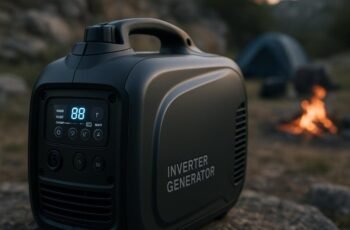
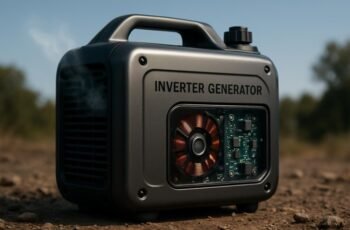
Did you know that inverter generators can reduce fuel consumption by up to 40% compared to traditional models? When we explore what sets these devices apart, we find a complex process of converting and stabilizing electrical energy through advanced electronics. This technology not only guarantees cleaner power but also protects sensitive equipment. Understanding how inverter generators achieve this balance reveals why they’ve become essential in various applications—yet there’s more to uncover about their inner workings.
Key Takeaways
- An inverter generator converts mechanical energy into clean, stable electrical power using electronic circuitry and an alternator.
- It rectifies AC power to DC, then inverts it back to precise AC with controlled frequency and voltage.
- Inverter generators produce low-noise, fuel-efficient power with minimal voltage fluctuations and harmonic distortion.
- They are lightweight, portable, and ideal for sensitive electronics, camping, emergency backup, and outdoor use.
- Compared to traditional generators, they offer quieter operation, better fuel economy, and cleaner, more stable power output.
What Is an Inverter Generator and How Does It Work?
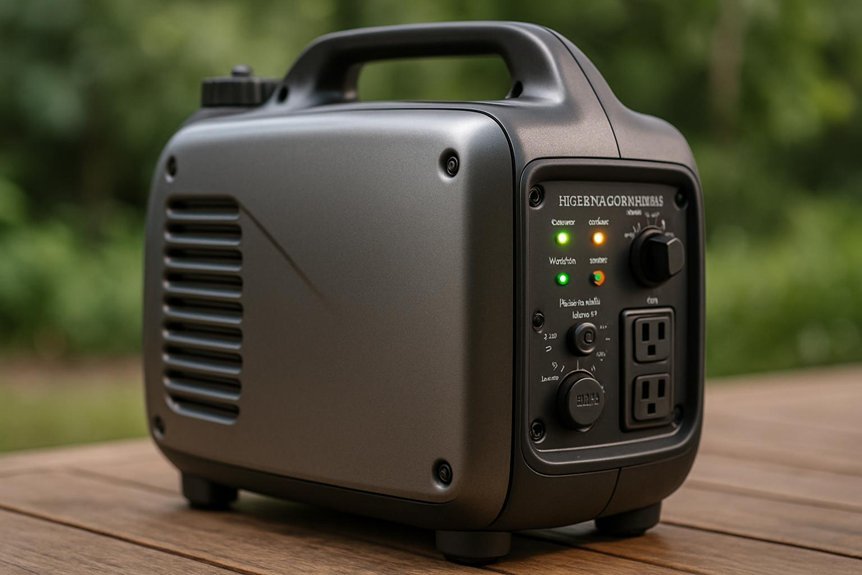
An inverter generator is a compact power device that converts mechanical energy into stable electrical energy using advanced electronic circuitry. Unlike traditional generators, it begins with a gasoline engine driving an alternator, producing alternating current. This AC power then undergoes rectification, converting it into direct current. The inverter circuitry subsequently processes this DC, modulating it back into clean, consistent AC power at the desired frequency and voltage. This multi-stage energy conversion process enables us to deliver reliable portable power with improved efficiency and reduced size. The integration of sophisticated electronic components allows for precise control over output, making inverter generators highly adaptable to various sensitive electronic devices. By optimizing energy conversion, we achieve a lightweight, quiet, and efficient solution ideal for fieldwork, camping, or emergency use.
Why Inverter Generators Produce Cleaner, Stable Power
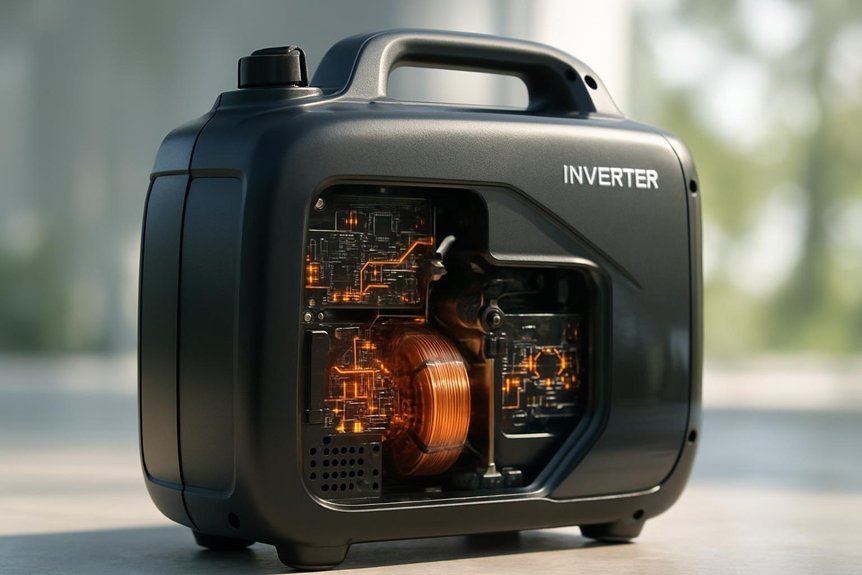
Because inverter generators use advanced electronic components to regulate power output, we can assure a much cleaner and more stable electrical supply compared to conventional generators. They convert raw AC power to DC and then invert it back to AC with precise frequency and voltage control. This process greatly improves power quality by minimizing voltage fluctuations and harmonic distortion. The inverter’s ability to maintain waveform stability means the output closely resembles the sine wave standard required for sensitive electronics. Unlike traditional generators, which run at constant speeds regardless of load, inverter generators adjust engine speed dynamically, reducing fuel consumption and noise while sustaining consistent electrical parameters. This sophisticated regulation guarantees connected devices receive power within strict tolerances, preventing damage and malfunction caused by unstable or poor-quality electricity.
Key Benefits of Choosing an Inverter Generator
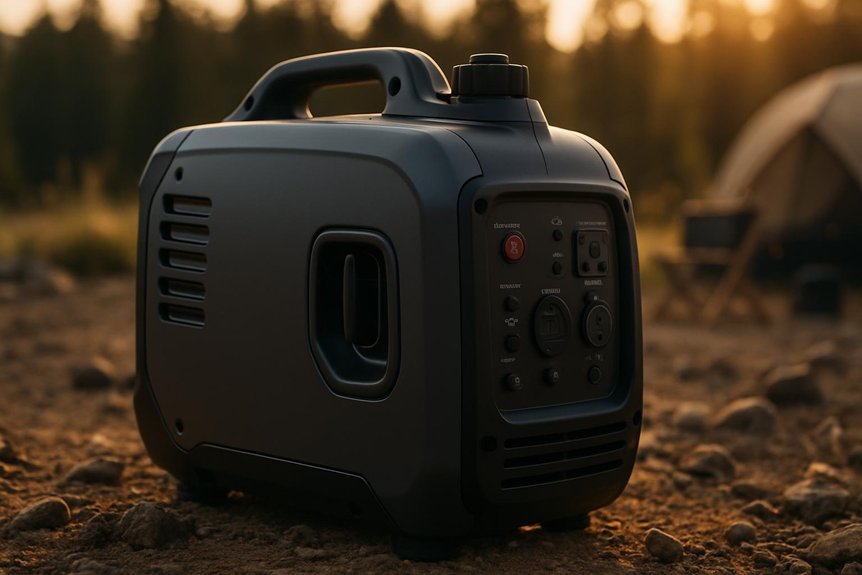
Let’s examine how inverter generators offer significant advantages in quiet operation and fuel efficiency. Their advanced engine management reduces noise levels, making them suitable for noise-sensitive environments. Additionally, precise fuel consumption control extends run time and lowers operating costs compared to conventional generators.
Quiet Operation Advantages
Many users appreciate how inverter generators operate considerably quieter than conventional models, making them ideal for noise-sensitive environments. This silent operation results from advanced electronic components that modulate engine speed based on power demand, reducing unnecessary noise generation. Unlike traditional generators that run at a constant high RPM, inverter generators adjust dynamically, achieving significant noise reduction without compromising output quality. Additionally, their compact design and use of sound-dampening materials further minimize auditory impact. This feature is especially valuable for camping, residential use, and events where maintaining a low noise profile is essential. By prioritizing noise control through innovative engineering, inverter generators offer a practical solution that balances power generation with environmental and user comfort considerations, setting them apart in applications requiring discreet, efficient energy supply.
Fuel Efficiency Benefits
When we compare inverter generators to traditional models, we find they significantly improve fuel efficiency by adjusting engine speed according to real-time power demands. This dynamic operation reduces fuel consumption, especially during low-load conditions, making inverter generators more economical. Efficiency comparisons reveal that inverter generators optimize fuel types, including gasoline and propane, to achieve cleaner combustion and extended run times. The table below summarizes key fuel efficiency metrics:
| Feature | Inverter Generator |
|---|---|
| Fuel Consumption Rate | Lower due to variable load |
| Fuel Types | Gasoline, Propane, Flex Fuel |
| Run Time | Extended per fuel tank size |
| Emission Levels | Reduced via optimized burn |
How Inverter Generators Compare to Traditional Models
Although both inverter and traditional generators serve the same fundamental purpose of providing portable power, their operational mechanisms and performance characteristics differ notably. In a weight comparison, inverter generators are considerably lighter due to compact components and advanced electronics, enhancing portability. Performance analysis reveals that inverters produce cleaner, more stable power with lower harmonic distortion, ideal for sensitive electronics. Traditional generators rely on fixed-speed engines, often resulting in fluctuating voltage and frequency under varying loads, whereas inverter models adjust engine speed dynamically, optimizing fuel consumption and noise levels. Additionally, inverter generators typically offer quieter operation and improved fuel efficiency, though traditional generators excel in sustained high-load output. Understanding these distinctions helps us select the appropriate generator type based on specific technical requirements and operational contexts.
Common Uses and Ideal Situations for Inverter Generators
We use inverter generators primarily for camping and outdoor activities due to their quiet operation and fuel efficiency. They also serve as reliable backup power sources for homes, providing stable electricity during outages. Let’s examine how their design optimizes performance in these scenarios.
Camping And Outdoor Activities
Because inverter generators deliver clean, stable power with low noise levels, they excel in camping and outdoor activities where sensitive electronics and quiet environments are essential. When we consider camping essentials, inverter generators provide reliable energy for devices like GPS units, smartphones, and portable refrigerators without risking damage from power fluctuations. Their compact design and fuel efficiency also make them ideal for extended outdoor adventures, reducing the need for frequent refueling. Unlike conventional generators, inverter models adjust engine speed according to load demands, optimizing fuel consumption and minimizing sound output, which preserves the natural ambiance. This precise operation guarantees we can power lights, cooking equipment, and communication devices efficiently, enhancing safety and comfort in remote locations. Overall, inverter generators are a technical solution tailored for the power demands and environmental sensitivity of outdoor enthusiasts.
Backup Power For Homes
When power outages disrupt our daily lives, inverter generators offer a dependable backup solution by delivering stable electricity to essential household systems. Their ability to provide clean, consistent power makes them ideal for maintaining home safety during emergencies. We rely on inverter generators because they:
- Support critical appliances such as refrigerators, medical devices, and communication equipment without risking damage from power fluctuations.
- Operate quietly and efficiently, reducing noise pollution and fuel consumption during extended outages.
- Guarantee seamless power transfer, minimizing downtime and preserving sensitive electronics.
What to Look for When Buying an Inverter Generator
How do we determine the best inverter generator for our specific needs? First, we must assess the power capacity required to run our essential devices simultaneously, ensuring the generator can handle peak loads without strain. Next, we evaluate noise levels, as quieter models enhance usability in residential or recreational settings. It’s essential to examine fuel efficiency and runtime, balancing operational costs and convenience. Portability matters too; weight and dimensions influence ease of transport and storage. Additionally, we consider advanced features like parallel capability, enabling scalability, and inverter technology quality, which affects power stability for sensitive electronics. Finally, reliability and warranty support factor into long-term satisfaction. By analyzing these technical criteria, we make an informed choice tailored to our unique power demands and environment.
Frequently Asked Questions
How Do I Maintain and Service an Inverter Generator?
We maintain and service an inverter generator by regularly changing the oil, cleaning air filters, and inspecting spark plugs. These steps enhance fuel efficiency and extend generator lifespan, ensuring peak, reliable performance throughout its use.
Are Inverter Generators Safe to Use Indoors?
It is understood that many worry about indoor safety, but inverter generators still emit carbon monoxide. So, we don’t recommend using them indoors unless you have proper ventilation and a carbon monoxide detector to prevent toxic buildup effectively.
Can I Connect Multiple Inverter Generators Together?
Yes, we can connect multiple inverter generators using parallel operation cables to combine their power output efficiently. This allows us to increase total wattage while maintaining stable voltage and frequency for sensitive equipment.
What Noise Levels Do Inverter Generators Typically Produce?
Inverter generators typically produce noise levels between 40 to 60 decibels, thanks to advanced noise reduction technology. We analyze sound ratings carefully to guarantee quieter operation, making them ideal for camping, events, and residential use.
How Long Do Inverter Generators Usually Last?
Inverter generators typically last 2,000 to 4,000 hours, depending on fuel efficiency and power output. We’ve found maintaining ideal fuel efficiency extends lifespan, ensuring consistent power output while minimizing wear and operational stress.
Conclusion
As we’ve seen, inverter generators combine advanced circuitry with mechanical power to deliver clean, stable electricity—perfect for sensitive devices. Coincidentally, this precise control also means quieter, more fuel-efficient operation, making them ideal for diverse uses. Whether camping or backing up power, choosing an inverter generator means investing in reliability and performance. So, when deciding, let’s prioritize these technical advantages to guarantee we get the best fit for our specific energy needs.