We often assume that simply matching generator wattage to our devices’ power ratings is enough, but the reality involves more precise calculations. Understanding the difference between running and starting watts is critical to avoid underperformance or wasted capacity. By accurately evaluating our total power needs and usage scenarios, we can select an inverter generator that balances efficiency, portability, and reliability. Let’s explore how to determine the right size generator for your specific requirements.
Key Takeaways
- Calculate the total wattage of all devices you plan to run simultaneously to determine generator capacity.
- Include both running watts and starting watts to handle power surges from motorized appliances.
- For camping, prioritize compact, lightweight generators with noise levels below 60 dB for portability and quiet operation.
- For home backup, list critical appliances and select a generator with slightly higher capacity to ensure reliable power.
- Avoid oversized generators to save fuel and costs, and undersized ones to prevent overload and equipment damage.
How to Calculate Your Total Power Needs for an Inverter Generator
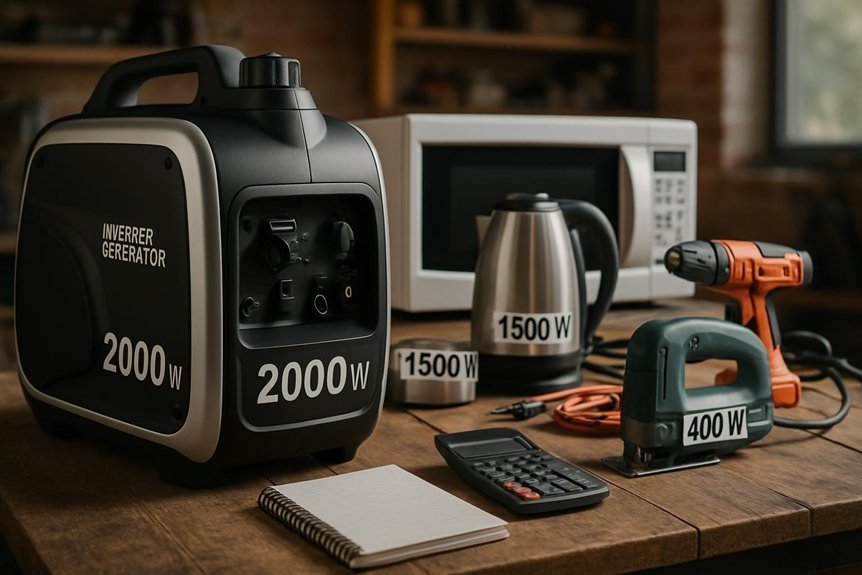
Before selecting an inverter generator, we need to accurately calculate our total power requirements by summing the wattage of all devices we plan to run simultaneously. We start by listing each device’s power consumption using their equipment ratings, usually found on labels or manuals. Using a wattage calculator simplifies this process, allowing us to input individual wattages and obtain a precise total. It’s essential to evaluate the combined load to avoid under-sizing the generator. Different generator types handle loads differently, so understanding these distinctions helps us match the inverter generator’s capacity to our needs. By quantifying total wattage demand, we guarantee the inverter generator delivers stable, efficient power without overload risks, optimizing performance and longevity.
What Are Running Watts vs. Starting Watts and Why They Matter
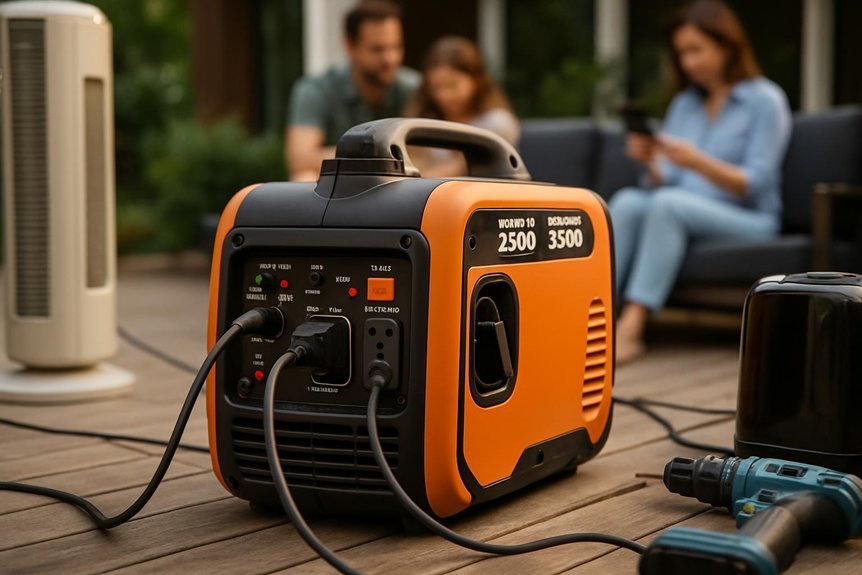
After calculating our total power needs, the next step is to understand the difference between running watts and starting watts—two key measurements that impact generator performance. Running watts represent the continuous power an appliance requires to operate, while starting watts reflect the initial power surge needed to start motors or compressors. This power surge can be two to three times higher than running watts, so our wattage calculation must account for it to avoid overload. Matching generator capacity to both running and starting watts guarantees efficient load management and prevents tripping. Ignoring starting watts risks undersizing the generator, reducing efficiency ratings and potentially damaging appliances. Accurately evaluating appliance requirements with these distinctions is critical for selecting an inverter generator that delivers stable, reliable performance.
Choosing the Right Inverter Generator Size for Camping and Outdoor Use
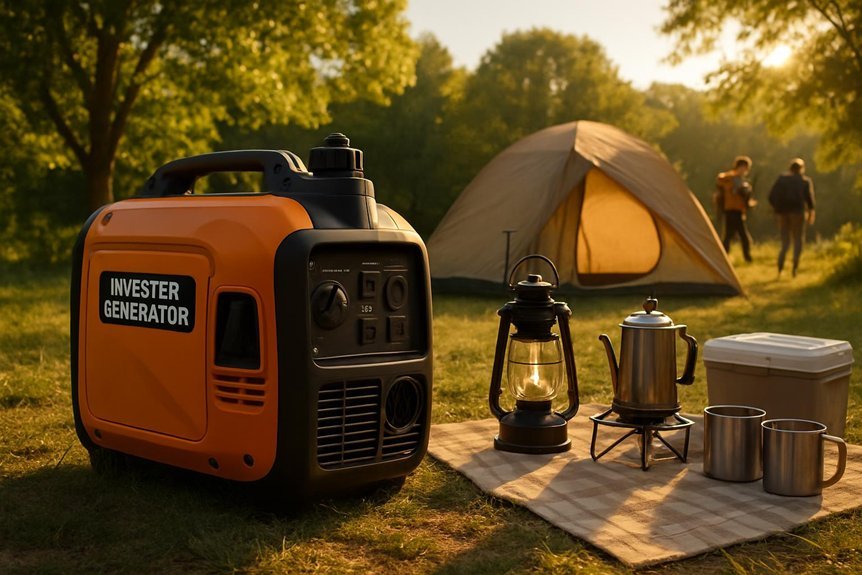
How do we determine the ideal inverter generator size for camping and outdoor use? First, we analyze our total power needs, focusing on essential devices to avoid oversizing. Portable power demands emphasize lightweight, compact units with advanced generator features like eco-throttle for fuel efficiency. Noise levels are critical; we prioritize models rated below 60 dB to maintain a peaceful environment. Brand reliability influences our choice, ensuring consistent performance and access to service. Maintenance tips guide us to select generators with accessible parts and straightforward upkeep protocols, extending lifespan during rugged use. By balancing wattage requirements, fuel efficiency, noise control, and trusted brand support, we confidently select an inverter generator optimized for outdoor scenarios without unnecessary bulk or complexity.
Picking an Inverter Generator Size for Home Backup Power
When selecting an inverter generator size for home backup power, we must carefully assess our essential household loads to guarantee uninterrupted operation during outages. First, we quantify the total power requirements by listing critical appliances and their starting and running wattages. This confirms the generator can handle surge demands without overloading. Next, we analyze generator efficiency, focusing on fuel consumption relative to output, to maintain cost-effectiveness over extended use. Choosing a generator with a slightly higher capacity than calculated power needs allows for operational stability and future adaptability. Precise sizing also prevents unnecessary fuel waste and wear. By integrating these factors, we optimize backup power reliability and efficiency, confirming our home remains functional through power interruptions without compromising generator performance.
Tips to Avoid Buying an Oversized or Undersized Inverter Generator
Although selecting the right inverter generator size can be challenging, we can avoid costly mistakes by thoroughly evaluating our power needs against the generator’s specifications. Oversizing reduces power efficiency and increases cost and weight, undermining generator portability. Undersizing risks overload and equipment damage. To balance these factors, we must analyze peak and continuous wattage requirements precisely.
| Factor | Consideration |
|---|---|
| Peak Power | Match or slightly exceed highest load |
| Continuous Power | Sustain essential devices |
| Power Efficiency | Prefer models operating near rated load |
| Generator Portability | Choose size manageable for transport |
Frequently Asked Questions
How Noisy Are Inverter Generators Compared to Regular Generators?
We find inverter generators produce considerably lower noise levels than regular generators. Their sound comparison shows a cleaner, quieter operation due to advanced engine controls and sound insulation, making them ideal for noise-sensitive environments.
Can Inverter Generators Run Sensitive Electronics Safely?
Yes, we can run sensitive electronics safely with inverter generators because they deliver superior power quality and maintain voltage stability, minimizing harmonic distortion and voltage fluctuations that could damage delicate devices or cause operational failures.
What Maintenance Is Required for Inverter Generators?
We perform regular oil changes and inspect spark plugs to maintain inverter generators. Cleaning air filters and checking fuel lines also guarantee peak performance and longevity, preventing breakdowns and preserving power quality for your sensitive electronics.
Are Inverter Generators Fuel-Efficient?
Yes, inverter generators optimize fuel efficiency by adjusting power output to match load capacity precisely. This modulation reduces fuel consumption during low loads, making them considerably more economical and environmentally friendly compared to conventional generators.
How Long Can an Inverter Generator Run Continuously?
Like a marathon runner relying on steady breaths, our inverter generator’s runtime duration depends on fuel capacity and load. Typically, it runs 8–12 hours continuously, balancing efficiency and power without overheating or fuel depletion.
Conclusion
As we’ve seen, accurately evaluating your total power needs—including both running and starting watts—is key to selecting the right inverter generator size. Whether for camping or home backup, choosing a unit that balances capacity, portability, and efficiency prevents unnecessary fuel consumption and overload risks. Remember, “measure twice, cut once”—a precise calculation saves money and guarantees reliable performance. Let’s apply this analytical approach to make an informed, optimized choice every time.