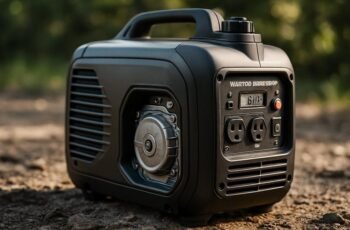
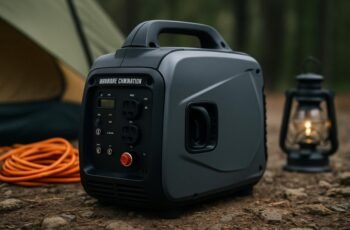
We might assume that all inverter generators perform similarly, but the reality is more nuanced. Understanding your actual power requirements and how inverter technology manages energy output is vital. Without this clarity, we risk overspending or underpowering our devices. Let’s examine the key factors that separate adequate models from those that truly optimize fuel efficiency, noise levels, and power quality—essential aspects that influence both performance and long-term value.
Key Takeaways
- Assess your power needs by listing device wattages and accounting for surge requirements to choose a generator with adequate capacity.
- Prioritize inverter generators with clean, stable sine wave output to safely power sensitive electronics.
- Consider fuel efficiency to reduce operating costs and environmental impact, especially under typical load conditions.
- Evaluate noise levels, aiming for models with sound ratings between 40-60 dB and features like insulated enclosures.
- Balance budget constraints with essential features and reliability by comparing brands, specifications, and customer reviews.
What Is an Inverter Generator and How Does It Work?
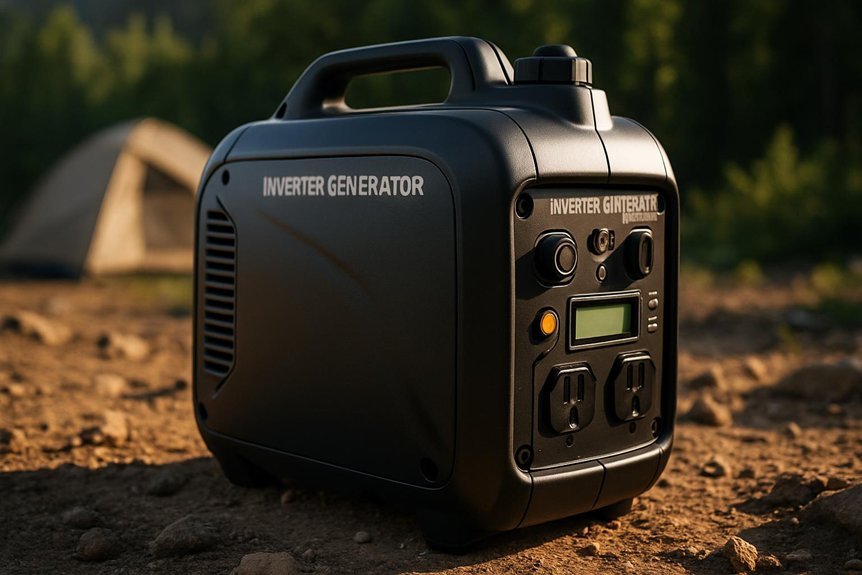
An inverter generator converts mechanical energy into clean, stable electrical power by electronically regulating the output voltage and frequency. Unlike conventional generators, it uses advanced power conversion technology that transforms raw AC power into DC, then inverts it back to refined AC at a consistent frequency. This process guarantees a stable, pure sine wave output suitable for sensitive electronics. Additionally, inverter generators are engineered for noise reduction; they operate at variable speeds, adjusting engine RPM based on load demand. This not only improves fuel efficiency but also markedly lowers operational noise compared to traditional models. By integrating sophisticated electronics with mechanical components, inverter generators offer precise power delivery and quieter performance, making them ideal for applications requiring reliable, low-noise energy sources.
How Much Power Do You Really Need From an Inverter Generator?
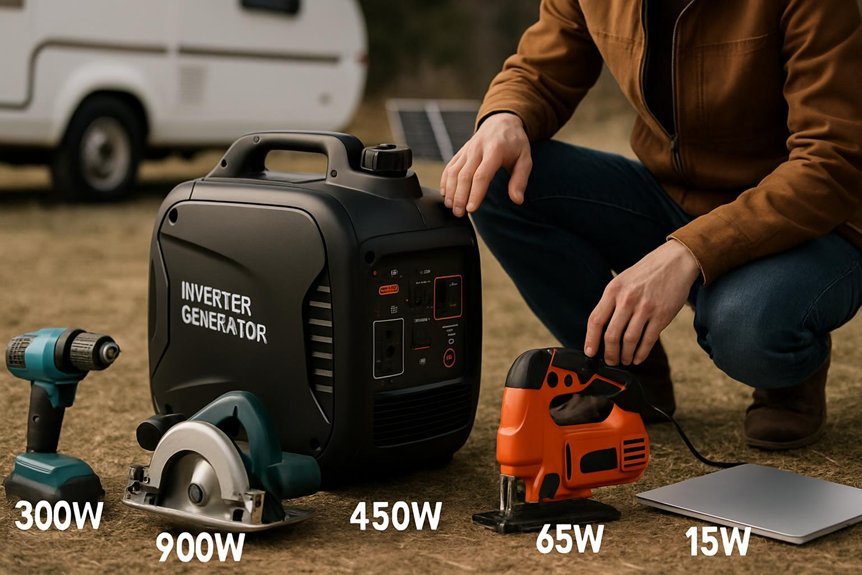
Now that we comprehend how inverter generators produce clean and stable power, the next step is determining the amount of power we actually require from one. Accurately evaluating our power requirements is critical to selecting an inverter generator that meets our needs without overspending or underperforming. We start by listing all essential devices we plan to power simultaneously, noting their starting and running wattages. Using a wattage calculator helps us aggregate these values, providing a clear picture of total load demands. It’s important to factor in surge wattage for devices with motors or compressors. By precisely calculating peak and continuous wattage, we guarantee the inverter generator can handle our load efficiently, optimizing performance and longevity while avoiding unnecessary capacity that adds weight and cost.
Why Fuel Efficiency Matters for Inverter Generators
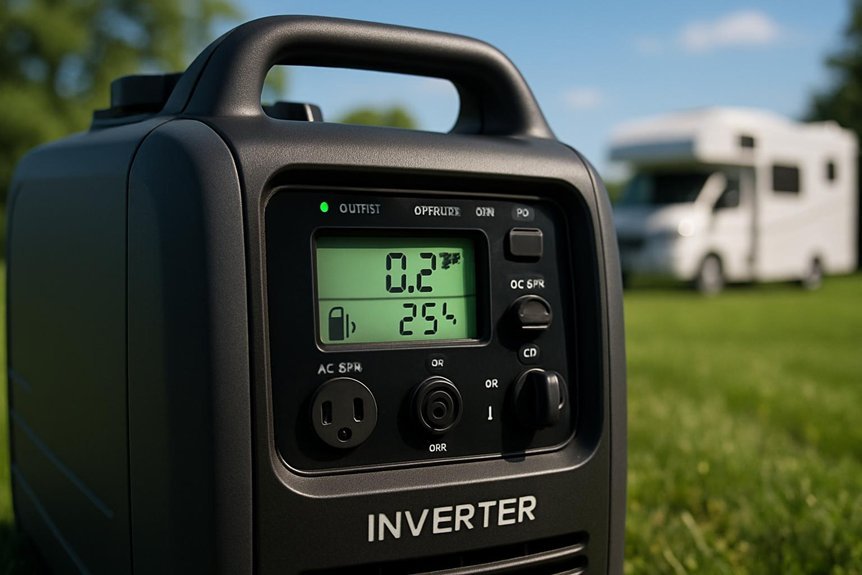
Anyone who relies on inverter generators understands that fuel efficiency directly impacts both operational cost and environmental footprint. Prioritizing fuel savings delivers clear efficiency benefits, reducing the frequency of refueling and lowering fuel expenses. Additionally, enhanced efficiency means less carbon emissions, aligning with eco-conscious usage.
Consider this comparison of fuel consumption at varying loads:
| Load (%) | Fuel Consumption (L/hr) | Run Time (hrs) on 5L Fuel |
|---|---|---|
| 25 | 0.8 | 6.25 |
| 50 | 1.5 | 3.33 |
| 75 | 2.2 | 2.27 |
| 100 | 3.0 | 1.67 |
This data underscores how operating at lower loads maximizes fuel efficiency, optimizing fuel savings and overall performance.
How to Find the Quietest Inverter Generator for Your Space
How quiet should an inverter generator be for your specific environment? To determine this, we first analyze the acceptable sound levels in your space, considering local noise ordinances and proximity to living areas. Effective noise reduction starts with measuring decibel ratings—typically between 40 to 60 dB for quiet models. We then evaluate design features like insulated enclosures, mufflers, and advanced cooling systems that minimize mechanical noise. Comparing these technical specifications helps us select generators that balance power output with minimal acoustic impact. By focusing on precise sound level data and engineered noise reduction, we make certain the chosen inverter generator operates unobtrusively, maintaining comfort without sacrificing performance. This analytical approach helps us find the ideal unit tailored to your environment’s noise sensitivity.
What Makes an Inverter Generator Easy to Carry and Store?
When evaluating portability, we focus on compact design features that reduce bulk without sacrificing functionality. Using lightweight materials greatly lowers the overall weight, making transport and storage more manageable. Together, these factors streamline handling and optimize space efficiency for various applications.
Compact Design Features
Although inverter generators vary widely in features, their compact design is a critical factor that directly impacts portability and storage convenience. Compact portability hinges on dimensions that allow easy handling and efficient storage without sacrificing power output. Generators with a streamlined chassis and integrated handles enhance maneuverability, reducing user fatigue during transport. Additionally, design aesthetics play a functional role; smooth contours and minimal protrusions prevent snagging and facilitate stacking or placement in confined spaces. A well-planned layout of controls and outlets also contributes to ease of access without increasing bulk. By prioritizing these compact design features, manufacturers achieve a balance between size, usability, and visual appeal, making inverter generators truly practical for both casual users and professionals who demand efficient, space-saving power solutions.
Lightweight Materials Used
Building on the importance of compact design, the choice of materials considerably influences an inverter generator’s weight and portability. Lightweight construction typically involves high-strength plastics, aluminum alloys, and magnesium components. These materials reduce overall mass without compromising structural integrity or durability. For instance, aluminum alloys provide excellent strength-to-weight ratios, enhancing the generator’s portable design by allowing easier handling and transport. Additionally, advanced polymers contribute to vibration dampening and corrosion resistance, which further support longevity in various environments. By integrating these materials strategically, manufacturers achieve a balance between robustness and ease of carrying. When evaluating inverter generators, focusing on the lightweight construction materials used is essential, as they directly impact how manageable and convenient the unit will be for storage and mobility.
Which Features Protect Your Electronics With Clean Power?
Let’s examine the features that guarantee our electronics receive clean, stable power from an inverter generator. Clean power technology minimizes harmonic distortion, protecting sensitive devices from damage or malfunction. Additionally, built-in surge protection guards against voltage spikes, maintaining consistent output and safeguarding our equipment.
Clean Power Technology
When we choose an inverter generator, understanding how clean power technology safeguards our sensitive electronics is essential. This technology guarantees the delivery of clean energy with minimal harmonic distortion, maintaining high power quality. It stabilizes voltage and frequency, preventing damage to devices that rely on consistent electrical input.
| Feature | Function | Benefit |
|---|---|---|
| Pure Sine Wave Output | Produces smooth AC power | Protects sensitive electronics |
| THD < 3% | Minimizes Total Harmonic Distortion | Guarantees stable power quality |
| Voltage Regulation | Maintains steady voltage levels | Prevents voltage spikes |
Surge Protection Features
Although clean power technology guarantees stable voltage and minimal distortion, our sensitive electronics still face risks from sudden power surges. To safeguard devices, inverter generators must integrate effective surge protection features that manage both surge capacity and voltage regulation. These features help prevent damage from unexpected spikes and maintain consistent output.
Key surge protection features include:
- Automatic voltage regulation (AVR) for steady voltage control
- High surge capacity components to absorb transient spikes
- Built-in circuit breakers to isolate faults quickly
- Thermal sensors to detect and prevent overheating
- EMI/RFI filters to reduce electromagnetic interference
How to Choose the Best Inverter Generator for Your Budget
How do we determine the best inverter generator without exceeding our budget? First, we must analyze budget considerations by defining a clear spending limit that balances essential features with affordability. Next, conducting systematic brand comparisons helps us evaluate performance metrics, reliability, and warranty terms across options within our price range. We prioritize models offering efficient fuel consumption, low noise levels, and adequate surge protection. It’s vital to assess inverter technology quality, as it impacts power stability and device safety. By cross-referencing technical specifications and user reviews, we eliminate overpriced or underperforming units. This analytical approach guarantees we select an inverter generator that meets power needs, durability, and cost-effectiveness without compromising quality, optimizing our investment while staying within budget constraints.
Frequently Asked Questions
Can Inverter Generators Be Used Safely Indoors?
We can’t use inverter generators safely indoors due to carbon monoxide risks. For indoor safety, we must guarantee proper ventilation or rely on carbon monoxide detectors to prevent poisoning from this toxic gas generated during operation.
How Often Should I Perform Maintenance on an Inverter Generator?
Like clockwork, we perform oil changes every 50 hours and filter cleaning every 100 hours to keep the inverter generator running smoothly. Staying precise with this schedule prevents wear and enhances performance consistently.
Are Inverter Generators Suitable for Camping in Cold Weather?
Yes, inverter generators work well in cold weather performance, providing reliable camping power solutions. We recommend checking fuel and oil types for low temperatures and ensuring proper ventilation to maintain efficiency and safety during cold-weather camping trips.
What Are the Environmental Impacts of Inverter Generators?
It is understood inverter generators have lower emission levels due to superior fuel efficiency, reducing pollutants and carbon footprint. Their advanced technology optimizes fuel consumption, making them environmentally friendlier compared to conventional generators, especially in sensitive ecosystems.
Can I Connect Multiple Inverter Generators Together for More Power?
Yes, we can connect multiple inverter generators using parallel operation to increase power capacity. This setup requires compatible models and proper cables to synchronize output, ensuring stable voltage and frequency for efficient combined performance.
Conclusion
Choosing the right inverter generator is like assembling a precise toolkit tailored to your power needs. By analyzing your devices’ wattages, prioritizing fuel efficiency, noise levels, and protective features, we guarantee you get reliable, clean energy without compromise. Balancing performance with budget constraints means making informed, data-driven choices. Together, we can select an inverter generator that delivers efficient, quiet power—perfectly engineered for your unique demands and peace of mind.