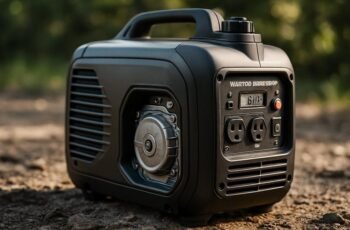
Let’s explore how inverter generators achieve their stable and clean power output through a sophisticated multi-stage electrical process. Unlike traditional generators, these units convert AC to DC and then back to optimized AC, ensuring consistent voltage and frequency. Understanding this transformation sheds light on why inverter technology is preferred for sensitive electronics and efficient operation. But what exactly happens inside these devices to make this possible?
Key Takeaways
- Inverter generators convert mechanical energy to AC power, then to DC, and back to clean, stable AC output using advanced circuitry.
- The AC power is first rectified to DC for voltage stabilization and consistent current flow.
- A microprocessor-controlled inverter switches DC back to a pure, stable AC waveform with regulated voltage and frequency.
- This multi-step conversion ensures smooth power output, ideal for sensitive electronics requiring consistent voltage and frequency.
- Engine speed adjusts to load demand, optimizing fuel efficiency and reducing noise compared to traditional generators.
What Is an Inverter Generator and How Does It Differ?
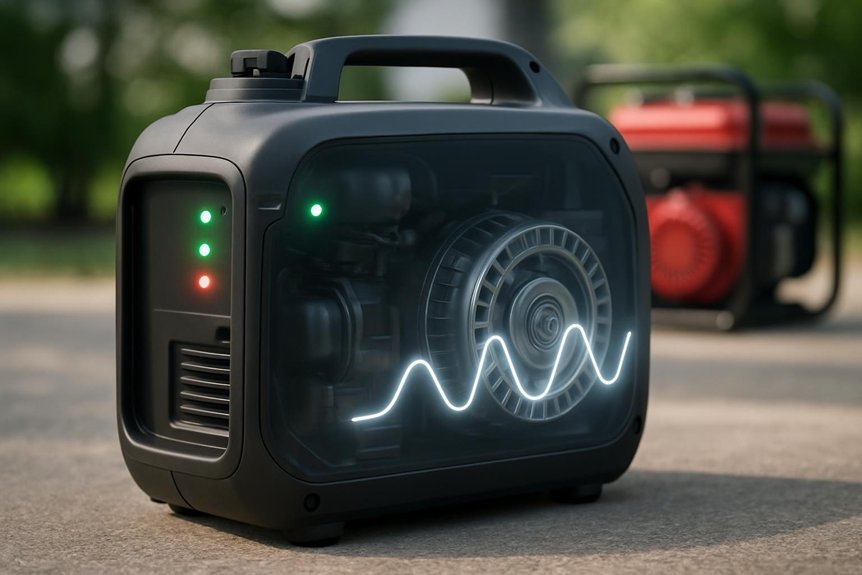
An inverter generator is a compact power device that converts raw mechanical energy into stable, clean electrical output using advanced electronic circuitry. Unlike conventional generators that produce raw AC power directly, inverter generators first generate AC power, then convert it to DC, and finally invert it back to a refined AC waveform. This process guarantees consistent voltage and frequency, ideal for sensitive electronics. We appreciate how its design optimizes portable power delivery by reducing size and noise levels, making it highly practical for various applications. Additionally, inverter generators enhance fuel efficiency by adjusting engine speed based on load demand, avoiding unnecessary fuel consumption. Understanding these distinctions helps us recognize why inverter generators represent a significant advancement in reliable, efficient portable power solutions.
How Inverter Generators Convert AC to DC and Back
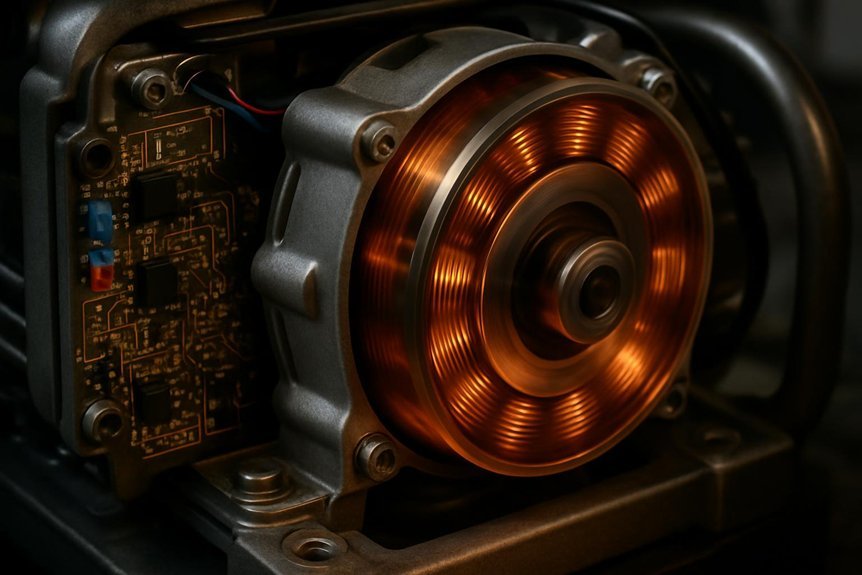
The conversion process inside inverter generators hinges on sophisticated power electronics that transform alternating current (AC) into direct current (DC) before inverting it back to a controlled AC output. This two-step approach improves waveform purity and enhances voltage regulation. Initially, AC conversion occurs as the generator produces raw AC power. Then DC rectification circuits convert this AC into DC, stabilizing the current. Finally, advanced inverters employ precise circuit design to switch the DC back into clean, stable AC tailored for sensitive electronics. Key factors influencing performance include:
- AC Conversion techniques for initial power capture
- DC Rectification methods ensuring steady current flow
- Waveform Purity optimization to minimize distortion
- Voltage Regulation for consistent output
- Efficiency Factors embedded in circuit design for energy savings
Understanding these elements is essential to grasp how inverter generators achieve superior power quality.
Why Stable Power Output Matters for Sensitive Electronics
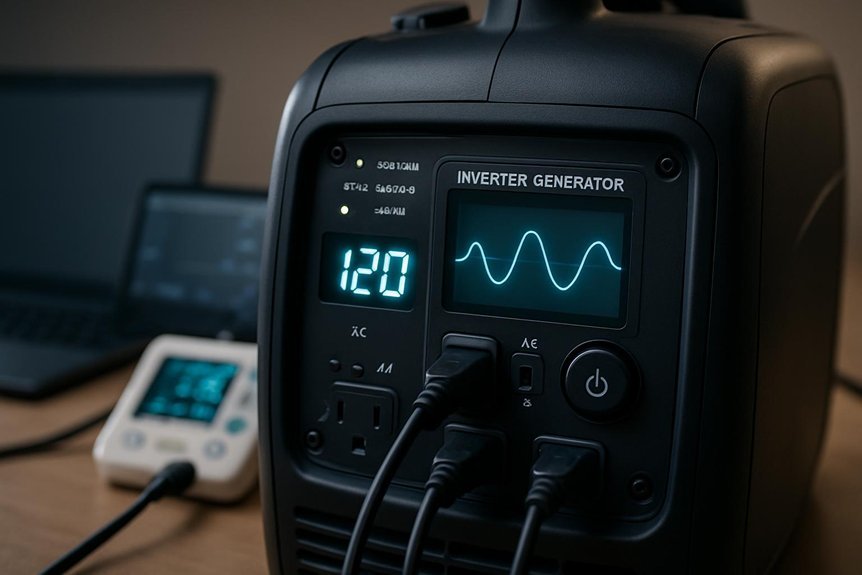
Because sensitive electronics rely on consistent voltage and frequency, unstable power output can cause malfunctions, reduced lifespan, or data loss. Maintaining high power quality through precise voltage regulation is vital to protect these devices from voltage sags, spikes, and frequency fluctuations. Effective load management guarantees the inverter generator adapts to varying demands without compromising output stability. This stability directly impacts electronic safety by preventing overheating and component stress caused by erratic power supply. Without consistent voltage and frequency, sensitive circuits can reset, corrupt data, or suffer irreversible damage. As a result, inverter generators must deliver filtered, stable output to safeguard performance and longevity. Understanding why stable power output matters helps us appreciate the critical role of inverter technology in powering modern electronics reliably and efficiently.
Key Components Inside an Inverter Generator Explained
While understanding stable power output is essential, grasping the key components inside an inverter generator helps us see how that stability is achieved. Inverter technology relies on an intricate system that converts raw mechanical energy into clean, consistent electrical power. The main parts work together to regulate frequency and voltage precisely.
Key components include:
- Engine: Drives the generator, converting fuel into mechanical energy.
- Alternator: Produces AC power from mechanical energy.
- Rectifier: Converts AC to DC for stable processing.
- Inverter Module: Converts DC back to clean AC with controlled frequency.
- Microprocessor Controller: Manages output and monitors performance for efficiency.
Advantages of Inverter Generators Over Traditional Models
Although traditional generators have served us well for decades, inverter generators offer distinct advantages that address many of their limitations. Primarily, inverter generators optimize fuel efficiency by adjusting engine speed to the electrical load, unlike traditional models that run at constant RPM. This dynamic adjustment reduces fuel consumption considerably. Additionally, inverter technology produces cleaner, more stable power with consistent voltage and frequency, protecting sensitive electronics better. Another key benefit is noise reduction; inverter generators operate at lower speeds and incorporate advanced mufflers, resulting in quieter performance, which is essential in residential or recreational settings. Their compact design and lighter weight further enhance portability without sacrificing output quality. Collectively, these factors make inverter generators a superior choice for users demanding efficient, quiet, and reliable power generation.
Common Uses and How to Choose the Right Inverter Generator
Inverter generators serve a wide range of applications, from outdoor recreational activities to critical backup power for sensitive electronics. When selecting the right inverter generator, we focus on portable power capabilities and energy efficiency to match specific needs. Key considerations include:
- Power output capacity aligned with device requirements
- Fuel type and consumption rates for maximum energy efficiency
- Noise levels suitable for the intended environment
- Weight and size for ease of transport and storage
- Compatibility with sensitive electronics to prevent damage
Frequently Asked Questions
How Do I Maintain and Service an Inverter Generator?
We maintain inverter generators by regularly checking oil, air filters, and spark plugs to guarantee fuel efficiency. Following maintenance tips like timely oil changes and cleaning components prevents performance loss and extends the generator’s lifespan effectively.
What Is the Typical Lifespan of an Inverter Generator?
We all wish inverter generators lasted forever, right? Realistically, their lifespan hinges on factors like usage frequency, maintenance quality, and environmental conditions. Typically, they endure 2000–4000 hours before efficiency and reliability start to decline.
Can Inverter Generators Run on Alternative Fuels?
Yes, we can run inverter generators on alternative fuel types like propane or natural gas, but we must consider inverter generator efficiency, as some fuels may reduce performance or require specific modifications for ideal operation and longevity.
How Loud Are Inverter Generators Compared to Regular Ones?
Wondering how noise levels stack up? We find inverter generators produce considerably lower noise levels than regular ones due to advanced sound dampening and efficient engine technology, making the sound comparison favor quieter, more user-friendly operation.
Are Inverter Generators Safe to Use Indoors?
We don’t recommend using inverter generators indoors due to indoor safety risks. Proper ventilation requirements are essential to prevent carbon monoxide buildup, so always operate them outdoors or in well-ventilated areas to guarantee safe usage.
Conclusion
As we’ve seen, inverter generators cleverly convert AC to DC and back, ensuring stable, clean power ideal for sensitive electronics. While some might assume traditional generators are sufficient, the multi-step conversion truly enhances performance and efficiency. By understanding these principles, we can confidently choose inverter generators for reliable, precise energy output. This technology’s advantages in fuel economy and noise reduction aren’t just claims—they’re backed by the inverter’s sophisticated power management process.