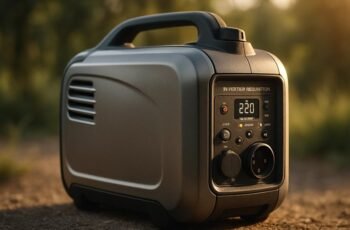
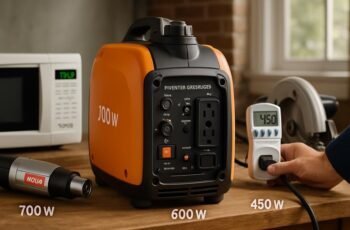
Did you know inverter generators can reduce fuel consumption by up to 30% compared to traditional models? This efficiency stems from their unique ability to produce stable, low-distortion power through advanced electronic conversion processes. Understanding how this technology works not only highlights their benefits but also reveals why they’re increasingly preferred for sensitive electronics and varied applications. Let’s explore what sets inverter generators apart and why that matters.
Key Takeaways
- Inverter generators use a two-stage power conversion process to produce stable, clean AC electricity with controlled frequency and voltage.
- They adjust engine speed dynamically based on load demand, enhancing fuel efficiency and reducing noise levels.
- Advanced electronics minimize harmonic distortion and maintain consistent power quality suitable for sensitive devices.
- Compared to traditional generators, inverter models are more portable, quieter, and require less maintenance.
- Choosing the right inverter generator involves assessing power needs, noise levels, fuel type, and runtime for optimal performance.
What Is an Inverter Generator and How Does It Work?
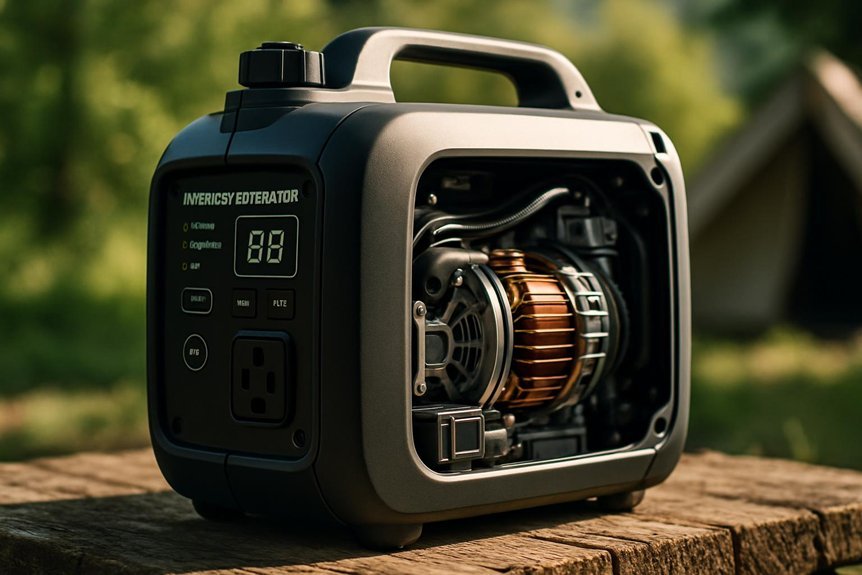
Although traditional generators produce electricity by directly converting mechanical energy into alternating current, inverter generators take a more complex approach to deliver cleaner, more stable power. We use inverter technology to first convert the raw AC power into direct current (DC). This step isolates the power from fluctuations inherent in mechanical rotation speed. Then, sophisticated electronics perform a second power conversion, transforming the DC back into AC with tightly controlled frequency and voltage. This dual-stage power conversion allows us to regulate output precisely, ensuring consistent power quality regardless of engine speed variations. By integrating power conversion with microprocessor controls, inverter generators adapt dynamically to load demands, optimizing efficiency and performance. This approach distinguishes inverter generators from conventional models through enhanced control over electrical output parameters.
Why Inverter Generators Produce Cleaner Power
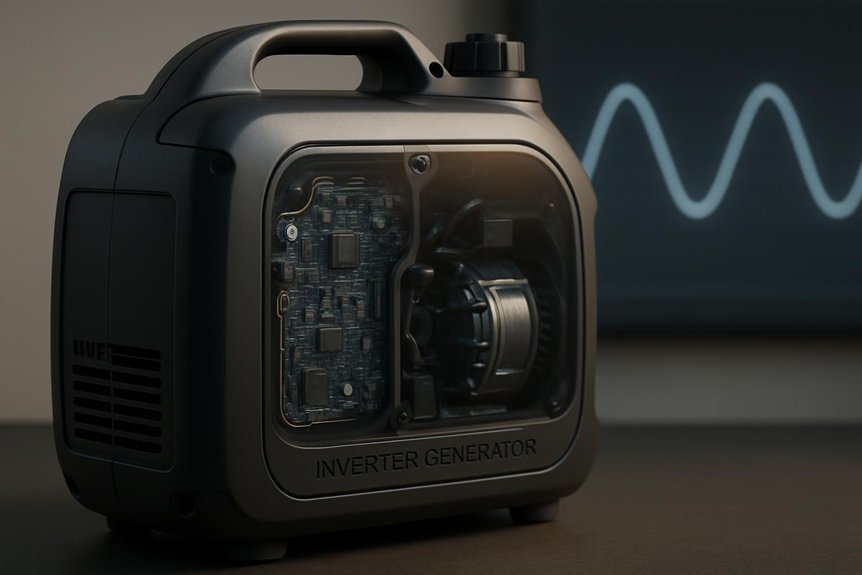
Because inverter generators regulate power through advanced electronic controls rather than relying solely on mechanical speed, they produce considerably cleaner electricity. This precision control guarantees consistent clean energy output with minimal distortion. The inverter’s ability to convert raw power into stable, usable current enhances power stability, critical for sensitive electronics.
Key reasons inverter generators deliver cleaner power include:
Key reasons inverter generators deliver cleaner power include advanced controls ensuring stable, low-distortion electricity output.
- Pulse Width Modulation (PWM) control for voltage regulation
- Real-time frequency adjustment for consistent output
- Reduction of harmonic distortion below industry thresholds
- Synchronization of engine speed with load demand
- Integration of microprocessor-based feedback loops
Together, these factors maintain a steady sine wave output, reducing electrical noise and providing reliable, clean energy suitable for delicate equipment and applications demanding power stability.
Benefits of Using Inverter Generators Over Traditional Models
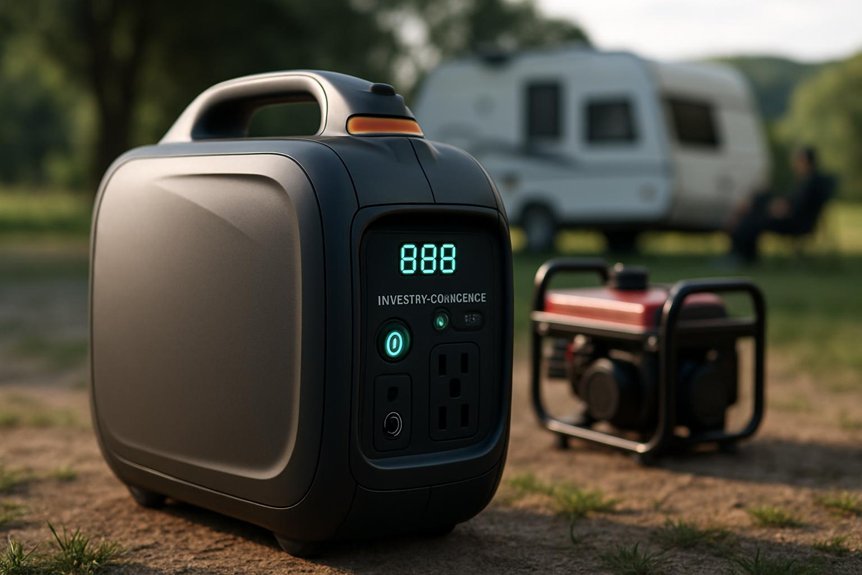
Let’s examine how inverter generators outperform traditional models through enhanced fuel efficiency, quieter operation, and improved power quality. These advantages directly impact both performance and user experience in critical ways. Understanding these benefits helps us make informed decisions about power generation technology.
Enhanced Fuel Efficiency
When we compare inverter generators to traditional models, we notice a significant improvement in fuel efficiency driven by advanced engine management systems. These systems adjust engine speed based on load, optimizing fuel consumption across various fuel types. This precision results in notable cost savings and eco benefits, especially with higher usage frequency. Compared to traditional generators, inverter models also demand less frequent maintenance, contributing to long-term value.
Key factors influencing enhanced fuel efficiency include:
- Variable engine speed tailored to power demand
- Compatibility with multiple fuel types for flexibility
- Reduced fuel consumption lowering operational costs
- Less frequent maintenance due to smoother operation
- Portability options supporting efficient transport and deployment
When we analyze brand comparison, inverter generators consistently outperform traditional ones in energy conservation without sacrificing reliability.
Quieter Operation Levels
Alongside improved fuel efficiency, inverter generators deliver a significant reduction in noise levels compared to traditional models. This noise reduction results from advanced engineering techniques, including optimized engine speed control and enhanced sound insulation materials integrated into the generator housing. Unlike conventional generators that run at constant high RPMs, inverter generators adjust engine speed based on load demand, minimizing unnecessary noise output. Additionally, sound insulation layers absorb and dampen vibrations, further lowering operational noise. This combination not only creates a quieter environment but also reduces noise pollution, making inverter generators ideal for residential areas, campsites, and events where noise sensitivity matters. By prioritizing noise reduction through both mechanical refinement and sound insulation, inverter generators provide a distinct operational advantage over traditional models in maintaining a peaceful and functional power source.
Improved Power Quality
Although traditional generators provide basic power output, inverter generators deliver markedly improved power quality that suits sensitive electronics and modern devices. Their advanced design guarantees consistent power stability and precise voltage regulation, minimizing fluctuations that can damage equipment. By converting raw power into clean, sine-wave electricity, inverter generators maintain peak performance across various loads.
Key benefits include:
- Enhanced voltage regulation for steady output
- Reduced harmonic distortion protecting sensitive devices
- Stable frequency control supporting modern electronics
- Adaptive engine speed maximizing efficiency and power quality
- Lower total harmonic distortion (THD) for cleaner power
This improved power quality not only safeguards our devices but also extends their lifespan, making inverter generators ideal for critical applications requiring reliable, high-quality electricity.
Who Should Consider Buying an Inverter Generator?
Why should we consider investing in an inverter generator? We should evaluate our specific power requirements, such as running sensitive home appliances or meeting moderate camping needs. Those seeking reliable emergency backup will benefit from the stable, clean power inverter generators provide. Portability options suit outdoor enthusiasts who prioritize lightweight and compact designs, while noise tolerance is critical for residential areas or campgrounds. Additionally, we must analyze fuel type efficiency—gasoline, propane, or dual-fuel models—to align with availability and environmental preferences. Budget considerations inevitably influence the decision; inverter generators often come at a higher upfront cost but offer long-term value through fuel efficiency and quieter operation. Ultimately, if our usage scenario demands clean, portable, and quiet power with manageable fuel consumption, investing in an inverter generator makes technical and practical sense.
How to Choose the Right Inverter Generator for Your Needs
How do we determine the best inverter generator for our specific needs? First, we analyze wattage requirements to guarantee the generator can handle peak and running loads without overloading. Next, we evaluate portability factors like weight and size for easy transport. We also consider noise levels, fuel efficiency, and runtime to maximize operational convenience.
Key considerations include:
Key considerations include wattage, size, noise, fuel efficiency, and runtime for choosing the best inverter generator.
- Accurate calculation of total wattage needed
- Physical dimensions and weight for portability
- Noise output measured in decibels (dB)
- Fuel type and consumption rate
- Runtime per tank under typical load
Common Uses and Applications for Inverter Generators
Where do inverter generators fit into our daily and professional lives? They provide reliable, efficient power for diverse applications. We rely on them to run camping equipment, ensuring consistent energy in remote locations. For tailgating power, inverter generators deliver quiet, stable electricity, preserving sound quality and appliance safety. During outdoor events and recreational activities, they enable uninterrupted power without noise disruption. In RV travel, their compact design and fuel efficiency make them indispensable. At home, inverter generators offer emergency backup, powering essential home appliances during outages. On job sites, they support job site tools, maintaining productivity where grid power is unavailable. Their ability to produce clean, stable power makes inverter generators versatile assets across multiple scenarios requiring portable, dependable electricity.
Tips for Maintaining and Getting the Most From Your Inverter Generator
To guarantee peak performance and longevity of our inverter generators, we need to prioritize regular oil changes, as they prevent engine wear and maintain efficiency. Proper storage techniques are essential to avoid fuel degradation and corrosion during periods of inactivity. Additionally, effective load management helps us balance power output and avoid overloading, maximizing the generator’s reliability.
Regular Oil Changes
Although inverter generators are designed for efficiency and durability, regular oil changes play an essential role in maintaining their ideal performance. Selecting the correct oil type and adhering to the recommended change frequency are critical for preventing engine wear and ensuring consistent power output. Let’s focus on key factors for effective oil maintenance:
- Use manufacturer-specified oil types, often SAE 10W-30 or synthetic blends.
- Follow the change frequency guidelines, typically every 50-100 hours of operation.
- Monitor oil level before each use to avoid low lubrication risks.
- Replace oil more frequently under heavy loads or extreme temperatures.
- Proper disposal of used oil prevents environmental damage.
Proper Storage Techniques
Proper storage techniques are crucial for preserving the functionality and longevity of our inverter generators. To enhance storage conditions, we must guarantee temperature regulation by keeping the generator in a cool, dry environment with stable temperatures. Humidity control is important to prevent corrosion and electrical issues; using dehumidifiers or silica packs can help. Battery maintenance involves disconnecting and periodically charging the battery to avoid degradation. Protective covers shield against dust and physical damage but must allow for adequate ventilation needs to prevent moisture buildup. Fuel stabilization is essential when preparing for long-term storage—adding stabilizers prevents fuel breakdown and carburetor clogging. By rigorously managing these factors, we extend our inverter generator’s operational life and reliability, ensuring it performs effectively when needed.
Load Management Tips
When we manage the load on our inverter generators carefully, we maximize efficiency and prevent unnecessary wear. Effective load management hinges on accurate wattage calculation to avoid exceeding capacity. We prioritize power allocation, ensuring essential devices run first, which supports energy efficiency and operational stability. Load balancing reduces strain by distributing power demand evenly over time. To optimize performance, we follow these key tips:
- Calculate total wattage of connected devices before operation
- Prioritize critical appliances using power prioritization strategies
- Avoid simultaneous startup of high-wattage equipment to prevent overload
- Monitor real-time power consumption to maintain balanced loads
- Schedule non-essential devices during off-peak times to enhance energy efficiency
Frequently Asked Questions
Can Inverter Generators Run Sensitive Medical Equipment Safely?
Yes, we can confidently say inverter generator reliability guarantees medical equipment compatibility by providing stable, clean power. This minimizes voltage fluctuations, protecting sensitive devices and assuring safe operation for critical medical equipment during power outages or remote use.
How Loud Are Inverter Generators Compared to Traditional Ones?
Like comparing a whisper to a shout, inverter generators have markedly lower noise levels than traditional ones. Our sound comparison shows they run quieter, producing less disturbance, ideal for sensitive environments requiring minimal acoustic impact.
What Fuels Are Compatible With Inverter Generators?
We understand inverter generators typically support gasoline, propane, and natural gas as fuel types. Choosing the right fuel enhances generator efficiency, ensuring peak performance and longer engine life while maintaining cleaner energy output and reduced emissions.
Are Inverter Generators Safe to Use Indoors?
We don’t recommend using inverter generators indoors due to carbon monoxide risks. Proper ventilation requirements are critical to prevent toxic buildup. Always operate them outdoors or in well-ventilated areas to guarantee safety and compliance with health standards.
Can Inverter Generators Be Connected to Solar Power Systems?
About 60% of off-grid systems use inverters with solar compatibility. We can connect inverter generators to solar setups, leveraging inverter efficiency to seamlessly manage power conversion and maintain stable energy flow in hybrid configurations.
Conclusion
As we’ve seen, inverter generators are the modern Prometheus of power—harnessing advanced technology to deliver clean, efficient energy where and when we need it. By choosing the right model and maintaining it well, we guarantee reliable performance that outshines traditional generators. Together, we can embrace this innovation, powering our lives with precision and confidence, no matter the challenge or environment. Let’s move forward, informed and empowered.