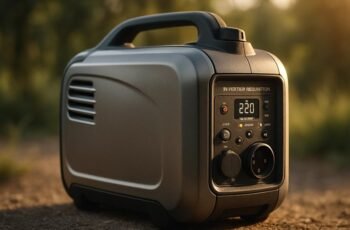
When choosing an inverter generator, we need to start by accurately evaluating our total power requirements, including both running and surge wattage. It’s critical to identify features that guarantee stable, clean electricity, especially if we plan to run sensitive electronics. Noise levels and portability also play significant roles, as does fuel efficiency tied to our preferred fuel type. But beyond specs, understanding durability and maintenance can make all the difference in long-term reliability.
Key Takeaways
- Calculate total wattage needs, including starting watts, to select a generator with slightly higher capacity than required.
- Choose inverter generators with microprocessor-controlled output for stable, clean power ideal for sensitive electronics.
- Evaluate noise levels, weight, and portability features to ensure comfortable use and compliance with local regulations.
- Consider fuel type and rated consumption to balance fuel efficiency and runtime based on your usage needs.
- Prioritize durability with corrosion-resistant materials and easy maintenance access to ensure long-lasting performance.
How to Match an Inverter Generator to Your Power Needs

Before selecting an inverter generator, we need to accurately assess our power requirements by identifying the total wattage of the devices we intend to run simultaneously. This power calculation is essential to make sure the generator can handle the combined load without overloading. We start by listing each device’s wattage requirements, including starting watts for motors or compressors, which are higher than running watts. Summing these values gives us the total wattage requirement. To maintain efficiency and avoid strain, we select an inverter generator with a capacity slightly above this total. This approach guarantees reliable performance and prevents power interruptions. Accurately matching wattage requirements through precise power calculation provides a foundation for making an informed inverter generator choice tailored to our specific energy demands.
What Features Make an Inverter Generator Stand Out
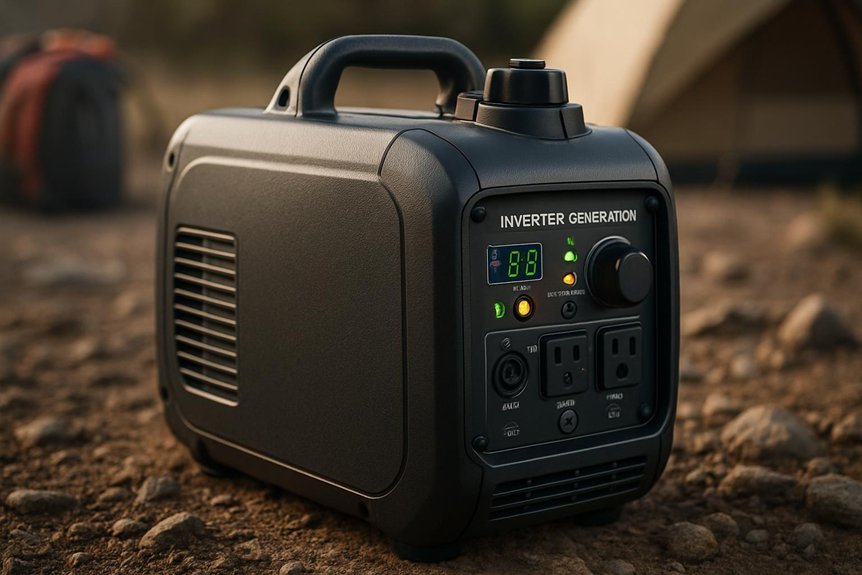
Now that we’ve established how to align an inverter generator’s capacity with our power demands, we can evaluate the specific features that distinguish one model from another. A key differentiator is the power output stability, which hinges on advanced technology like microprocessor-controlled inverters that provide clean, consistent electricity ideal for sensitive electronics. Additionally, features such as parallel capability allow us to link multiple units, scaling total power output efficiently. The integration of smart sensors and automatic throttle control optimizes fuel consumption and reduces emissions, enhancing operational efficiency. We also consider the quality of the engine and inverter components, as durable materials and precision engineering directly impact reliability and lifespan. By focusing on these advanced technological aspects, we can select an inverter generator that delivers superior performance tailored to our specific needs.
How to Evaluate Noise Levels and Portability
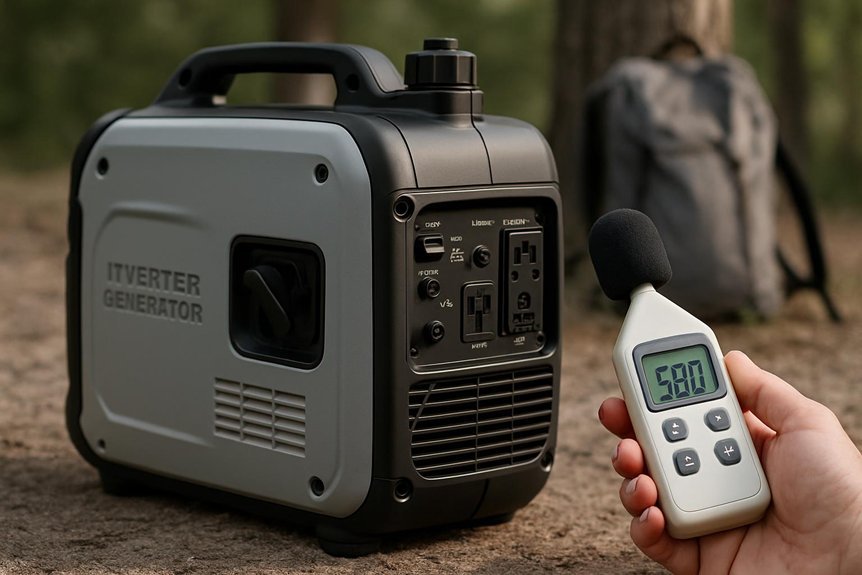
When evaluating inverter generators, we need to focus on decibel ratings to understand their noise output accurately. Analyzing weight alongside handle design helps us determine how easily we can transport the unit. Additionally, compactness and storage options play a critical role in ensuring the generator fits our space and mobility requirements.
Measuring Decibel Ratings
How do we accurately assess the noise output of an inverter generator to balance performance with portability? We start by measuring decibel ratings under standardized conditions, typically at a 7-meter distance, to guarantee consistency. A precise decibel comparison between models helps us quantify noise levels objectively. We must also consider local noise regulations, which often set maximum allowable decibel limits for residential or recreational use. Understanding these constraints guides us in selecting generators that comply without sacrificing power output. When analyzing decibel data, we focus on both peak and average sound levels, as transient spikes can affect comfort and compliance. By integrating these measurements with performance metrics, we make informed decisions that prioritize quieter operation while maintaining portability and efficiency.
Weight and Handle Design
Balancing noise levels with portability requires us to evaluate the generator’s weight and handle design carefully. A heavier generator often reduces noise due to more robust components but sacrifices portability. Conversely, lighter models improve transport but may compromise stability. We must assess handle comfort and weight distribution, as these factors directly impact ease of movement and user fatigue during transport.
| Factor | Importance |
|---|---|
| Weight (lbs) | Affects portability and noise |
| Handle Comfort | Reduces user strain |
| Weight Distribution | Guarantees balanced carrying |
| Material Durability | Influences longevity and grip |
This analytical approach helps us select an inverter generator that optimizes noise control without undermining portability.
Compactness and Storage Options
Compactness plays a critical role in evaluating inverter generators for noise control and portability. A smaller, well-designed unit typically produces less noise due to reduced vibration and efficient engine enclosure. When reviewing generators, we must balance compactness with power output, ensuring the unit meets our energy needs without excessive bulk. Additionally, compact models often integrate advanced storage solutions, allowing for easier transport and efficient space utilization. We should consider how the generator fits into our storage environment—whether it can be securely stowed in tight spaces or carried conveniently during transport. By focusing on these factors, we can select an inverter generator that delivers optimal noise performance and portability without compromising on power output or storage practicality.
Why Fuel Efficiency Matters and Which Types to Choose
Since fuel cost directly impacts both operating expenses and environmental footprint, understanding fuel efficiency becomes essential when selecting an inverter generator. Different fuel types—gasoline, propane, diesel, and natural gas—offer varied energy densities and combustion characteristics that influence generator efficiency. Gasoline models are common but typically less fuel-efficient, while propane and natural gas tend to burn cleaner and can improve efficiency over extended use. Diesel generators excel in fuel economy and torque but are often heavier and noisier. We should analyze the generator’s rated fuel consumption at various loads, focusing on those with inverter technology that modulates engine speed to match demand, optimizing fuel use. By prioritizing fuel-efficient models compatible with preferred fuel types, we minimize costs and environmental impact without sacrificing performance.
How to Consider Durability and Maintenance Requirements
Although fuel efficiency is essential, we must also evaluate the durability and maintenance requirements of inverter generators to guarantee long-term reliability and cost-effectiveness. Durability testing assesses material strength and component resilience under stress, which helps us predict generator lifespan. Additionally, understanding maintenance tips such as regular oil changes, air filter cleaning, and spark plug inspection guarantees peak performance and prevents costly repairs.
| Factor | Consideration |
|---|---|
| Durability Testing | Check for rigorous lab and field tests |
| Material Quality | Prefer corrosion-resistant metals |
| Maintenance Tips | Follow manufacturer’s scheduled upkeep |
| Ease of Access | Easy access to components for service |
Where to Find the Best Deals on Inverter Generators
Where can we find the best deals on inverter generators without compromising quality? We should first explore online retailers, which often feature competitive pricing and detailed customer reviews to gauge product reliability. Seasonal sales and clearance events provide strategic opportunities to purchase high-quality units at reduced costs. Local dealerships offer the advantage of warranty options and immediate technical support, which can be critical for long-term maintenance. Utilizing comparison sites allows us to analyze specifications, prices, and bundle deals efficiently, guaranteeing we select the best value. By integrating these resources—online platforms, in-person outlets, and timely promotions—we can optimize our purchase decision, balancing cost savings with performance and service guarantees. This analytical approach guarantees we secure an inverter generator that meets both our technical and financial criteria.
Frequently Asked Questions
Can Inverter Generators Be Used Safely Indoors?
We don’t recommend using inverter generators indoors due to indoor safety risks. They require strict ventilation requirements to prevent carbon monoxide buildup. Instead, we suggest operating them outdoors or in well-ventilated spaces to guarantee safe use.
How Do Inverter Generators Affect Sensitive Electronics?
When it comes to sensitive electronics, inverter generators really are a cut above. They deliver stable power quality with low harmonic distortion and reduced noise levels, minimizing risks of damage and interference—perfect for delicate, precision devices.
What Is the Typical Lifespan of an Inverter Generator?
We typically expect inverter generators to last 2,000 to 3,000 hours. Following maintenance tips and optimizing fuel efficiency help extend lifespan, ensuring consistent performance and minimizing wear on internal components over time.
Are Inverter Generators Compatible With Solar Power Systems?
It is understood that over 30% of homeowners use solar power, and yes, inverter generators offer solar compatibility. Their advanced power efficiency allows seamless integration, ensuring consistent energy output and minimizing losses when paired with solar power systems for reliable backup power.
Can I Connect Multiple Inverter Generators Together?
Yes, we can connect multiple inverter generators using parallel operation, but we must carefully consider generator sizing to guarantee compatibility and balanced load sharing, preventing overload and maximizing efficiency. Proper synchronization is essential for safe operation.
Conclusion
When we chose our first inverter generator, we quickly learned that matching power needs is like fitting the right key to a lock—too much or too little won’t open the door smoothly. By prioritizing stable output, low noise, fuel efficiency, and durability, we guaranteed reliable performance for sensitive electronics and extended use. Let’s apply this precision to your selection, turning complex specs into a seamless power solution tailored perfectly to your demands.