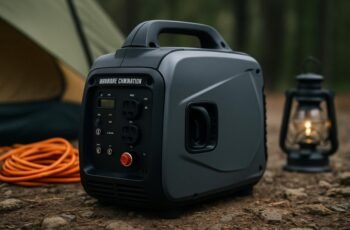
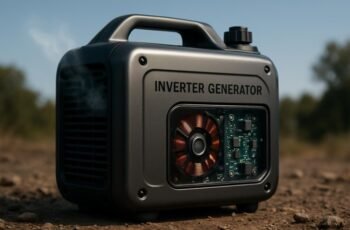
We understand some might think all inverter generators are fundamentally the same, but choosing the right one requires a careful analysis of power output, portability, noise, and protective features. It’s not just about picking the most powerful model; it’s about matching your specific needs while ensuring efficiency and safety. Understanding these nuances can make a significant difference in performance and convenience, especially when balancing home use with camping demands. Let’s explore what really matters when selecting your generator.
Key Takeaways
- Choose an inverter generator with a rated output 10-20% higher than your total device wattage to ensure reliable power supply.
- Select models between 1,000 to 3,000 watts balancing power needs with portability, ideally weighing under 50 pounds for easy transport.
- Prioritize low-noise generators using sound insulation and advanced engineering for quieter operation during home or outdoor use.
- Opt for generators with voltage regulation, surge protection, and automatic throttle control to safeguard electronics and improve fuel efficiency.
- Compare fuel types and runtimes, considering gasoline for availability, propane for cleaner combustion, and dual-fuel options for flexibility.
How to Choose the Right Power Output for Your Inverter Generator
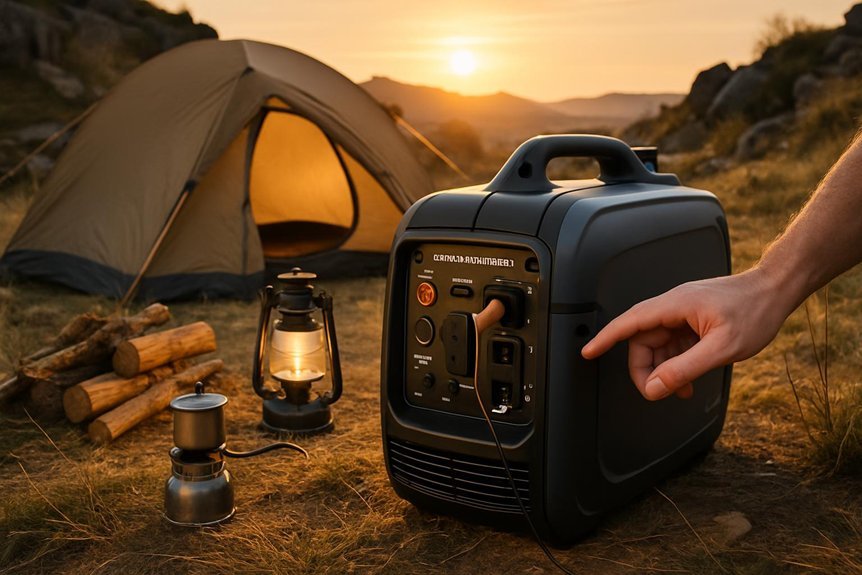
When selecting the right power output for an inverter generator, we must first analyze the total wattage of all devices we plan to run simultaneously. This involves calculating the combined power consumption by summing each appliance’s starting and running wattage needs. Since some devices require higher surge wattage at startup, we must factor in these peak demands to avoid under-sizing the generator. Once we determine the total wattage needs, selecting an inverter generator with a rated output that exceeds this value by at least 10-20% guarantees reliable performance without overloading. This systematic approach helps us match the generator’s capacity precisely to our power consumption profile, avoiding inefficiencies and assuring stable power delivery for all connected equipment.
What Size and Weight Work Best for Home and Camping Use
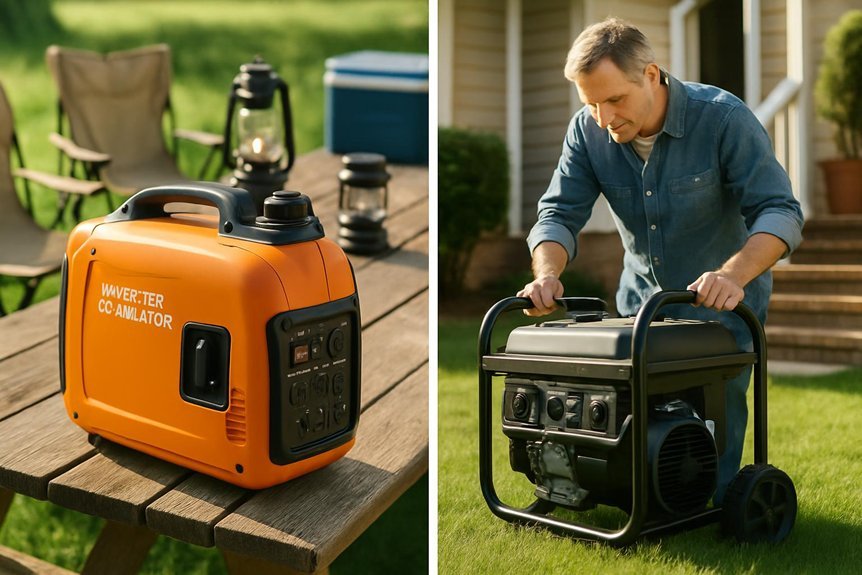
Choosing the appropriate size and weight for an inverter generator hinges on balancing portability with power capacity, especially for home and camping applications. We must evaluate portable options that deliver sufficient wattage without becoming cumbersome. Typically, generators ranging from 1,000 to 3,000 watts strike this balance effectively, providing enough power for essential devices while remaining manageable in weight. Weight considerations are vital; generators exceeding 50 pounds may hinder mobility, reducing convenience during transport and setup. Compact models often incorporate ergonomic handles or wheels to offset moderate weight, enhancing usability. By analyzing both physical dimensions and output requirements, we can select an inverter generator that meets power needs without compromising ease of movement, ensuring peak performance across diverse environments.
Why Low Noise Levels Matter for Your Inverter Generator
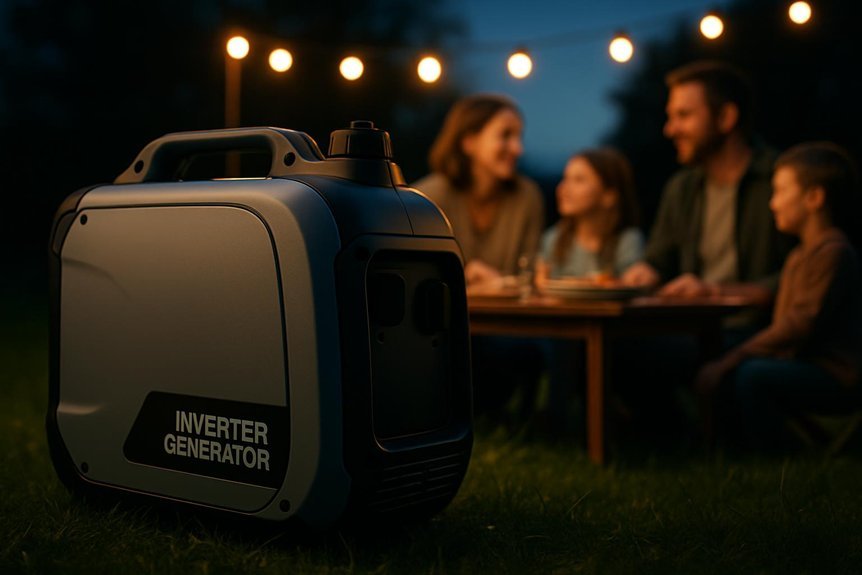
We need to prioritize low noise levels because quiet operation enhances comfort and usability in both residential and outdoor settings. Excessive noise from generators not only disrupts our activities but also negatively affects local wildlife and community environments. Understanding these impacts helps us select inverter generators that balance power with minimal acoustic disturbance.
Quiet Operation Benefits
Although inverter generators provide reliable power, their quiet operation is a defining advantage that greatly enhances user experience. Effective noise reduction is achieved through advanced engineering techniques, such as optimized engine speed control and precision sound insulation materials. These features minimize mechanical and exhaust noise without compromising performance. For home or camping use, quieter generators reduce auditory disturbances, allowing us to maintain a peaceful environment. Sound insulation components absorb and deflect sound waves, ensuring that operational noise stays within acceptable decibel levels. This technical focus on noise management not only improves comfort but also facilitates extended generator use during sensitive periods, like nighttime. Prioritizing quiet operation means selecting models designed with thorough noise control strategies, enhancing convenience and user satisfaction in diverse settings.
Noise Impact On Environment
Since inverter generators operate in diverse environments, their noise levels directly affect surrounding ecosystems and communities. Low noise emissions reduce disturbances to wildlife, preserving natural behaviors and habitats, which is a vital aspect of minimizing environmental impact. Additionally, adhering to strict noise regulations helps us avoid penalties and guarantees our generators can be used in noise-sensitive areas like campsites and residential zones. By selecting models engineered for quiet operation, we mitigate sound pollution, promoting coexistence with the environment and enhancing user comfort. Understanding the relationship between sound output and environmental repercussions allows us to make informed decisions that align with sustainable practices. Ultimately, prioritizing low noise levels not only benefits the ecosystem but also complies with evolving regulatory standards, making it a significant factor in inverter generator selection.
Which Features Protect Your Electronics and Improve Efficiency
When selecting an inverter generator, understanding which features safeguard our electronics and boost operational efficiency is essential. Key protective and efficiency-enhancing elements include precise voltage regulation, surge protection, and automatic throttle control. Voltage regulation stabilizes output, preventing harmful fluctuations that could damage sensitive devices. Surge protection guards against sudden power spikes, preserving the longevity of plugged-in electronics. Automatic throttle control adjusts engine speed based on load, optimizing fuel consumption and minimizing noise. Together, these features guarantee consistent, clean power delivery while maximizing operational economy. Specifically, we should prioritize:
- Voltage regulation for steady output voltages.
- Surge protection mechanisms to absorb transient spikes.
- Automatic throttle control to enhance fuel efficiency.
How to Compare Fuel Types and Runtime for Different Needs
As we evaluate inverter generators, comparing fuel types and runtime becomes essential for matching performance to our specific requirements. Gasoline models offer widespread availability but often lower fuel efficiency and higher maintenance demands, such as carburetor cleaning. Propane units typically provide cleaner combustion, extending engine life and reducing maintenance needs, yet they may yield shorter runtimes due to lower energy density. Dual-fuel generators combine flexibility, allowing us to optimize fuel use based on availability and cost. When analyzing runtime, we should consider fuel tank capacity relative to consumption rates under various loads to guarantee uninterrupted power for our intended use. Factoring in fuel efficiency alongside maintenance tips helps us select a generator that balances operational cost with reliability, critical for both home backup and camping scenarios.
Where to Find Reliable Inverter Generators Within Your Budget
Understanding fuel types and runtime helps us narrow down the specifications we need in an inverter generator, but the next step involves locating reliable units that fit our budget. We should focus on trusted manufacturers known for quality and evaluate budget brands through detailed feature comparisons. Online reviews and customer feedback give us real-world insights, while warranty options indicate manufacturer confidence and post-purchase support. To maximize value, consider:
- Checking local retailers for hands-on assessment and potential seasonal sales
- Analyzing online platforms for extensive feature comparisons and community feedback
- Prioritizing units with robust warranty options for long-term reliability
Frequently Asked Questions
How Do Inverter Generators Handle Extreme Weather Conditions?
It is understood that inverter generators handle extreme weather conditions by offering weather resilience and high temperature tolerance. Their advanced cooling systems and sealed components protect internal parts, ensuring consistent performance despite rain, cold, or heat fluctuations.
Can Inverter Generators Be Connected to Solar Panels?
Yes, about 70% of inverter generators offer solar panel compatibility, enhancing inverter generator efficiency by integrating renewable energy. We analyze this synergy carefully, ensuring ideal power output and seamless energy management between solar inputs and the generator’s inverter system.
What Maintenance Is Required for Inverter Generators?
We perform regular oil changes and use fuel stabilization to maintain inverter generators. Checking air filters, spark plugs, and cleaning the unit guarantees peak performance and longevity, preventing fuel degradation and mechanical wear systematically.
Are Inverter Generators Safe to Use Indoors?
It is understood that indoor safety concerns arise, but inverter generators emit carbon monoxide, making them unsafe indoors without proper ventilation. Always operate them outside to prevent buildup, ensuring safe use and protecting everyone from carbon monoxide poisoning risks.
How Long Do Inverter Generators Typically Last?
We find inverter generators typically last 2,000 to 4,000 hours, depending on maintenance. Their fuel efficiency and consistent power output contribute to longevity, ensuring stable performance over extended use periods without significant wear or power loss.
Conclusion
When selecting an inverter generator, we must carefully match power output to our device needs, adding a safety margin for surges. For example, a family camping trip with lights, a mini-fridge, and phone chargers requires about 1500 watts; choosing a 1800-watt model guarantees reliability. Prioritizing portability under 50 pounds and low noise enhances comfort, while protective features safeguard electronics. By analyzing fuel types and runtime, we find the best balance of efficiency and budget for any situation.