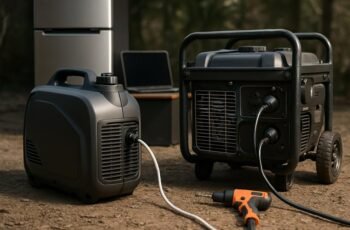
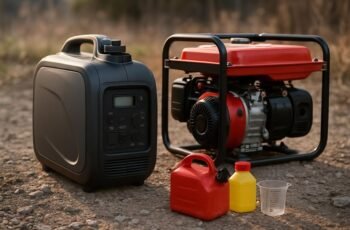
Choosing between an inverter generator and a solar generator for camping and off-grid trips can feel like a crossroads where power meets practicality. We all want reliable energy, but the path we take depends on factors like noise tolerance, fuel availability, and device requirements. Understanding how each option aligns with our outdoor needs can make all the difference. Let’s explore what sets these generators apart before making a decision that fits your adventure.
Key Takeaways
- Inverter generators provide stable, high-wattage power quickly, ideal for short trips with moderate energy needs.
- Solar generators operate silently, use renewable energy, and are best for longer, eco-friendly off-grid stays.
- Noise level is a major factor: inverter generators are louder, while solar generators ensure quiet outdoor experiences.
- Portability favors solar generators due to better weight distribution and no fuel requirements.
- Maintenance is simpler with solar generators, but inverter generators need regular fuel and engine care for reliability.
How Inverter Generators Deliver Power for Camping and Off-Grid Use
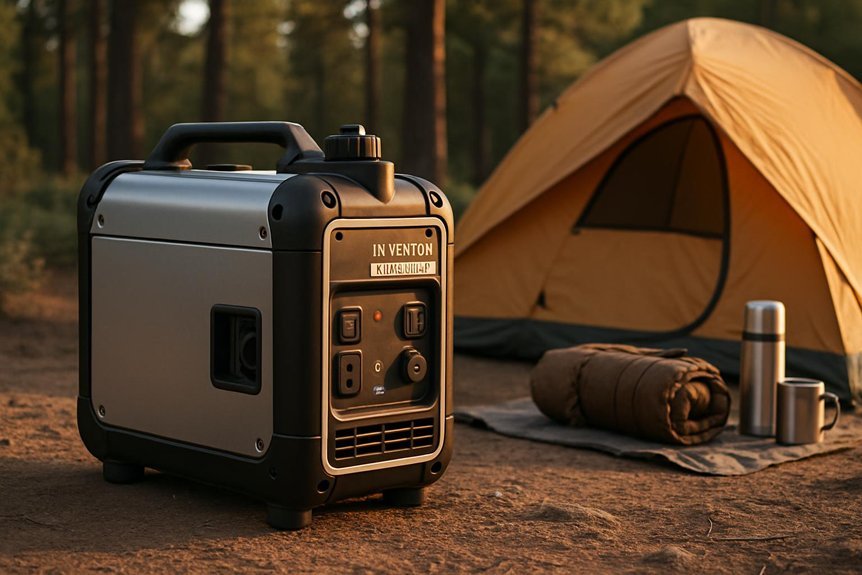
Although solar generators are gaining popularity, inverter generators remain a reliable choice for camping and off-grid power because they efficiently produce stable electricity on demand. We appreciate their power efficiency, which optimizes fuel consumption and extends runtime, making them practical for longer trips. These generators use advanced electronics to provide clean, consistent power suitable for sensitive devices like laptops and smartphones. One advantage we often consider is their flexible fuel options—running on gasoline, propane, or diesel—allowing us to choose what’s most accessible or convenient. This versatility means we’re less dependent on weather conditions compared to solar panels. When we need immediate, dependable power, inverter generators deliver, ensuring our camping experience stays comfortable and fully powered without interruptions.
What Makes Solar Generators Ideal for Quiet, Eco-Friendly Trips
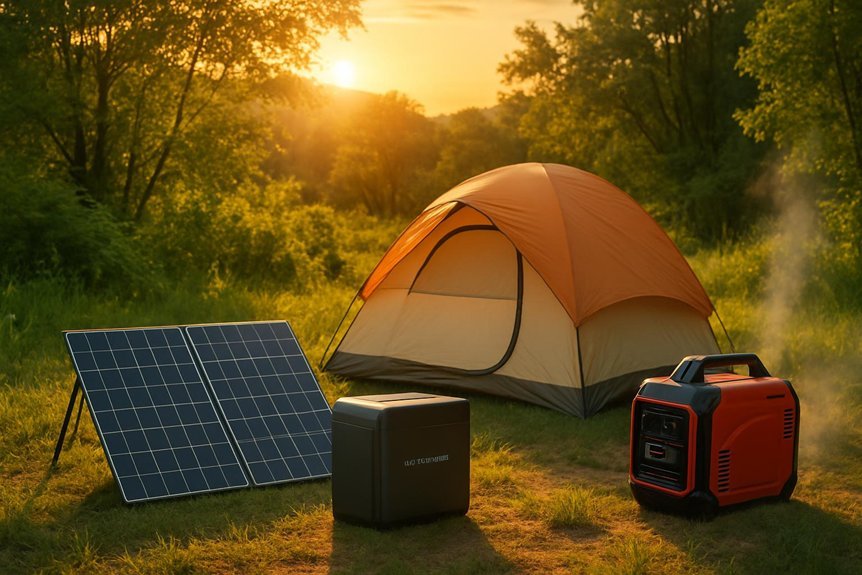
While inverter generators provide reliable and flexible power on demand, solar generators offer a different set of advantages that make them perfect for quiet, eco-friendly camping trips. Their operation is virtually silent, eliminating noise pollution and enhancing our outdoor experience. Plus, solar generators rely on renewable energy, reducing our environmental impact by cutting down on fossil fuel use and emissions. Thanks to advances in solar efficiency, modern solar panels capture sunlight more effectively, allowing us to harness energy even on partly cloudy days. This efficiency means we can power essential devices without the fumes or noise associated with gas-powered generators. By choosing solar generators, we embrace a sustainable way to enjoy off-grid adventures, preserving nature’s tranquility while staying powered up.
Comparing Runtime and Fuel Sources: Inverter vs Solar Generators
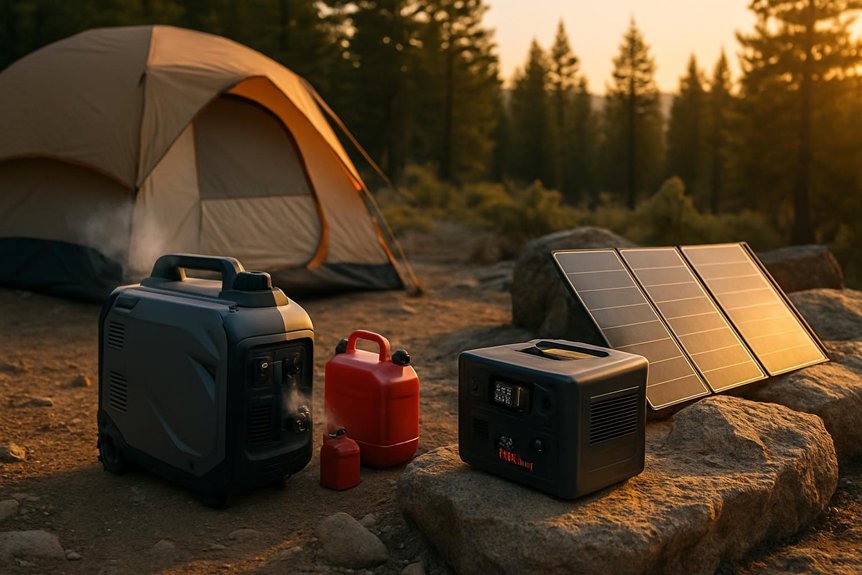
When we compare inverter and solar generators, understanding their runtime and fuel sources is essential for planning our camping trips. Inverter generators run on gasoline or propane, offering consistent power with a runtime that depends on fuel tank size and consumption rate. Their fuel efficiency varies, but they typically provide several hours of continuous use before refueling. Solar generators, on the other hand, rely on sunlight and built-in battery storage. Their runtime depends on battery capacity and sunlight availability, enabling quiet, fuel-free operation during the day and limited use at night. While inverter generators excel in quick refueling and long runtime during cloudy conditions, solar generators offer eco-friendly, maintenance-free power with no fuel costs. Our runtime comparison highlights that choosing the right generator depends on balancing fuel efficiency with trip duration and environment.
Handling Power Needs: Which Generator Supports Your Devices Better?
Let’s compare the power output of inverter and solar generators to see which one can handle your camping devices better. We’ll also look at the types of devices each generator supports and their compatibility options. Understanding these details will help us choose the right generator for our specific power needs.
Power Output Comparison
Although both inverter and solar generators serve the essential purpose of powering our devices during camping trips, their power output capabilities differ considerably. When comparing power capacity and output efficiency, inverter generators generally provide higher and more consistent power levels, making them ideal for running multiple or high-wattage devices simultaneously. Solar generators, on the other hand, depend on battery size and sunlight availability, which can limit their output capacity. Here’s what we’ve found:
- Inverter generators deliver stable power with surge capacity for starting motors.
- Solar generators offer quieter operation but lower peak power.
- Output efficiency in solar units hinges on solar panel quality and weather conditions.
Understanding these factors helps us choose the right generator to meet our specific power needs on the trail.
Device Compatibility Options
Power output differences between inverter and solar generators directly impact the range of devices they can support during our camping trips. Device compatibility relies heavily on matching voltage requirements and surge capacity. Inverter generators typically handle higher wattage devices like microwaves and power tools, while solar generators excel with low to moderate voltage needs such as phones and laptops.
| Device Type | Generator Compatibility |
|---|---|
| Smartphones | Solar & Inverter |
| Laptops | Solar & Inverter |
| Power Tools | Inverter only |
| Small Appliances | Both (check surge voltage) |
Understanding these compatibility options guarantees we select a generator that meets our specific power needs without risking device damage or insufficient power supply.
Portability and Noise Levels: What’s Easier to Carry and Use Outdoors?
How do inverter generators and solar generators compare when it comes to portability and noise levels during camping? Solar generators generally win on noise, producing no sound thanks to their quiet operation, while inverter generators, despite improved sound insulation, still emit noticeable noise. Portability depends heavily on weight distribution and design.
Consider these points:
- Solar generators often have better weight distribution, making them easier to carry for long distances.
- Inverter generators, though heavier, sometimes include handles or wheels to enhance mobility.
- Sound insulation in inverter models reduces but does not eliminate noise, which can disrupt a peaceful outdoor setting.
Maintenance and Reliability: Keeping Your Generator Ready on the Trail
Since staying prepared on the trail means more than just packing the right gear, we need to understand the maintenance demands and reliability of both inverter and solar generators. Generator upkeep involves regular cleaning procedures and performance checks to guarantee consistent power output. For inverter generators, fuel management is essential—using fresh fuel and stabilizers helps prevent engine issues during seasonal storage. Solar generators require less routine maintenance but benefit from cleaning solar panels to maximize efficiency. Reliability factors include battery health for solar units and engine condition for inverters. We should also familiarize ourselves with troubleshooting issues like fuel line clogs or battery drainage. By following practical maintenance tips and scheduling seasonal storage correctly, we can keep our generators ready and dependable throughout every camping and off-grid trip.
Choosing Between Inverter and Solar Generators Based on Your Trip Type
When choosing between inverter and solar generators, we first need to evaluate how long our trip will last and the total power we’ll require. Shorter trips with higher power demands might favor inverter generators, while longer stays with moderate needs often suit solar options better. Let’s break down how these factors influence our choice for different camping scenarios.
Trip Duration Considerations
Although both inverter and solar generators serve as reliable power sources, the length of our camping trip plays a crucial role in deciding which one suits our needs best. When evaluating camping duration, power planning becomes critical to guarantee continuous energy supply without hassle.
For short trips, inverter generators shine due to their ability to provide immediate, high-power output without relying on weather. For extended stays, solar generators offer sustainable power but require adequate sunlight and storage capacity. Here are key points to evaluate:
- Short duration: Opt for inverter generators for quick, reliable power.
- Extended duration: Solar generators minimize fuel needs but demand sunlight and battery management.
- Hybrid approach: Combining both can optimize power availability regardless of trip length.
Power Needs Assessment
Evaluating our power needs accurately is essential to choosing between an inverter generator and a solar generator for camping. First, we should list all devices we plan to power and calculate their total power consumption in watts. This helps us understand the peak load and continuous energy demands. For short trips with moderate power use, an inverter generator may be more practical due to its ability to deliver consistent power quickly. However, if we prioritize energy efficiency and quieter operation for longer, off-grid stays, a solar generator paired with battery storage can meet our needs sustainably. By analyzing how much energy we consume daily and the duration of our trip, we can select the generator type best aligned with our camping style and environmental goals.
Frequently Asked Questions
Can Inverter or Solar Generators Be Used Simultaneously for More Power?
Yes, we can use inverter and solar generators simultaneously to increase our power source. Combining them boosts energy efficiency, especially when solar input fluctuates, ensuring a steady, reliable power supply for our camping or off-grid trips.
Are There Any Safety Concerns Unique to Inverter or Solar Generators?
We’ve noticed inverter generators need careful fuel handling due to emissions and noise levels, while solar generators avoid that but require safe battery use. Both need attention to fuel efficiency and proper ventilation for safe operation.
How Do Weather Conditions Affect the Performance of Each Generator Type?
Coincidentally, weather plays a huge role in both generators’ performance. High temperatures can reduce inverter efficiency, while humidity impacts solar panels by causing condensation. We recommend monitoring these factors closely to guarantee reliable power during your trips.
What Are the Initial Costs and Long-Term Savings of Each Generator?
We understand the initial investment for solar generators is higher, but they have low maintenance costs and save money long-term. Inverter generators cost less upfront but require ongoing fuel and maintenance expenses, increasing total costs over time.
Can Either Generator Charge Electric Vehicles During Camping Trips?
They say, “Don’t put all your eggs in one basket.” We can charge EVs with both, but inverter generators offer higher charging capacity and power compatibility, while solar generators depend on sunlight and battery storage limitations.
Conclusion
We understand some of you might worry solar generators can’t power everything you need, but they handle most camping essentials quietly and sustainably. Inverter generators do offer more wattage for high-demand devices, but their noise and fuel needs can be a hassle. By considering your trip length, device requirements, and environmental impact, we can choose the right generator that balances convenience, reliability, and eco-friendliness for a great off-grid experience.