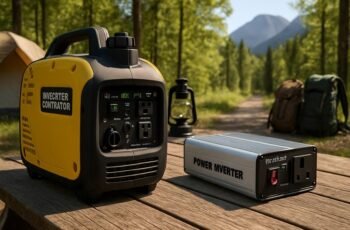
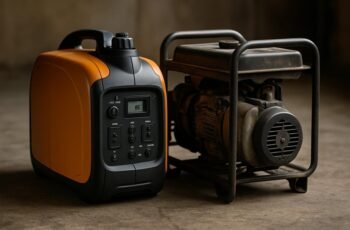
Like a thermostat finely tuning a room’s temperature, inverter generators adjust their fuel use based on demand, contrasting with portable generators that run at a steady pace regardless of load. This dynamic control often results in 20-30% fuel savings, especially under variable power needs. But how does this efficiency hold up across different scenarios and new technologies in 2026? Let’s explore the data behind these claims and what it means for your fuel budget.
Key Takeaways
- Inverter generators reduce fuel consumption by up to 30% under 50% load through dynamic engine speed control.
- Portable generators run at a fixed 3600 RPM, leading to higher fuel use during low or fluctuating loads.
- Both generators show similar efficiency near full load, but inverter models excel with variable power demands.
- Inverter generators have smarter fuel management, resulting in less fuel waste and emissions compared to portable models.
- Higher upfront cost for inverter generators is offset by long-term fuel savings and lower maintenance expenses.
How Inverter Generators Adjust Fuel Use Based on Power Demand
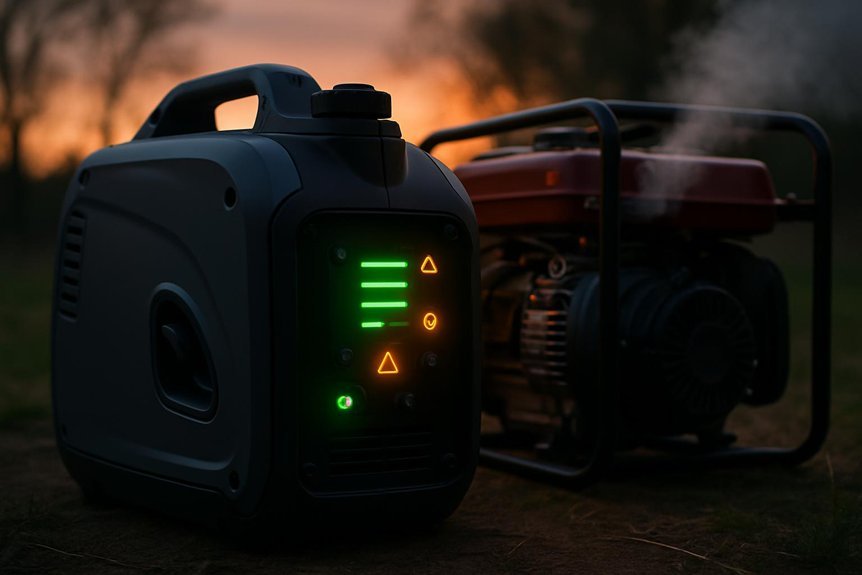
While traditional portable generators run at a constant speed regardless of load, inverter generators adjust their engine speed dynamically to match power demand. This fuel adjustment is achieved through advanced power modulation technology, enabling the engine to throttle down during low load and ramp up only when needed. As a result, inverter generators operate more efficiently, reducing fuel consumption by 20-30% compared to conventional models. By continuously monitoring output load, inverter generators optimize fuel injection and ignition timing, minimizing waste and emissions. This real-time power modulation contrasts with portable generators, which run at fixed RPMs, consuming fuel unnecessarily during light loads. Understanding this dynamic fuel adjustment helps us appreciate why inverter generators excel in fuel economy, especially for variable or intermittent power demands common in camping, RV use, or backup power scenarios.
Why Portable Generators Run at a Constant Engine Speed
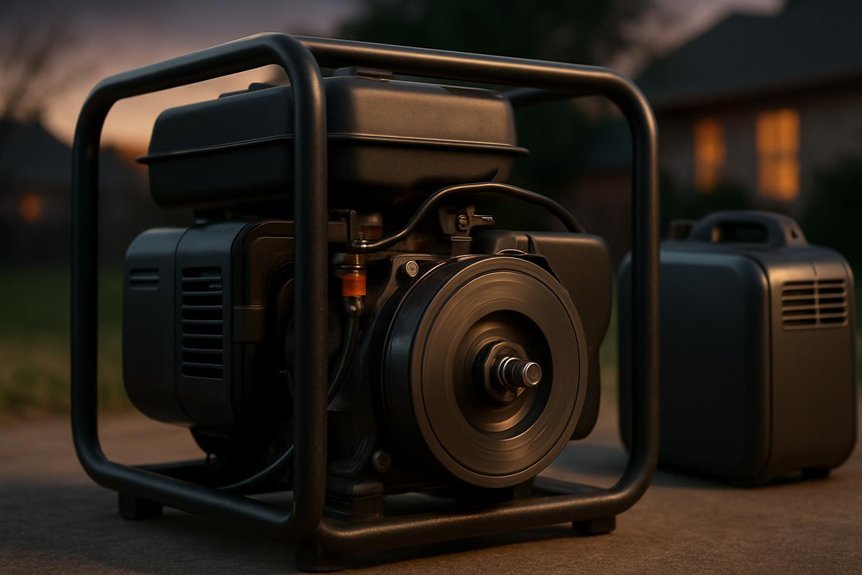
Because portable generators prioritize simplicity and reliability, they run at a constant engine speed—typically 3600 RPM—to maintain a stable 60 Hz electrical frequency. Their engine design is straightforward, relying on mechanical speed regulation rather than electronic controls. This fixed speed guarantees the generator produces consistent voltage and frequency, essential for powering standard appliances without damage. Unlike inverter generators that adjust engine speed based on load, portable generators use a governor to maintain this constant speed regardless of power demand fluctuations. While this approach sacrifices fuel efficiency during low loads, it simplifies the speed regulation system, reducing costs and potential failure points. Understanding this fundamental difference in engine design clarifies why portable generators run at a steady pace, prioritizing reliability over adaptive performance.
Comparing Fuel Consumption: Inverter Vs Portable Generators in 2026
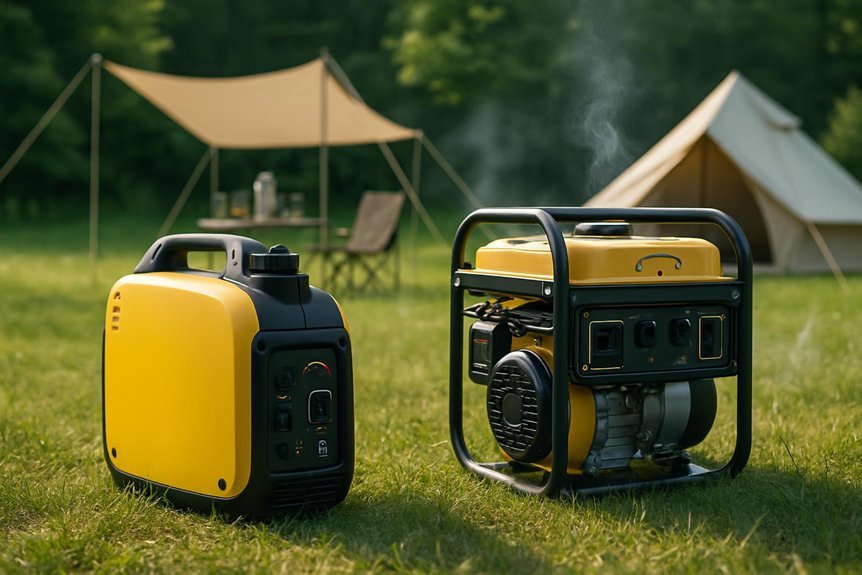
Understanding that portable generators maintain a constant engine speed to guarantee stable output helps us appreciate how this design impacts fuel consumption compared to inverter generators. Portable generators typically consume more fuel due to running at a fixed RPM, regardless of load, which means they burn fuel inefficiently during low-demand periods. In contrast, inverter generators adjust engine speed dynamically, optimizing fuel use through advanced fuel technology. Data from 2026 models show inverter generators can reduce fuel consumption by up to 30% under variable loads. However, this efficiency gain depends on proper generator maintenance; clogged filters or poor oil quality can negate fuel savings. While portable generators require less complex maintenance, their constant speed operation inherently limits fuel efficiency. Consequently, when comparing fuel consumption, inverter generators generally offer superior economy, especially in fluctuating power needs.
How New Technology Boosts Fuel Efficiency in Inverter Generators
As we explore advancements in inverter generators, we see how cutting-edge technologies greatly enhance fuel efficiency beyond traditional designs. Modern inverter generators integrate advanced inverter features such as variable engine speed control and real-time load adjustment, which optimize fuel consumption by matching power output precisely to demand. Additionally, smart fuel management systems monitor operational parameters and adjust fuel injection accordingly, reducing waste during low-load conditions. Compared to conventional portable generators that often run at constant speeds regardless of load, these technologies can improve fuel efficiency by up to 30%. By maintaining stable voltage and frequency, inverter generators minimize energy loss, which further conserves fuel. Collectively, these innovations mark a significant leap forward, allowing inverter generators to deliver more power per gallon of fuel and outperform traditional models in energy-efficient operation.
Real-World Scenarios Where Portable Generators May Waste Fuel
Let’s examine how portable generators often waste fuel during idle periods, when running loads below their ideal capacity, and through inefficient throttle control. Unlike inverter generators, they typically operate at a constant engine speed, leading to higher fuel consumption in these scenarios. Understanding these inefficiencies helps us compare real-world fuel use more accurately.
Idle Time Fuel Consumption
While both inverter and portable generators consume fuel during idle periods, portable generators often waste considerably more fuel when running without load. Data from generator comparisons show that portable models can burn up to 0.5 gallons per hour at idle, whereas inverter generators typically reduce fuel flow by adjusting engine speed, achieving idle time savings of up to 30-40%. This efficiency stems from inverter technology’s ability to modulate power output precisely, minimizing unnecessary fuel consumption. In real-world scenarios, such as standby power during intermittent use, portable generators maintain a fixed engine speed regardless of load, leading to significant fuel waste. Understanding these differences allows us to optimize fuel usage, especially when extended idle times are expected, making inverter generators a more fuel-efficient choice for variable load demands.
Overpowered Load Scenarios
Fuel efficiency during idle time highlights one of the operational challenges portable generators face, particularly when handling loads beyond their ideal capacity. When we push these generators into overpowered load scenarios, overload effects cause them to run less efficiently, consuming disproportionately more fuel. Unlike inverter generators, which adjust engine speed to match power demand, portable generators often operate at a fixed engine speed, leading to excessive fuel use during power surges or sustained heavy loads. Effective power management becomes difficult, increasing fuel waste and wear on the generator. Real-world data shows that portable generators can consume up to 25% more fuel under overload conditions compared to inverter models. Consequently, understanding overload effects is vital when considering fuel efficiency for heavy or fluctuating power demands.
Inefficient Throttle Operation
Although portable generators provide essential power in many situations, their throttle operation often runs inefficiently under typical usage patterns. Unlike inverter generators that adjust engine speed dynamically, portable generators usually operate at a fixed throttle, leading to an inefficient throttle mechanism that causes excess fuel consumption. This inefficiency results in measurable fuel waste, especially during partial load conditions.
Common scenarios where we see inefficient throttle and fuel waste include:
- Running low-power appliances continuously, causing the generator to consume more fuel than necessary.
- Frequent start-stop cycles without proper load management, increasing fuel usage.
- Operating in idle or near-idle states where the engine doesn’t adjust speed effectively, wasting fuel over time.
In contrast, inverter generators modulate throttle to match load, optimizing fuel use and minimizing waste.
The Role of Load Size in Fuel Efficiency for Both Generator Types
As we examine how load size impacts fuel efficiency, it’s clear that inverter generators adjust their fuel consumption more dynamically than portable generators. Inverter generators modulate engine speed based on load management, maintaining ideal efficiency metrics across varying loads. This contrasts with portable generators, which often run at a constant speed regardless of load, leading to less efficient fuel use under partial loads. Data shows inverter generators can reduce fuel consumption by up to 30% when operating below 50% capacity, while portable generators lack this adaptability. Consequently, for fluctuating or lower loads, inverter generators offer superior fuel efficiency. However, at near-full loads, both generator types demonstrate comparable efficiency metrics, narrowing the fuel consumption gap. Understanding load size’s role helps us select the right generator for precise energy demands and better fuel economy.
Fuel Type and Quality: Impacts on Inverter and Portable Generators
Since generators rely heavily on the type and quality of fuel used, we need to evaluate how these factors affect the performance and longevity of inverter and portable generators. Fuel quality considerably influences engine efficiency; lower-quality fuel can cause incomplete combustion, reducing fuel economy and increasing emissions. Fuel additives play an essential role by stabilizing fuel and enhancing combustion, especially in inverter generators designed for precision. Portable generators, often less sensitive, tolerate a broader range of fuel qualities but still benefit from additives to prevent engine deposits.
Key considerations include:
- Fuel quality consistency impacts inverter generators more due to their advanced electronics.
- Fuel additives improve ignition and reduce carbon buildup in both types.
- Ethanol-blended fuels can degrade seals and reduce lifespan, affecting portable generators more.
Understanding these nuances helps us optimize fuel use for each generator type.
When Fuel Efficiency Should Be Your Top Priority in Choosing a Generator
Fuel type and quality directly influence how efficiently a generator converts fuel into usable power, making fuel efficiency a key factor in generator selection. We should prioritize fuel efficiency when prolonged operation or remote usage amplifies fuel consumption costs. For instance, inverter generators typically deliver 20-30% better fuel savings compared to conventional portable generators due to advanced engine management and variable speed controls. When continuous power supply is essential—such as during extended outages or off-grid work—choosing generator types that maximize fuel economy reduces total fuel expenditure considerably. Conversely, if usage is sporadic or short-term, fuel efficiency might be less vital. Understanding specific energy demands and comparing fuel consumption rates across generator types guarantees we make informed decisions that optimize both operational cost and environmental impact.
Balancing Fuel Savings With Upfront Cost and Maintenance Needs
Although fuel savings play an essential role in evaluating generators, we must also weigh upfront costs and ongoing maintenance when making a choice. Inverter generators typically require a higher upfront investment but offer lower maintenance costs due to advanced components and improved efficiency. Portable generators, while cheaper initially, often incur higher maintenance costs over time and consume fuel less efficiently.
Let’s break down the key factors:
- Upfront investment: Inverter generators cost 20-40% more on average.
- Maintenance costs: Portable generators demand more frequent oil changes and repairs.
- Fuel efficiency impact: Lower fuel consumption in inverters reduces overall operating expenses.
Balancing these factors helps us determine the true cost-effectiveness of each type beyond just fuel efficiency.
Choosing the Right Generator for Your 2026 Fuel Budget and Usage Patterns
Let’s compare fuel consumption rates between inverter and portable generators to match your 2026 usage patterns. By analyzing efficiency across various scenarios, we can pinpoint which option optimizes fuel use without overshooting your budget. This data-driven approach helps us balance upfront costs with long-term savings for smarter generator selection.
Fuel Consumption Comparison
Since fuel costs often make up a significant portion of generator ownership expenses, comparing the consumption rates of inverter and portable generators is essential for planning your 2026 fuel budget. Inverter generators typically offer superior fuel efficiency due to their ability to adjust engine speed based on load, whereas portable generators run at a constant speed regardless of demand.
Here’s a quick comparison of fuel efficiency between these generator types:
- Inverter Generators: Consume up to 30% less fuel under variable loads.
- Portable Generators: Use more fuel consistently, especially at low loads.
- Fuel Consumption Rates: Inverter models average around 0.6 gallons per hour, while portable units often exceed 0.8 gallons per hour at similar loads.
Understanding these differences helps us choose the right generator aligned with our fuel budget and usage patterns.
Usage Scenarios Efficiency
Three primary usage scenarios help us determine which generator type best fits our 2026 fuel budget and operational needs: intermittent home backup, continuous job site power, and recreational use. In home backup, inverter generators excel with superior fuel efficiency, lower noise levels, and cleaner environmental impact, aligning with user preferences for quieter, eco-friendly solutions. Job sites demand rugged portable generators, favored for their generator longevity, higher power output, and compatibility with diverse fuel alternatives, despite increased maintenance needs. Recreational users prioritize portability advantages and reduced noise, tipping the scale back toward inverter models. Market trends indicate growing adoption of inverter generators for intermittent and recreational use due to maintenance efficiency and environmental benefits, while portable generators remain dominant where durability and fuel flexibility outweigh these advantages. Matching generator type to usage scenario optimizes fuel consumption and operational cost in 2026.
Budget Impact Analysis
Although both inverter and portable generators serve critical roles, analyzing their budget impact for 2026 requires a close examination of fuel consumption rates, maintenance costs, and operational efficiency relative to our specific usage patterns. When weighing budget considerations, it’s essential to factor in not just upfront costs but also long term savings from fuel efficiency and durability.
- Inverter generators typically use 20-30% less fuel, reducing ongoing expenses.
- Maintenance on portable generators can be higher due to less efficient engine designs.
- Our usage frequency and load demands directly influence total fuel costs and replacement intervals.
Frequently Asked Questions
How Noisy Are Inverter Generators Compared to Portable Generators?
We’ve found inverter generators produce markedly lower noise levels, typically 40-60 dB, compared to portable generators’ 60-75 dB. This sound comparison highlights inverters’ quieter operation, making them ideal for noise-sensitive environments.
Can Inverter Generators Power Sensitive Electronics Safely?
Coincidentally, inverter generators excel at powering devices with superior voltage stability, making them ideal for sensitive electronics. Unlike traditional portable generators, their clean sine wave output reduces risk of damage, ensuring safer, more reliable operation for us all.
What Is the Typical Lifespan of Inverter Versus Portable Generators?
We’ve found inverter generators typically last 3,000-5,000 hours, while portable generators run about 1,500-2,000 hours. Lifespan varies with fuel consumption and usage scenarios, so maintenance plays an essential role in durability.
Are Inverter Generators Easier to Transport Than Portable Generators?
Many understand some think inverter generators aren’t easier to move, but their weight comparison shows they’re lighter. Size variations also favor inverters, making them more compact and easier to transport than many traditional portable generators.
Do Inverter Generators Require Special Maintenance Procedures?
We don’t need special maintenance for inverter generators, but following maintenance tips like regular oil changes helps optimize fuel consumption. Compared to portable generators, they often require less upkeep, enhancing efficiency and longevity over time.
Conclusion
After analyzing fuel consumption data, it’s clear inverter generators outperform portable models in 2026, especially under variable loads—saving 20-30% fuel by adjusting engine speed dynamically. While portable generators maintain efficiency near full capacity, they waste fuel during fluctuating demand. If fuel efficiency is a priority, inverter technology offers measurable advantages. However, balancing upfront costs and maintenance remains key. Ultimately, choosing the right generator depends on your specific power needs and fuel budget.