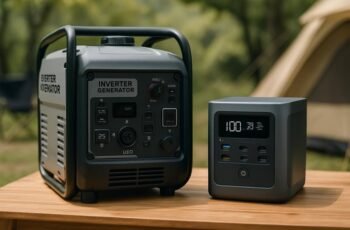
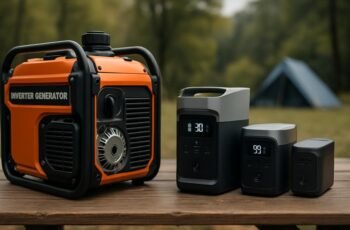
When it comes to powering our adventures, not all solutions are created equal. We often face the choice between inverter generators and car power inverters, each promising convenience and reliability. But which truly meets our camping and travel needs without compromise? Understanding their differences in power output, portability, and efficiency can make all the difference—so let’s explore what sets these options apart before you decide which one fits your journey best.
Key Takeaways
- Inverter generators provide stable, clean power suitable for sensitive electronics, while car power inverters are best for low to medium power devices.
- Generators offer higher power output for multiple or heavy appliances, whereas car inverters rely on vehicle battery with limited capacity.
- Inverter generators include advanced safety features, reducing device damage risk compared to basic protections in car power inverters.
- Inverter generators are portable, fuel-efficient, and quiet, unlike car inverters that depend on running the vehicle engine.
- Although costlier upfront, inverter generators deliver long-term reliability and efficiency, while car inverters are cheaper but less versatile for extended trips.
What Are Inverter Generators and How Do They Work?
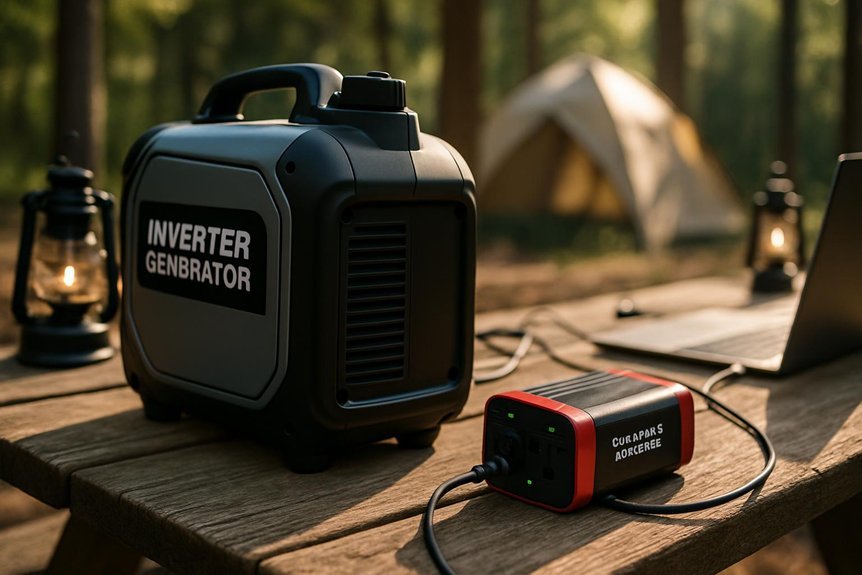
Although we often take power for granted, understanding how inverter generators work can help us choose the right portable energy source. Inverter generators convert raw power into stable, clean electricity using advanced inverter types, including microprocessor-controlled systems. This process guarantees consistent voltage and frequency, making them ideal for sensitive electronics. Unlike traditional generators, inverter generators produce power on demand, improving fuel efficiency and reducing noise. To keep them running smoothly, regular generator maintenance is essential—this includes checking oil levels, cleaning air filters, and inspecting spark plugs. By grasping these basics about inverter types and upkeep, we can confidently select and maintain the best inverter generator for camping or travel, guaranteeing reliable and safe power wherever we go.
How Car Power Inverters Convert Your Vehicle’s Power
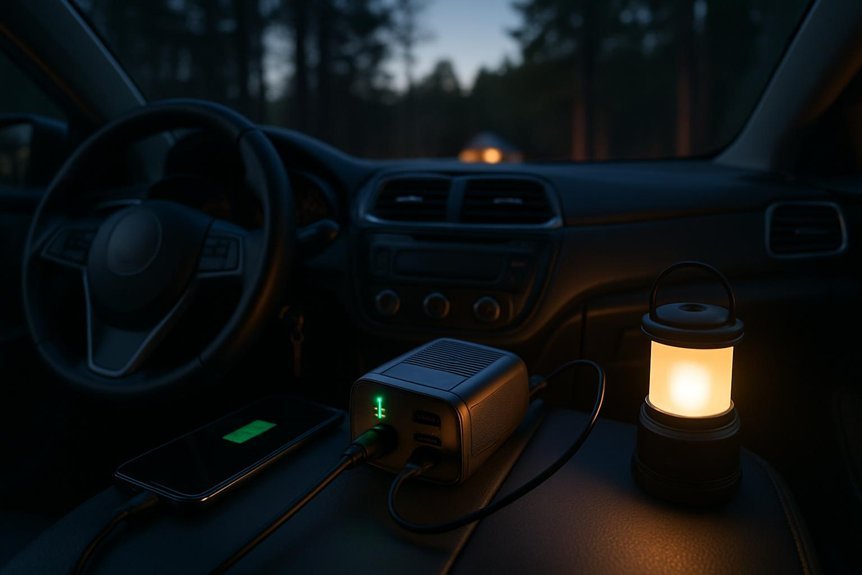
Let’s explore how car power inverters convert your vehicle’s DC battery power into usable AC electricity for your devices. We’ll also consider how this process affects your vehicle’s battery life and overall electrical system. Understanding these factors helps us use power inverters more efficiently and safely.
Power Conversion Process
When we plug a car power inverter into our vehicle’s cigarette lighter or directly to the battery, it immediately starts converting the car’s 12-volt DC power into usable AC power. This power conversion process involves transforming low-voltage DC into high-voltage AC, enabling us to run household electronics on the go. Efficiency comparison between inverters varies, with most achieving 85-95% efficiency, depending on quality and load.
| Stage | Function | Efficiency Range |
|---|---|---|
| DC Input | Receives 12V power | N/A |
| Inversion | Converts DC to AC | 85-95% |
| Output | Supplies AC to devices | Dependent on load |
Understanding this process helps us choose the right inverter for camping or travel needs.
Vehicle Battery Impact
Since car power inverters draw electricity directly from our vehicle’s battery, understanding their impact on battery health is essential. These devices convert our 12V DC power into usable AC power but can strain the battery if used improperly. Maintaining battery health not only guarantees longer battery life but also preserves vehicle efficiency. To minimize negative effects, we should:
- Avoid running high-wattage devices for extended periods
- Turn off the inverter when the engine is off
- Regularly check battery charge levels
- Use a deep-cycle battery if frequent inverter use is expected
- Confirm proper wiring and fuse protection
Comparing Power Output: Inverter Generators vs Car Inverters
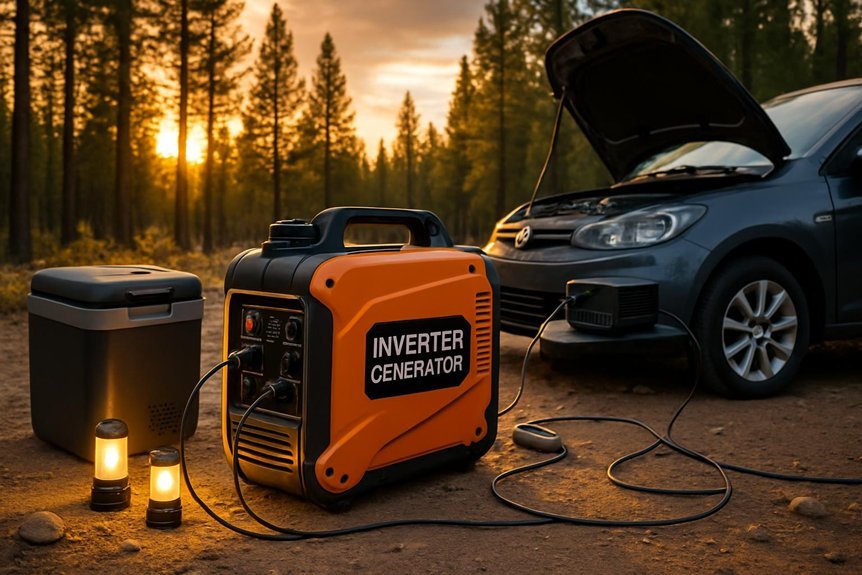
Let’s compare the power output of inverter generators and car power inverters by looking at their capacity differences and how they handle continuous versus peak loads. We’ll also consider which devices each can support without risking damage or overload. Understanding these factors will help us choose the right power source for our needs.
Power Capacity Differences
We often overlook how differently inverter generators and car power inverters handle power output. Understanding their power capacity differences is essential for camping and travel. Inverter generators typically offer higher power output, suitable for multiple devices or heavier appliances. Car power inverters, while more compact, provide lower capacity but are convenient for charging smaller electronics directly from your vehicle.
Key differences include:
- Inverter generators deliver consistent, stable power with good energy efficiency.
- Car inverters depend on your vehicle’s battery and have limited energy supply.
- Generators can power larger equipment like mini-fridges or power tools.
- Inverters excel at charging phones, laptops, and small gadgets.
- Energy efficiency varies, with generators using fuel and inverters relying on battery health.
Choosing depends on your power needs and travel style.
Continuous vs Peak Output
Understanding power capacity helps us appreciate another important aspect of performance: continuous versus peak output. Continuous load refers to the power a device can provide steadily over time without overheating or shutting down. Peak demand, on the other hand, is the short burst of power needed to start appliances or handle sudden surges. Inverter generators excel at delivering both, offering robust continuous load and handling high peak demand, making them reliable for camping and travel. Car power inverters usually have lower continuous output and limited ability to manage peak surges, which can cause issues with certain devices. So, when choosing between the two, consider how much continuous power you need and whether your equipment has high peak demands to guarantee smooth, uninterrupted operation.
Device Compatibility Limits
Although both inverter generators and car power inverters convert power for our devices, their compatibility limits vary greatly due to differences in power output and waveform quality. When choosing between them, it’s essential to evaluate the device types and usage scenarios we plan for. Inverter generators typically handle a wider range of devices, including sensitive electronics, thanks to their clean sine wave output. Car power inverters, however, are best suited for low to medium power devices.
Here’s how they compare in device compatibility:
- Inverter generators support high wattage appliances like microwaves and power tools
- Car inverters handle small electronics such as laptops and phone chargers
- Sensitive medical devices require stable sine wave power from generators
- Car inverters may struggle with surge power needs
- Usage scenarios involving extended power demand favor inverter generators
Portability and Convenience for Camping and Travel
When we head out for camping or travel, the portability and convenience of our power source become essential factors. Inverter generators often come as lightweight options with a user friendly design, making them easier to carry and set up at campsites. Their compact size lets us pack them efficiently without sacrificing power output. On the other hand, car power inverters rely on our vehicle’s battery, eliminating the need to carry extra equipment. This adds convenience but limits mobility once disconnected from the car. Both choices offer practical benefits, but inverter generators give us more freedom to position the power source where we need it. Ultimately, weighing lightweight options against ease of use helps us pick the best fit for our specific camping and travel needs.
Fuel Efficiency and Noise Levels: What to Expect
Since we often rely on portable power sources for extended periods during camping or travel, fuel efficiency and noise levels become critical factors to evaluate. Inverter generators and car power inverters differ markedly in these areas.
Here’s what to expect regarding fuel consumption and sound output:
- Inverter generators typically have lower fuel consumption due to efficient engine design.
- They adjust engine speed based on load, conserving fuel during light use.
- Car power inverters draw power from the vehicle’s battery, so fuel consumption depends on the car’s engine running time.
- Inverter generators produce less sound output, usually between 40-60 decibels, making them quieter in campsites.
- Car power inverters are silent but rely on the car running, which can increase overall fuel use and noise indirectly.
Considering these factors helps us choose the best option for quiet, fuel-efficient power.
Safety Features and Electrical Stability in Both Devices
Even though both inverter generators and car power inverters provide portable electricity, their safety features and electrical stability vary considerably. Inverter generators typically come equipped with advanced safety mechanisms like overload protection, low-oil shutoff, and circuit breakers. These features help prevent damage and guarantee safe operation during extended use. On the other hand, car power inverters often rely on built-in fuses and basic protections but may lack thorough safety systems. When it comes to electrical consistency, inverter generators produce stable, clean power with minimal fluctuations, making them ideal for sensitive electronics. Car power inverters can sometimes deliver less stable current, which might risk device performance or damage over time. Understanding these differences is essential for choosing the safest and most reliable power source for camping and travel.
Which Devices Can You Power With Each Option?
Understanding the safety and electrical stability differences helps us determine which devices each power source can handle. When considering power needs and device compatibility, inverter generators generally support higher wattage devices, while car power inverters suit smaller electronics. Here’s a quick look at what each can typically power:
- Inverter Generator: Portable refrigerators, power tools, small appliances
- Car Power Inverter: Laptops, phone chargers, LED lights
- Inverter Generator: Electric grills, CPAP machines, TVs
- Car Power Inverter: Cameras, small fans, portable speakers
- Inverter Generator: Multiple devices simultaneously with stable output
Cost Differences and Long-Term Value for Travelers
When weighing the cost differences between inverter generators and car power inverters, we need to evaluate both the upfront price and the long-term value they offer to travelers. Inverter generators typically require a higher initial investment, but they provide reliable, continuous power for a wide range of devices, making them a solid choice for frequent campers. Car power inverters are generally more affordable upfront and utilize your vehicle’s battery, which can mean lower initial costs. However, they may not support as many devices or run as long without draining your car battery. Considering long term savings, an inverter generator’s efficiency and durability often translate to fewer replacements and repairs, which can make it more cost-effective over time despite the higher starting price.
Choosing the Best Power Solution for Your Camping Needs
Since our camping needs vary widely, selecting the right power solution depends on factors like how long we’ll stay, the devices we want to run, and our budget. Balancing these helps us manage power efficiently and keep our camping essentials ready. When choosing, we should consider:
- Duration of the trip and power consumption
- Types of devices (lights, fridge, chargers)
- Noise level preferences (quiet for peaceful camping)
- Portability and ease of setup
- Budget constraints and long-term value
Frequently Asked Questions
Can Inverter Generators Charge Electric Vehicles During Camping Trips?
Yes, we can use inverter generators to charge electric vehicles during camping trips. Their charging capacity supports EV batteries, enhancing camping convenience by providing reliable power even in remote locations without traditional outlets.
How Do Weather Conditions Affect the Performance of Car Power Inverters?
We understand temperature effects and weather conditions impact car power inverters’ performance factors considerably. Extreme heat can cause overheating, while cold may reduce efficiency. Protecting inverters from moisture and temperature extremes helps maintain reliable operation outdoors.
Are There Any Environmental Impacts Unique to Inverter Generators?
It is understood that inverter generators can emit up to 50% more pollutants than car power inverters, impacting emissions impact and fuel efficiency. Their continuous fuel use and noise make their environmental footprint uniquely challenging for outdoor settings.
Can Car Power Inverters Be Used While the Vehicle Engine Is Off?
We can’t use car power inverters with the engine off because they drain the battery quickly, reducing power efficiency. They’re best suited for usage scenarios where the engine runs, ensuring steady power and preventing battery drain.
What Maintenance Is Required for Inverter Generators Versus Car Power Inverters?
Like tuning a finely crafted instrument, inverter upkeep demands regular cleaning and oil changes for generator longevity. Car power inverters need less maintenance, mainly keeping connections tight—maintenance frequency is lower but never neglect inverter cleaning for peak performance.
Conclusion
When deciding between inverter generators and car power inverters for camping, it’s clear each has its strengths. While some worry inverter generators are bulky or costly, their stable power and ability to handle high-wattage devices make them invaluable for extended trips. Car inverters suit quick, low-power needs but can drain your battery if overused. By weighing your power demands and trip length, we can confidently choose the best solution to keep our adventures powered smoothly.