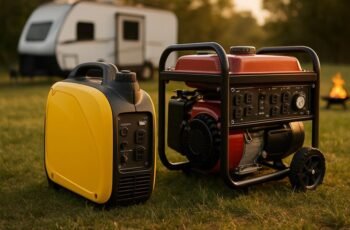
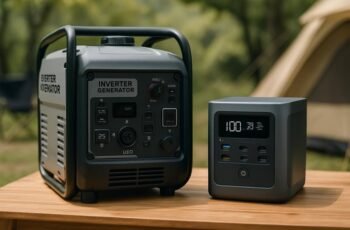
When choosing between inverter generators and solar panels for off-grid living, we need to weigh factors like power reliability, environmental impact, and cost. Inverter generators deliver immediate, portable power but depend on fuel and regular maintenance. Solar panels offer sustainable energy with minimal upkeep but require a higher upfront investment and depend on sunlight. Understanding these trade-offs will help us determine which solution aligns best with our off-grid goals and lifestyle.
Key Takeaways
- Inverter generators provide reliable, immediate power but depend on fuel and produce noise and emissions.
- Solar panels offer sustainable, quiet energy with minimal maintenance but require battery storage and backup for cloudy days.
- Solar setups have higher upfront costs but lower long-term expenses and environmental impact compared to generators.
- Portable inverter generators suit high power needs and mobility, while solar panels excel in modular expansion and silent operation.
- Assessing energy consumption and lifestyle helps determine the best off-grid power source between generators and solar systems.
How Inverter Generators Work for Off-Grid Living
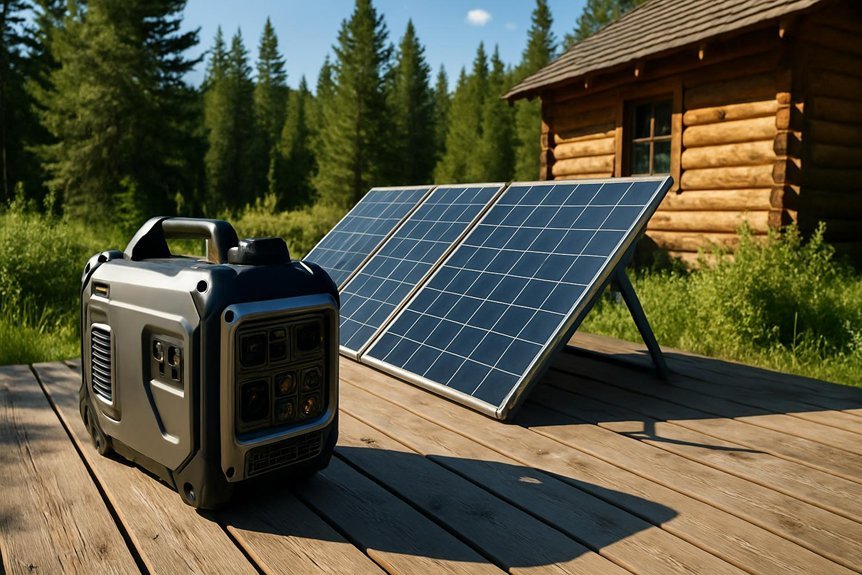
An inverter generator converts mechanical energy into clean, stable electrical power by first producing AC current and then converting it to DC before inverting it back to AC with a consistent frequency and voltage. This process guarantees reliable power output suitable for sensitive electronics. We choose from various fuel types like gasoline, propane, or diesel, balancing runtime efficiency and environmental impact. Inverter generators generally operate at lower noise levels compared to conventional models, enhancing usability in quiet off-grid settings. Portability options vary, with compact designs weighing as little as 20 pounds, making transport easier. Safety features such as overload protection and low-oil shutdown add reliability. Considering usage scenarios, these generators excel for temporary or backup power but require fuel supply management. Overall, their balance of power quality, efficiency, and portability suits many off-grid applications.
How Solar Panels Provide Power Off the Grid
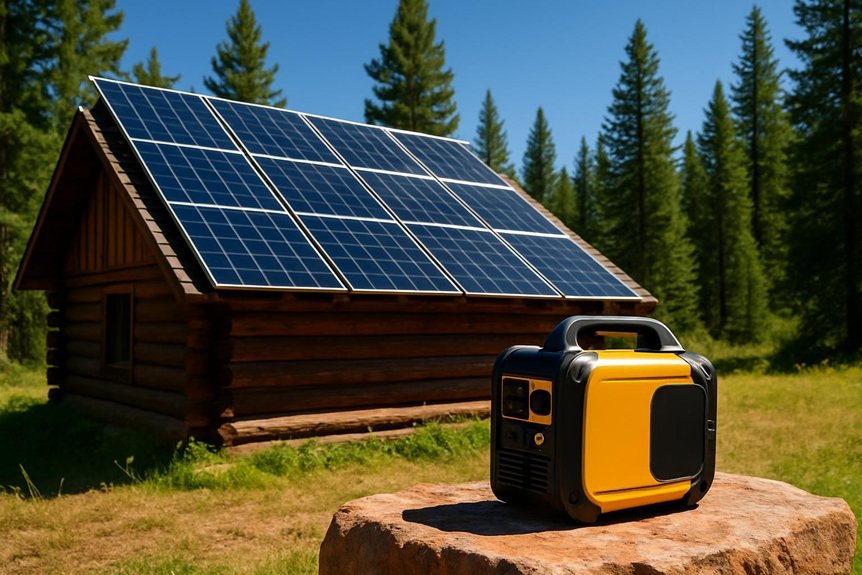
While inverter generators rely on fuel combustion, solar panels harness sunlight to generate electricity through the photovoltaic effect. Solar cells convert photons into direct current (DC) electricity, which we then direct to an inverter to produce usable alternating current (AC) power for our off-grid needs. The overall solar panel efficiency determines how effectively sunlight converts into electrical energy, influenced by panel quality and environmental conditions. Since solar power is intermittent, especially during nighttime or cloudy days, we integrate energy storage systems, typically batteries, to store excess electricity generated during peak sunlight. This stored energy guarantees a continuous power supply regardless of sunlight availability. By optimizing solar panel efficiency and employing reliable energy storage, solar setups provide a sustainable, low-maintenance power source ideal for off-grid living.
Pros and Cons of Inverter Generators for Off-Grid Use
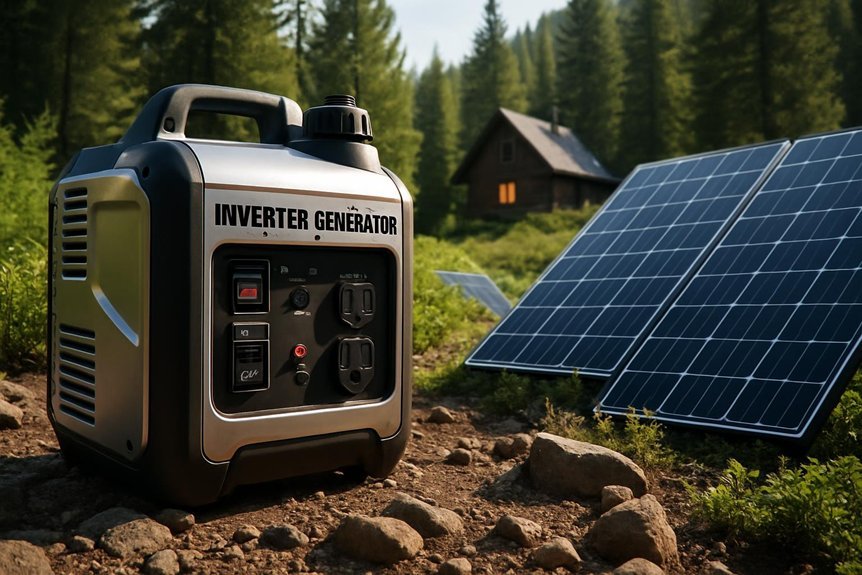
Since inverter generators convert fuel into electricity through advanced electronic circuitry, they offer a reliable power source for off-grid living when sunlight or wind isn’t available. Their fuel efficiency is generally higher than conventional generators, extending runtime duration and reducing fuel consumption. We appreciate the variety of portability options, from compact models to larger units with higher load capacity, which accommodate diverse power needs. Noise levels are noticeably lower due to inverter technology, enhancing comfort in remote settings. Usage versatility is a strong point, as these generators can safely power sensitive electronics thanks to built-in safety features. However, the environmental impact remains a concern due to fossil fuel reliance. Balancing these pros and cons helps us determine if inverter generators fit our off-grid lifestyle.
Pros and Cons of Solar Panels for Off-Grid Living
Let’s explore how solar panels offer energy independence by harnessing renewable resources, reducing reliance on fuel. We’ll also consider the technical aspects of installation and ongoing maintenance requirements. Finally, we need to address the challenges posed by weather dependency and its impact on consistent power supply.
Energy Independence Benefits
Achieving true energy independence requires reliable and sustainable power sources, making solar panels a compelling option for off-grid living. Solar systems contribute markedly to energy freedom and sustainable living by reducing reliance on external fuel supplies. Here are key benefits:
- Consistent power generation from sunlight guarantees a steady energy supply.
- Minimal fuel dependency lowers long-term operating costs.
- Silent operation enhances living conditions without noise pollution.
- Renewable energy source reduces environmental impact and carbon footprint.
These advantages position solar panels as a strategic solution for off-grid residents seeking autonomy and sustainability. While weather variability can affect output, advancements in battery storage mitigate this concern, further supporting energy independence. By integrating solar technology, we embrace a future focused on resilience and eco-friendly power generation.
Installation And Maintenance
Although solar panels offer numerous benefits for off-grid living, their installation and maintenance require careful consideration to confirm peak performance. Proper installation techniques involve site assessment to optimize panel orientation and tilt, secure mounting systems to withstand environmental stress, and precise electrical wiring to guarantee safety and efficiency. We recommend consulting professionals to avoid common pitfalls during setup. For ongoing upkeep, regular inspections are essential; maintenance tips include cleaning panels to remove dust or debris, checking for corrosion on connections, and monitoring inverter functionality. Neglecting these steps can reduce energy output and system lifespan. While installation demands an upfront investment of time and expertise, diligent maintenance ensures consistent power generation, making solar panels a reliable off-grid energy source when managed correctly.
Weather Dependency Challenges
Because solar panels rely on sunlight to generate electricity, their performance directly depends on weather conditions, which presents both advantages and challenges for off-grid living. Understanding how weather patterns and seasonal fluctuations affect solar output is essential to planning an effective energy system. Key challenges include:
- Reduced efficiency on cloudy or rainy days, limiting power availability.
- Seasonal fluctuations causing variable energy production, especially in winter months.
- Geographic weather patterns impacting long-term reliability and predictability.
- Potential need for supplemental energy storage or backup systems to maintain consistent power.
While solar panels offer clean energy, these weather dependency issues mean we must carefully assess local climate data to guarantee a resilient off-grid setup that meets our energy needs throughout the year.
Comparing Costs and Maintenance of Generators vs. Solar Panels
When comparing inverter generators and solar panels, we need to contemplate their initial investment costs alongside ongoing maintenance demands. Generators often require regular servicing and fuel expenses, while solar panels typically have higher upfront costs but lower maintenance over time. Evaluating these factors helps us understand which option offers better long-term cost efficiency for off-grid living.
Initial Investment Comparison
We can start by examining the upfront costs and ongoing maintenance expenses of inverter generators and solar panels to understand their financial implications for off-grid living. Budget considerations play an essential role in deciding which system suits your needs best. Here are key points to reflect on:
- Inverter generators typically have a lower initial purchase price than solar panel systems.
- Solar panels involve higher upfront costs due to panels, inverters, and battery storage components.
- Financing options for solar setups are often available, helping spread out the initial investment.
- While generators require fuel and occasional part replacements, solar panels generally demand less frequent capital input after installation.
Evaluating these factors helps us make informed decisions about the financial feasibility of each energy source.
Ongoing Maintenance Requirements
Beyond initial costs, understanding the ongoing maintenance demands of inverter generators and solar panels provides a clearer picture of their long-term viability. Inverter generators require regular engine servicing to maintain peak fuel efficiency and extend generator lifespan. Frequent use increases wear, necessitating oil changes, spark plug replacements, and air filter cleaning. Noise levels also require consideration, as generators produce operational sound that can affect comfort. Conversely, solar panels demand minimal panel maintenance, primarily periodic cleaning to preserve solar efficiency. Battery storage systems linked to solar setups need monitoring to guarantee performance and longevity, though their maintenance is less frequent compared to generators. From an environmental impact perspective, solar systems offer quieter operation and reduced emissions. We must weigh these factors alongside usage frequency to determine the appropriate off-grid energy solution.
Long-Term Cost Efficiency
Although inverter generators often have a lower initial purchase price compared to solar panel systems, we must consider the cumulative costs of fuel, maintenance, and potential repairs over time. Solar panels typically offer better long-term cost efficiency due to higher energy efficiency and lower operational expenses. Evaluating long-term savings involves:
- Fuel costs for generators, which accumulate considerably over years.
- Regular maintenance and part replacements required by generators.
- Minimal maintenance for solar panels, mainly cleaning and inverter checks.
- Solar panels’ longer lifespan, often 25+ years, spreading initial investment over decades.
Choosing the Right Power Source for Your Off-Grid Lifestyle
When selecting a power source for off-grid living, we must carefully assess our energy needs, environmental conditions, and long-term goals. Understanding our typical energy consumption helps determine the necessary battery storage capacity to support continuous power. Renewable resources like solar panels offer sustainable energy with minimal environmental impact and low noise levels, ideal for quiet environments. Inverter generators provide reliable power for higher power demands but generate noise and emissions, affecting lifestyle adaptability. Portability options also influence our choice—solar setups are often modular and easy to expand, whereas generators offer immediate power but require fuel. By evaluating these factors objectively, we can select a power source that aligns with our off-grid lifestyle, balancing efficiency, sustainability, and convenience effectively.
Frequently Asked Questions
Can Inverter Generators Run Sensitive Electronic Devices Safely?
Yes, we can safely run sensitive electronic devices with inverter generators because they provide stable power quality and clean sine waves. However, we must practice proper load management to avoid voltage fluctuations that could damage the devices.
How Do Weather Conditions Affect Solar Panel Efficiency?
We might think solar panel efficiency stays constant, but weather impact is real—clouds, temperature, and shading reduce output considerably. Understanding these factors helps us optimize placement and usage for reliable, efficient off-grid power generation.
Are There Any Environmental Impacts of Using Inverter Generators?
We recognize inverter generators produce noise pollution and fuel emissions, impacting air quality and tranquility. While efficient, their environmental footprint includes greenhouse gases and potential fuel spills, so we must weigh these effects carefully for sustainable off-grid living.
What Safety Precautions Are Needed When Operating Inverter Generators?
Wondering how to stay safe with inverter generators? We always guarantee proper fuel storage away from sparks, operate in well-ventilated areas, and manage noise levels to protect hearing and comply with regulations. Safety first!
Can Solar Panels Be Used Effectively in Snowy or Cloudy Regions?
Yes, we can use solar panels effectively in snowy conditions, though solar panel efficiency drops due to reduced sunlight and snow coverage. Proper panel angle and regular snow removal help maintain energy output during cloudy or snowy periods.
Conclusion
As we weigh inverter generators against solar panels, think of them as two paths leading through the wilderness. The generator is a reliable compass—immediate, portable, but fueled by finite resources. Solar panels are like the steady sun—sustainable and low-maintenance, yet dependent on clear skies. Together, understanding your energy needs and goals helps us choose the trail best suited for our off-grid journey, balancing practicality with long-term sustainability.