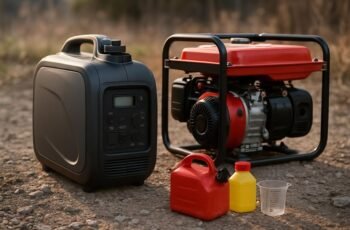
When comparing inverter generators to open frame models, we need to focus on two critical factors: noise levels and reliability. Inverter generators typically operate at markedly lower decibels, thanks to advanced engine controls and soundproofing. Meanwhile, open frame generators, although capable of higher peak power, often sacrifice quiet operation and consistent output. Understanding these distinctions is essential before deciding which generator suits your specific needs and environments.
Key Takeaways
- Inverter generators operate quieter (50-60 dB) using advanced mufflers and soundproof materials, while open frame units are louder (70-80 dB).
- Inverter models provide more stable, clean power by electronically regulating voltage and frequency, ideal for sensitive electronics.
- Open frame generators deliver higher peak power but may experience voltage fluctuations affecting reliability.
- Inverter generators adjust engine speed based on load, optimizing fuel efficiency and reducing wear, enhancing long-term reliability.
- Open frame generators require more frequent maintenance and produce higher noise, making them less convenient and reliable for noise-sensitive use.
How Inverter Generators and Open Frame Generators Work Differently
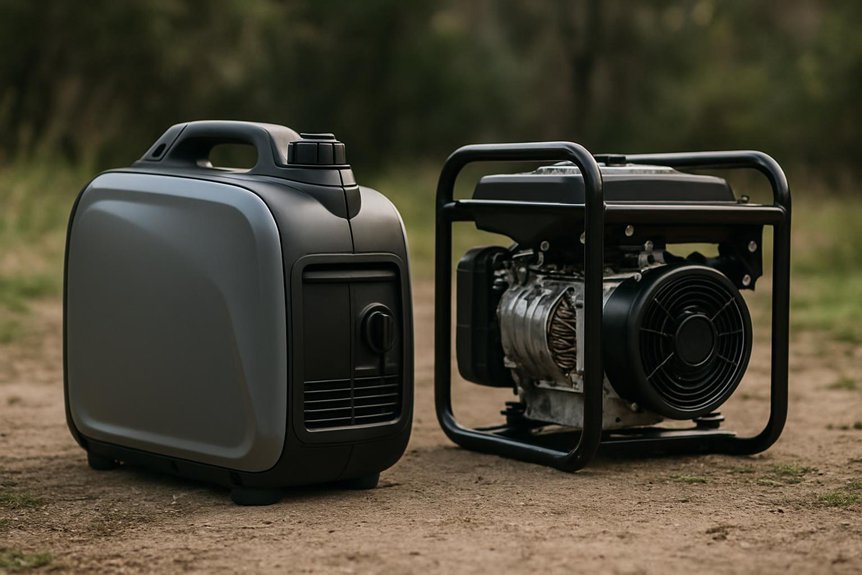
Let’s examine how inverter generators and open frame generators operate differently by focusing on their fundamental mechanisms. Open frame generators convert mechanical energy directly into AC power through a rotating coil within a magnetic field, producing a consistent power output ideal for high-demand applications. In contrast, inverter generators generate AC power, convert it to DC, and then invert it back to clean, stable AC electricity. This process allows inverter models to adjust engine speed dynamically, optimizing fuel consumption and enhancing efficiency ratings. Consequently, inverter generators often deliver superior fuel efficiency compared to open frame units, especially under variable loads. The refined power output quality from inverters suits sensitive electronics, while open frame generators excel in raw power delivery. Understanding these operational distinctions helps us choose the appropriate generator based on efficiency and power needs.
Why Inverter Generators Are Quieter Than Open Frame Models
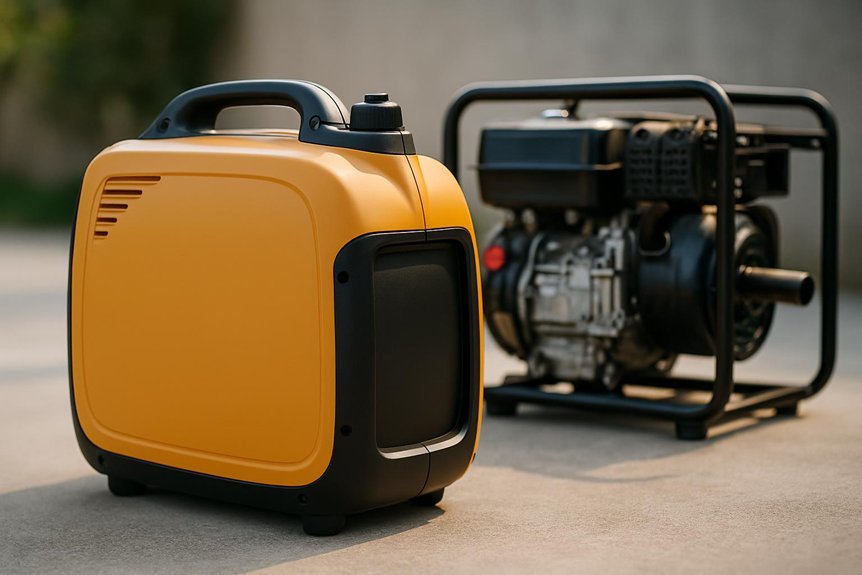
Let’s examine how noise reduction technology and engine design differences contribute to inverter generators operating more quietly than open frame models. Inverter generators use advanced mufflers and sound-dampening materials that minimize noise output. Additionally, their engines run at variable speeds, optimizing performance while reducing sound levels compared to the constant high RPMs in open frame generators.
Noise Reduction Technology
Although both inverter and open frame generators serve the same fundamental purpose, their noise output levels differ markedly due to distinct engineering approaches. Inverter generators integrate advanced noise reduction technology, employing soundproof materials around the engine housing to absorb and dampen vibrations effectively. This strategic use of insulation minimizes sound transmission. Additionally, inverter models utilize noise cancellation techniques, such as engineered airflow paths and muffler designs, to disrupt and reduce acoustic waves. In contrast, open frame generators lack these thorough noise control measures, exposing their louder engine components directly to the environment. By combining soundproof materials with active noise cancellation strategies, inverter generators achieve considerably quieter operation, making them preferable in noise-sensitive settings. This precise engineering focus on noise reduction technology clearly distinguishes inverter generators from their open frame counterparts.
Engine Design Differences
When we examine the engine designs of inverter and open frame generators, key structural differences explain why inverters operate with considerably less noise. The enhanced engine efficiency and design complexity of inverter generators play significant roles. Here’s why:
- Engine Speed Variation: Inverter generators adjust engine speed dynamically based on load, reducing unnecessary noise, whereas open frame models run at constant high speeds.
- Advanced Engine Components: Inverter engines use precision-engineered parts that optimize combustion and minimize vibration, directly impacting noise levels.
- Compact and Enclosed Design: The intricate design complexity allows inverter engines to be more compact and better insulated, effectively dampening sound compared to the exposed, bulkier open frame engines.
These factors collectively improve engine efficiency and reduce mechanical noise, making inverter generators the quieter, more reliable choice.
Comparing Power Reliability: Inverter vs Open Frame Generators
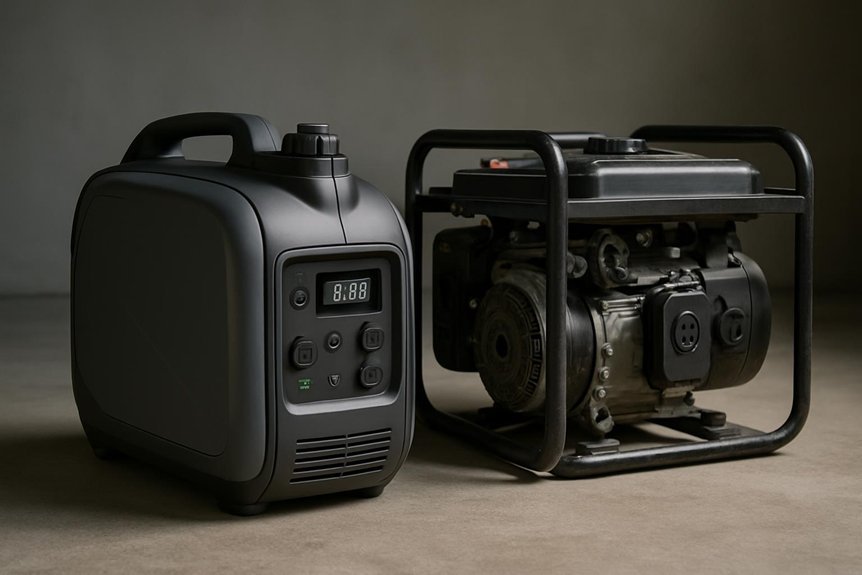
Because power reliability is critical for both residential and professional applications, understanding how inverter and open frame generators perform under various load conditions is essential. Inverter generators regulate power output electronically, allowing for stable voltage and frequency even with fluctuating loads. This precise load handling reduces the risk of power surges that could damage sensitive equipment. Conversely, open frame generators deliver consistent power through mechanical regulation but may experience voltage fluctuations under rapidly changing loads. Their simpler design often translates to higher peak power output, but less refined load handling can compromise reliability during variable demand. Evaluating these factors, inverter generators generally provide superior power quality and reliability for sensitive applications, while open frame generators excel when consistent, high power output is prioritized despite less sophisticated load management.
Which Generator Type Fits Best for Camping and Outdoor Use?
When choosing a generator for camping and outdoor use, we need to evaluate noise levels, portability, and fuel efficiency. Inverter generators typically offer quieter operation and lighter weight, enhancing transportability. Meanwhile, fuel efficiency remains vital for extended use, influencing overall performance and convenience.
Noise Levels Comparison
Although both inverter and open frame generators serve the purpose of providing portable power, their noise levels differ considerably, which directly impacts their suitability for camping and outdoor use. Inverter generators benefit from advanced sound insulation and often operate within a quieter range of operational decibels, typically between 50 and 60 dB. Open frame generators, lacking substantial sound insulation, generally produce noise levels around 70 to 80 dB, which can disturb the outdoor environment.
- Inverter generators use enclosed casings that reduce mechanical noise transmission.
- Open frame generators’ exposed engines result in higher noise output.
- Lower operational decibels in inverter models make them preferable for noise-sensitive settings like campsites.
Thus, inverter generators clearly offer a quieter solution for outdoor enthusiasts prioritizing minimal noise disruption.
Portability and Weight
Noise levels play a significant role in choosing the right generator, but portability and weight often determine how practical each option is for camping and outdoor activities. Inverter generators typically feature a compact design and lightweight options, making them easier to transport and maneuver in rugged environments. Their streamlined frames and integrated handles enhance mobility without sacrificing performance. Conversely, open frame generators tend to be bulkier and heavier due to exposed components and robust construction, which can hinder portability. While open frame units may offer durability, their weight limits convenience for frequent relocation. For camping and outdoor use, inverter generators clearly fit best, combining portability with efficient power delivery. Their compact design and lightweight construction optimize ease of transport, a critical factor when packing gear for remote sites.
Fuel Efficiency Benefits
Since fuel efficiency directly impacts how long we can rely on a generator during extended outdoor trips, it’s essential to evaluate which type better conserves fuel under varying loads. When comparing inverter generators and open frame generators, the fuel efficiency advantages become clear:
- Inverter generators adjust engine speed according to power demand, reducing unnecessary fuel consumption and optimizing performance during low to moderate loads.
- Open frame generators typically run at a constant speed regardless of load, leading to higher fuel consumption, especially when operating below peak capacity.
- Fuel consumption comparison shows inverter models can extend runtime by 30-50%, making them ideal for camping and outdoor use where fuel availability is limited.
Cost Differences and Long-Term Value Between These Generators
When comparing the cost differences and long-term value between inverter generators and open frame generators, we need to contemplate several key factors that directly impact our investment. A thorough cost analysis reveals that inverter generators typically have a higher upfront price due to advanced technology and quieter operation. However, their fuel efficiency and reduced noise levels can translate into lower operational costs and increased usability in noise-sensitive environments. Conversely, open frame generators are generally more affordable initially but may incur higher fuel expenses and noise-related limitations over time. Our value assessment must also consider durability and potential resale value; inverter generators often maintain better value due to their sophisticated components and demand. Ultimately, balancing initial expenditure against operational savings and longevity defines which generator offers superior long-term value.
Maintenance Needs for Inverter and Open Frame Generators
Both inverter and open frame generators require regular maintenance to guarantee peak performance and longevity, but their specific needs differ due to design and technology. Inverter generators often use cleaner fuel types and advanced electronics, which can reduce maintenance frequency compared to open frame models. Here are three key maintenance considerations:
- Fuel type and quality: Inverter generators usually run on gasoline or propane, demanding consistent fuel checks to prevent clogging, while open frame units may tolerate varied fuel types but require more frequent cleaning due to open exposure.
- Maintenance frequency: Inverter generators need less frequent oil changes and filter replacements, thanks to efficient engines; open frame generators demand more regular servicing due to their robust, less refined design.
- Component inspection: We must routinely inspect open frame generators for dust and debris buildup, whereas inverter models require closer monitoring of electronic components to avoid failure.
Making the Right Choice: Quietness and Reliability Priorities Explained
Understanding maintenance differences helps us appreciate how operational factors like quietness and reliability impact the choice between inverter and open frame generators. When evaluating generator types, sound ratings become a critical metric. Inverter generators typically exhibit lower decibel levels due to advanced noise-reduction engineering, making them preferable in noise-sensitive environments. Conversely, open frame generators often produce higher sound levels but excel in durability and consistent power output, which reflects on their reliability under heavy or prolonged loads. Prioritizing quietness leads us to favor inverter models, while emphasizing reliability might steer us toward open frame units. Ultimately, balancing sound ratings with dependable performance depends on the intended application, operational context, and maintenance capabilities. By analyzing these factors, we can make an informed, objective decision tailored to specific power needs.
Frequently Asked Questions
Can Inverter Generators Charge Sensitive Electronics Safely?
Yes, we can safely charge sensitive electronics with inverter generators due to their superior power stability and low noise levels. Their precise frequency regulation guarantees minimal voltage fluctuations, protecting devices from damage while operating quietly and efficiently.
How Do Inverter Generators Perform in Extreme Weather Conditions?
Performance and durability prove pivotal as inverter generators persistently perform under pressure. We’ve analyzed temperature impact thoroughly, and while cold or heat can hinder efficiency, careful maintenance guarantees reliable operation in extreme weather conditions.
Are Open Frame Generators Easier to Repair Than Inverter Models?
We find open frame generators generally easier to repair due to lower repair complexity and simpler components. However, they require higher maintenance frequency compared to inverter models, which have advanced electronics but demand less frequent, specialized upkeep.
What Are the Typical Warranty Periods for Each Generator Type?
Coincidentally, both inverter and open frame generators typically offer a 3 to 5-year warranty. This warranty comparison highlights manufacturers’ confidence in generator longevity, reflecting robust design and expected durability for each type under standard operating conditions.
Do Inverter Generators Require Special Fuel Compared to Open Frame Ones?
We don’t need special fuel for inverter generators; both types use regular gasoline. However, inverter generators offer better fuel efficiency and lower maintenance requirements, making them more cost-effective and reliable over time compared to open frame models.
Conclusion
After analyzing noise levels, power stability, and design, we can confidently say inverter generators outperform open frame models in quietness and reliability. Their dynamic engine speeds and sound-dampening materials reduce noise to 50-60 dB, ideal for sensitive environments. While open frame generators offer higher peak power, their 70-80 dB operation compromises quiet use and consistent output. For those prioritizing noise control and dependable performance, inverter generators clearly deliver superior value.