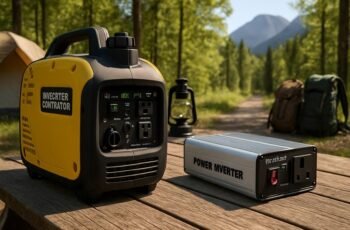
When evaluating backup energy options, reliability is paramount. Inverter generators deliver stable, immediate power with minimal maintenance, making them dependable for sudden outages. On the other hand, wind power systems offer sustainable energy but face variability due to weather conditions. Understanding these strengths and limitations is essential in selecting the right solution. Let’s explore how each performs across factors like power consistency, maintenance, and environmental impact to determine which truly stands out.
Key Takeaways
- Inverter generators provide consistent, on-demand power with quick startup, making them highly reliable for immediate backup needs.
- Wind power reliability depends on wind speed variability and weather conditions, which can cause unpredictable energy output.
- Inverter generators require low-frequency maintenance, enhancing operational reliability during short-term backup use.
- Wind systems need regular, seasonal maintenance to ensure turbine integrity and long-term performance stability.
- For sustained backup, wind power offers longer lifespan and cleaner energy but may require complementary backup due to intermittent output.
How Inverter Generators Provide Reliable Backup Power
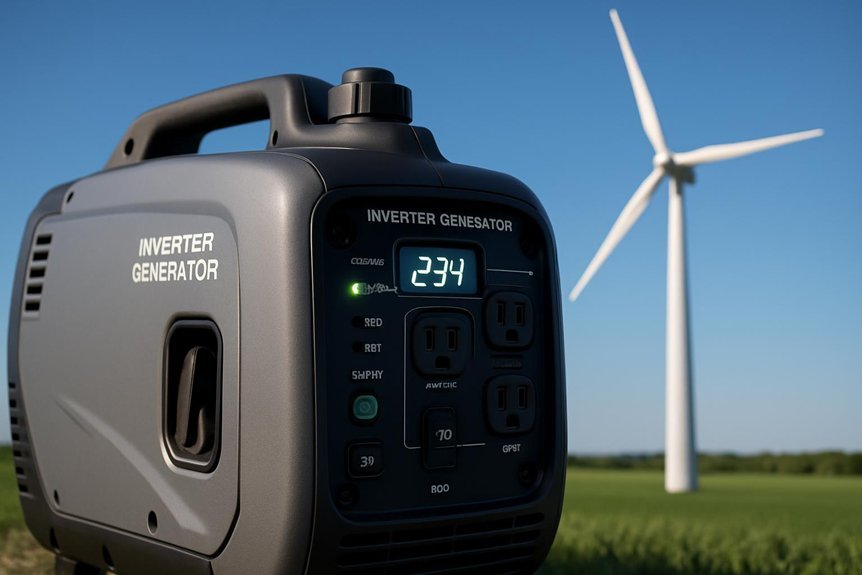
Although wind power systems offer renewable energy solutions, inverter generators remain a reliable choice for backup power due to their consistent output and quick startup capabilities. We can integrate batteries with inverter generators to store excess energy, ensuring seamless power delivery during outages. This battery integration optimizes energy use, reducing fuel consumption and enhancing overall system efficiency. Additionally, inverter generators adjust engine speed based on load demand, greatly improving fuel efficiency compared to conventional generators. This dynamic regulation minimizes fuel waste and lowers operating costs. By providing stable voltage and frequency, inverter generators protect sensitive electronics from damage. Their compact design and portability further support rapid deployment in emergencies. Together, these technical attributes make inverter generators a dependable and efficient backup power solution, especially when continuous, high-quality power is essential.
What Affects the Reliability of Wind Power Systems
When evaluating the reliability of wind power systems, we must consider factors like wind speed variability, which directly impacts energy output consistency. Maintenance requirements for turbines also play a critical role in minimizing downtime and ensuring operational efficiency. Additionally, the location and terrain influence wind patterns and turbine performance, affecting overall system dependability.
Wind Speed Variability
Since wind power systems depend directly on wind speed, fluctuations in this variable greatly impact their reliability. Wind fluctuations can be unpredictable and vary hourly, daily, and seasonally, making consistent power output challenging. These variations affect the energy conversion efficiency of turbines, leading to intermittent energy supply. Accurate energy forecasting becomes essential to anticipate these changes and optimize system performance. By analyzing historical wind data and real-time measurements, we can model wind patterns to improve forecasting accuracy. However, even with advanced models, sudden shifts in wind speed reduce predictability, necessitating complementary backup sources. Understanding and managing wind speed variability is vital for integrating wind power as a dependable backup energy source, ensuring system stability despite the inherent intermittency of wind fluctuations.
Turbine Maintenance Needs
Because turbine components endure constant mechanical stress and environmental exposure, their maintenance directly influences the reliability of wind power systems. Regular turbine inspections are essential to identify early signs of wear or damage, preventing costly turbine repairs and downtime. By systematically monitoring critical parts, we can maintain operational efficiency and extend turbine lifespan. Key maintenance factors include:
- Blade integrity checks for cracks or erosion
- Gearbox oil analysis to detect contamination or wear
- Electrical system diagnostics to guarantee proper function
- Structural inspections of tower and foundation for fatigue
Implementing a rigorous maintenance schedule minimizes unexpected failures, guaranteeing consistent energy output. Neglecting these practices increases the risk of breakdowns, undermining the reliability advantage wind power systems offer as backup energy sources.
Location And Terrain Effects
Although wind power systems offer considerable potential, their reliability hinges greatly on location and terrain characteristics. Terrain challenges like hills, dense forests, or urban obstacles can disrupt airflow, reducing turbine efficiency. Conversely, location advantages such as open plains or coastal areas provide consistent wind speeds, enhancing system dependability. Evaluating these factors is critical for optimizing output and maintaining steady backup energy.
| Terrain Challenges | Location Advantages |
|---|---|
| Irregular landforms | Flat, open landscapes |
| Vegetation obstructions | Coastal and offshore sites |
| Turbulence from buildings | Elevated ridges and plateaus |
| Accessibility issues | Remote, wind-rich zones |
Understanding these elements helps us determine wind power’s true reliability compared to inverter generators under varying environmental conditions.
Comparing Power Consistency: Inverter Generators vs Wind Systems
When we evaluate power consistency, inverter generators deliver a steady and predictable output regardless of environmental conditions, while wind power systems depend heavily on variable wind speeds that can fluctuate rapidly. This difference considerably impacts power stability and energy efficiency in backup applications.
Key factors to take into account include:
- Power Stability: Inverter generators maintain a constant voltage and frequency, ensuring reliable operation of sensitive electronics.
- Environmental Dependency: Wind systems’ output varies with wind speed, causing intermittent power supply and potential energy storage needs.
- Energy Efficiency: Generators operate near ideal efficiency during steady loads, whereas wind systems may produce surplus or insufficient power sporadically.
- Grid Integration: Wind systems often require sophisticated inverters and batteries to stabilize output, increasing system complexity.
Understanding these elements helps us assess which backup system suits your reliability requirements best.
Portability and Setup: Which Backup Source Fits Your Needs?
Power consistency plays a significant role in selecting a backup energy source, but we also need to evaluate how easily the system can be transported and set up. Inverter generators excel in portable power, designed for quick relocation and minimal setup. Their compact form and integrated handles allow us to move them effortlessly, making them ideal for emergency scenarios or temporary power needs. Conversely, wind power systems require more extensive assembly, including tower installation and blade alignment, which demands technical expertise and time. While wind systems offer sustainable energy, their setup complexity reduces immediate usability. As a result, if setup simplicity and rapid deployment are priorities, inverter generators provide a clear advantage. Evaluating these factors helps us determine which backup source aligns best with our mobility and installation requirements.
Maintenance Demands for Inverter Generators and Wind Systems
Both inverter generators and wind power systems demand regular maintenance to confirm peak performance and longevity. Understanding the distinct maintenance requirements helps us evaluate their reliability accurately. Generator upkeep primarily involves monitoring oil levels, replacing air filters, and inspecting spark plugs to ascertain efficient combustion. Conversely, wind power systems require turbine servicing, focusing on blade inspection, lubrication of moving parts, and electrical system checks.
Key maintenance tasks include:
- Routine oil and filter changes for inverter generators
- Blade integrity inspections for wind turbines
- Lubrication of turbine gearboxes and bearings
- Electrical connections and control system diagnostics
Cost Factors Influencing Reliability and Long-Term Use
Let’s examine how initial investment costs compare between inverter generators and wind power systems, focusing on their impact on overall reliability. We’ll also analyze ongoing maintenance and operating expenses that affect long-term viability. Finally, we’ll assess lifespan and replacement costs to determine total cost of ownership over time.
Initial Investment Comparison
When evaluating initial investments, we need to contemplate how upfront costs impact the long-term reliability and operational efficiency of inverter generators versus wind power systems. Initial costs for wind power systems tend to be markedly higher due to equipment complexity and installation requirements, while inverter generators offer a lower entry price. However, financing options can vary, influencing the overall affordability and accessibility of each system. Key factors to take into account include:
- Capital expenditure on equipment and installation
- Available financing options and interest rates
- Potential incentives or subsidies affecting net initial cost
- Impact of initial costs on system scalability and upgrade paths
Maintenance and Operating Expenses
Although inverter generators typically require less frequent maintenance than wind power systems, we must carefully analyze the ongoing operating expenses to gauge long-term reliability and total cost of ownership. Maintenance frequency directly impacts cost efficiency, with inverter generators needing oil changes and filter replacements far less often. Conversely, wind power systems demand more regular inspections and component servicing due to exposure to variable weather conditions.
| Aspect | Inverter Generator | Wind Power System |
|---|---|---|
| Maintenance Frequency | Low (every 50-100 hrs) | High (seasonal inspections) |
| Operating Costs | Moderate fuel and parts cost | Higher parts and labor cost |
| Cost Efficiency | Good for short-term use | Better for sustained use |
Balancing these factors is essential for an informed reliability assessment.
Lifespan and Replacement Costs
Since both inverter generators and wind power systems involve significant upfront investments, understanding their respective lifespans and replacement costs is essential for evaluating long-term reliability and total cost of ownership. Lifespan factors for inverter generators often include engine wear and component fatigue, typically lasting 5-10 years with proper maintenance. Wind power systems, benefiting from fewer moving parts, can last 20-25 years, but replacement expenses for blades or inverters add to costs over time. Key considerations include:
- Durability of components under operational stress
- Frequency and cost of part replacements
- Impact of environmental conditions on lifespan factors
- Total replacement expenses relative to energy output
Weather Dependency and Its Impact on Wind Power Reliability
Because wind power systems rely entirely on atmospheric conditions, their output can vary considerably with changes in weather patterns. Wind patterns and seasonal fluctuations critically affect reliability, making energy generation inconsistent. Understanding these variations helps us assess wind power’s viability as a backup source.
| Factor | Impact on Reliability | Mitigation Strategy |
|---|---|---|
| Wind Patterns | Unpredictable gusts reduce output | Site selection based on wind data |
| Seasonal Fluctuations | Lower speeds in summer reduce generation | Hybridization with other sources |
| Weather Extremes | Storms can damage turbines | Robust design and maintenance |
| Calm Periods | Prolonged no-wind phases halt production | Battery storage or backup generators |
Noise Levels and Environmental Considerations for Both Options
When evaluating inverter generators and wind power systems, we must carefully consider their noise levels and environmental impacts, as these factors greatly influence their suitability for various settings. Inverter generators typically produce consistent noise pollution due to engine operation, which can be disruptive in residential areas. Conversely, wind turbines generate intermittent noise, mainly from blade rotation and mechanical components, often perceived as less intrusive. Environmentally, wind systems offer a cleaner footprint, emitting no direct pollutants, whereas generators rely on fossil fuels, contributing to emissions.
Key considerations include:
Key considerations include noise, wildlife impact, emissions, and the visual footprint of energy systems.
- Noise pollution levels during operation
- Impact on local wildlife and habitats
- Emissions and fuel consumption for generators
- Visual and spatial environmental impact of turbines
Balancing these factors helps us assess which backup energy source aligns best with environmental priorities.
Choosing the Best Backup Energy Source for Your Home’s Needs
Understanding the noise levels and environmental impacts of inverter generators and wind power systems sets a foundation for selecting the most appropriate backup energy source for our homes. When choosing, we must weigh factors like fuel availability, energy efficiency, and environmental impact. Wind systems offer grid independence and integrate well with solar energy and battery storage, enhancing overall reliability. Conversely, inverter generators provide immediate power without reliance on weather but depend on fuel, which may limit sustainability. Technological advancements continue to improve efficiency and reduce emissions in both options. Ultimately, aligning with user preferences—whether prioritizing quiet operation, eco-friendliness, or cost—determines the ideal system. By analyzing these technical elements, we can make informed decisions that guarantee consistent, efficient backup power tailored to our specific home energy needs.
Frequently Asked Questions
Can Inverter Generators Work Indoors Safely?
We don’t recommend using inverter generators indoors due to hazardous generator emissions. For indoor safety, proper ventilation is essential; otherwise, carbon monoxide buildup risks severe health issues. Always prioritize exhaust management when operating these generators inside.
How Do Government Incentives Affect Wind Power Adoption?
We understand government subsidies considerably boost wind power adoption by lowering costs and improving project feasibility. These incentives accelerate renewable energy integration, making wind systems more competitive and attractive for widespread deployment in various energy markets.
What Is the Typical Lifespan of Wind Turbines?
We find wind turbines typically last 20-25 years, but consistent wind turbine maintenance is essential to manage energy output variability. Neglecting upkeep can reduce efficiency and lifespan, impacting overall reliability and performance of the system.
Are There Hybrid Systems Combining Inverters and Wind Power?
Yes, we see hybrid technology combining inverters and wind turbines for efficient renewable integration. These systems optimize energy storage and supply, enhancing reliability by balancing variable wind output with stable inverter-generated power in real time.
How Quickly Can Inverter Generators Start During a Power Outage?
We find inverter generators offer rapid startup speed, often within seconds, delivering immediate power output. This quick activation guarantees seamless backup during outages, making them highly efficient for maintaining consistent energy supply without delay.
Conclusion
When it comes to reliable backup power, inverter generators act like a steady heartbeat—consistent, quick to start, and low-maintenance. Wind power systems, though promising, dance to the unpredictable rhythm of the weather, making their output less certain. For immediate, dependable energy, we lean toward inverter generators. Yet, if sustainability and long-term use are your goals, wind systems have their place. Ultimately, your choice depends on whether you prioritize instant reliability or clean, ongoing power.