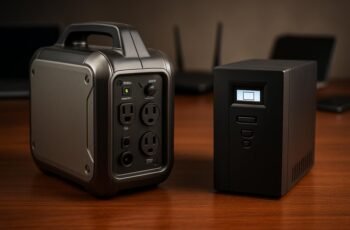
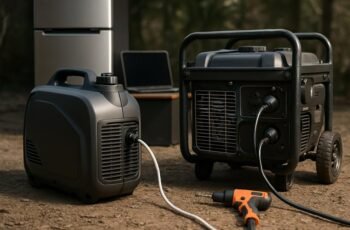
Did you know inverter generators typically operate between 50 and 60 decibels, often quieter than many silent generators that range from 40 to 55 decibels? While silent models aim for noise suppression with constant engine speeds, inverter generators adjust their engine speed based on load, reducing unnecessary noise. But is this technological advantage enough to make them truly quieter in all scenarios? Let’s examine the mechanics and factors behind their sound profiles to find out.
Key Takeaways
- Inverter generators use variable engine speeds and advanced soundproofing, typically producing 50-60 dB noise levels.
- Silent generators rely on robust insulation and mufflers, achieving quieter noise levels of 40-55 dB.
- Silent generators are generally quieter than inverter models due to superior physical noise dampening.
- Inverter generators are lighter and more portable but may be slightly louder than silent generators in some cases.
- Both types reduce noise compared to conventional generators, but silent models excel in noise suppression.
How Inverter Generators Work Differently From Silent Generators
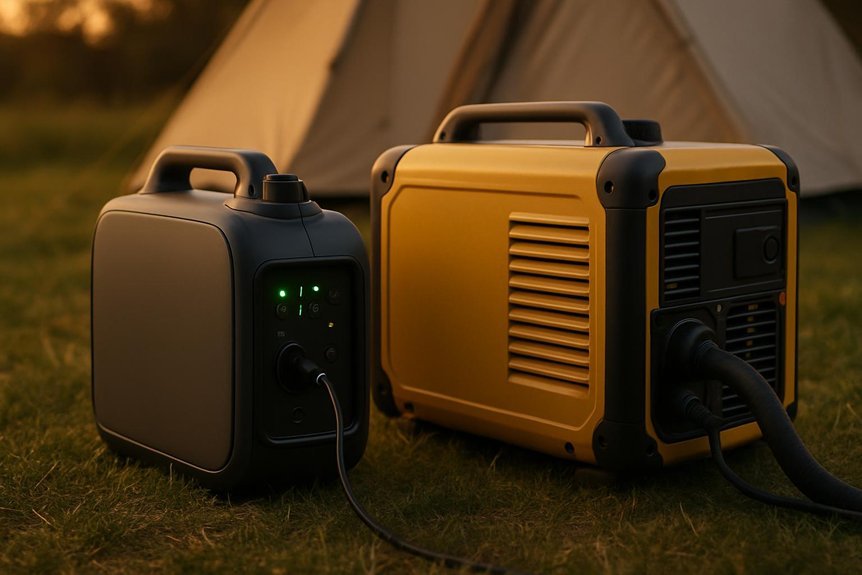
Although both inverter generators and silent generators aim to provide power quietly, they operate on fundamentally different principles that affect their performance and efficiency. Inverter generators utilize advanced inverter technology, converting raw AC power into DC and then back to clean AC power, allowing the engine to run at variable speeds optimized for load demand. This modulation greatly enhances noise reduction by minimizing unnecessary engine strain and vibrations. In contrast, silent generators primarily rely on physical noise dampening methods such as insulation and mufflers to reduce sound output, without altering engine speed. By integrating inverter technology, inverter generators achieve superior efficiency and more consistent noise reduction, especially under varying loads, setting them apart from the more conventional silent generator designs.
What Causes Noise in Inverter and Silent Generators
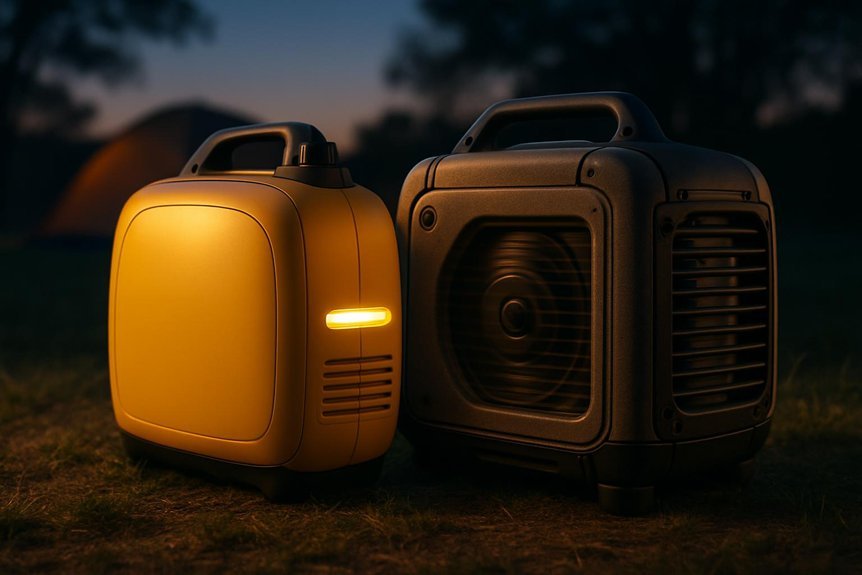
When we examine the sources of noise in both inverter and silent generators, we find that mechanical components, engine combustion, and exhaust systems play primary roles. Noise reduction heavily depends on generator design, focusing on minimizing vibrations and sound emissions. Key noise contributors include:
Mechanical parts, engine combustion, and exhaust systems are the primary sources of noise in generators.
- Engine combustion cycles producing combustion noise.
- Mechanical vibrations from moving parts and alternator operation.
- Exhaust noise generated by high-pressure gas expulsion.
- Cooling fan operation, which can add to ambient sound levels.
Both inverter and silent generators address these factors differently through design choices like soundproofing enclosures, variable engine speeds, and advanced mufflers. Understanding these noise sources helps us appreciate how innovations in generator design target noise reduction without compromising performance.
Comparing Typical Noise Levels: Inverter vs Silent Generators
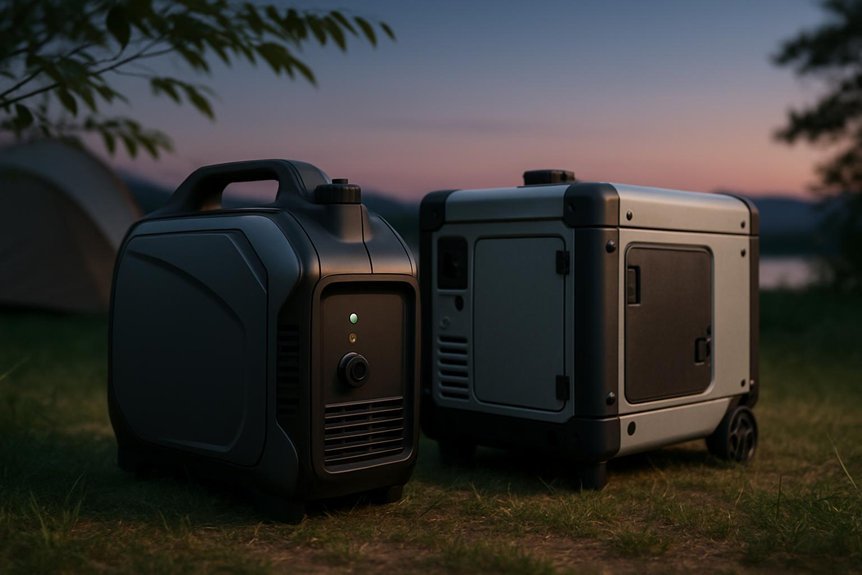
Since noise levels directly impact user experience and application suitability, comparing typical sound outputs of inverter and silent generators reveals important distinctions. Noise measurement shows inverter generators usually emit 50-60 dB, benefiting from advanced soundproofing techniques and variable engine speeds. Silent generators, designed specifically for minimal noise, often range from 40-55 dB, employing extensive insulation and mufflers.
| Generator Type | Typical Noise Level (dB) | Key Soundproofing Techniques |
|---|---|---|
| Inverter Generator | 50-60 | Variable engine speed, insulation |
| Silent Generator | 40-55 | Acoustic enclosures, mufflers |
| Conventional Gen | 65-75 | Limited soundproofing |
This comparison clarifies that while inverter models are quieter than conventional ones, silent generators generally achieve lower noise levels through more robust soundproofing techniques.
Which Generator Type Is Best for Quiet Camping and Tailgating?
When choosing a generator for quiet camping and tailgating, we need to evaluate noise levels alongside portability and convenience. Inverter generators typically offer lower decibel ratings and lighter weight, enhancing mobility. Silent generators, however, emphasize noise suppression but may sacrifice some ease of transport.
Noise Levels Comparison
Although both inverter and silent generators aim to reduce noise output, their engineering approaches lead to distinct sound profiles that impact our experience during quiet camping and tailgating. Inverter generators use advanced electronics to modulate engine speed, lowering noise dynamically, while silent generators rely on heavy insulation and mufflers to dampen sound consistently. When comparing noise levels, consider these key factors:
- Fuel types influence combustion noise—propane and gasoline vary in sound intensity.
- Maintenance practices affect engine smoothness and noise emission.
- Inverter models typically operate between 40–60 dB, adjusting with load.
- Silent generators maintain a steady noise level around 50–65 dB regardless of load.
Thus, inverter generators often provide quieter operation under variable loads, while silent generators offer consistent but less dynamic noise control.
Portability and Convenience
Because portability and ease of use directly impact our enjoyment during quiet camping and tailgating, we need to carefully evaluate how inverter and silent generators compare in these areas. Inverter generators typically offer better weight distribution and overall lighter weight, enhancing portability. Their superior fuel efficiency means less frequent refueling, boosting convenience. Silent generators, while often heavier and bulkier due to added soundproofing, may compromise ease of transport. Let’s analyze key factors:
| Feature | Inverter Generators | Silent Generators |
|---|---|---|
| Weight | Lightweight, balanced | Heavier, uneven distribution |
| Fuel Efficiency | High, longer runtime | Moderate, more frequent fills |
| Portability | Easier to carry and move | Bulkier, less convenient |
| Setup Convenience | Quick, user-friendly | More complex setup |
Other Factors That Affect Generator Noise Besides Type
Besides the generator type, factors like engine size and operating speed greatly influence noise levels. The design of the exhaust system and muffler also plays an essential role in sound attenuation. Additionally, where we position the generator and the characteristics of the surrounding environment can affect how noise propagates.
Engine Size And Speed
When we examine generator noise, engine size and speed play crucial roles in determining overall sound levels. Larger engines generally produce more noise due to increased combustion events and mechanical movement. Speed variation also affects noise; engines running at higher RPMs emit louder sounds because of faster-moving components and increased exhaust pulses. Inverter generators typically optimize engine performance by adjusting speed according to load, reducing noise during low demand. To analyze this further, consider:
- Larger engine displacement correlates with elevated noise output.
- Constant high speeds maintain consistent noise levels, often louder.
- Variable engine speed allows noise reduction under partial loads.
- Engine tuning impacts efficiency and noise emission.
Understanding these factors helps us assess noise beyond inverter versus silent generator classifications.
Exhaust And Muffler Design
Although many focus on engine size and speed, exhaust and muffler design greatly influence generator noise levels. Exhaust efficiency plays a critical role in controlling sound output by optimizing gas flow and reducing backpressure, which also enhances engine performance. Advanced muffler technology further attenuates noise through specialized chambers, baffles, and sound-absorbing materials that disrupt sound waves and lower decibel levels. Inverter generators often incorporate more sophisticated muffler systems designed for quieter operation, but traditional silent generators can also benefit from high-grade muffler technology. Evaluating a generator’s noise profile requires understanding how exhaust efficiency and muffler design interact. Ultimately, these components are pivotal factors that can markedly reduce noise beyond the inherent differences between inverter and conventional generator types.
Placement And Surrounding Environment
While exhaust and muffler design considerably impact generator noise, we must also consider how placement and the surrounding environment affect sound levels. Generator placement is critical, as surfaces and obstacles influence sound propagation. Environmental factors such as terrain, vegetation, and nearby structures modify noise reflection and absorption. To optimize noise reduction, we should focus on:
- Positioning the generator on sound-absorbing surfaces like grass rather than concrete.
- Placing barriers or walls to block direct sound paths.
- Avoiding locations near reflective surfaces that amplify noise.
- Considering wind direction, as it can carry noise further.
How to Measure and Test Generator Noise Effectively
How do we accurately measure and test generator noise to guarantee reliable comparisons? First, precise noise measurement requires using a calibrated sound level meter positioned at a standardized distance—usually 7 meters—from the generator. We conduct sound testing under consistent load conditions, typically at 25%, 50%, and 100% capacity, to capture real-world operational noise levels. It’s essential to perform tests in an open, reflective-free environment to minimize ambient sound interference. We also make certain the generator is stable and warmed up before measurements begin, avoiding transient noise spikes. Data collected must be reported in decibels (dB) using the A-weighting scale (dB(A)), which aligns with human hearing sensitivity. By standardizing these parameters, we make certain noise measurement and sound testing yield reliable, comparable data across inverter and silent generator models.
Tips to Reduce Noise No Matter Which Generator You Choose
Since generator noise impacts both user comfort and community standards, we must implement effective strategies to minimize sound output regardless of the model we select. Whether dealing with inverter or silent generators, controlling noise requires a systematic approach. We recommend these four technical measures:
Effective noise control is essential for user comfort and community standards, regardless of generator type.
- Install noise barriers around the generator to disrupt and absorb sound waves.
- Utilize soundproof enclosures specifically designed to reduce operational noise without restricting airflow.
- Position the generator on vibration-damping mounts to minimize mechanical noise transmission.
- Maintain the generator regularly, ensuring components like mufflers and fans operate effectively to prevent excess noise.
Applying these strategies allows us to considerably reduce noise levels, making any generator more community-friendly and enhancing our operational environment.
Frequently Asked Questions
Are Inverter Generators More Fuel-Efficient Than Silent Generators?
We find inverter generators typically offer better fuel consumption due to variable engine speeds matching power demand, which also reduces noise levels. Silent generators may be quieter mechanically but often run at constant speeds, increasing fuel use.
Can Inverter Generators Power Sensitive Electronics Safely?
We can confidently say inverter generators provide pristine power quality and voltage stability, gently humming at low noise levels. Their efficiency comparison favors safe operation, ensuring your sensitive electronics run smoothly without risk or interruption.
What Maintenance Differences Exist Between Inverter and Silent Generators?
We notice maintenance differs mainly in oil changes and filter replacements frequency due to inverter generators’ advanced cooling systems and design features. Noise levels don’t affect upkeep, but usage frequency dictates timely service for both types.
Do Inverter Generators Have a Longer Lifespan Than Silent Generators?
We find inverter generators often exhibit better durability compared to silent generators, mainly due to advanced technology and efficient fuel use. However, lifespan factors like maintenance and operating conditions ultimately determine their longevity in practical use.
Are Inverter Generators More Expensive to Repair Than Silent Generators?
We find inverter generators usually have higher repair costs but lower repair frequency than silent generators. Their advanced electronics demand precise maintenance, yet this reduces overall wear, making repairs less frequent despite being pricier when needed.
Conclusion
When choosing between inverter and silent generators, we see that inverter models generally offer quieter operation thanks to variable engine speeds and advanced soundproofing. But does a few decibels really change your outdoor experience? For activities like camping or tailgating, inverter generators often provide a more peaceful environment without bulky designs. Ultimately, understanding noise sources and using proper measurement helps us select and maintain the quietest option for our needs.