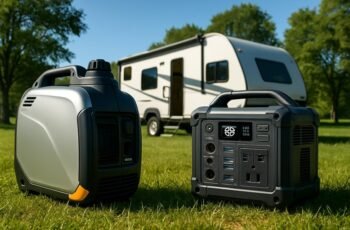
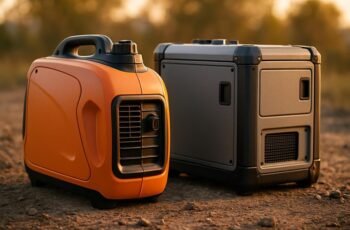
When deciding between inverter and high-wattage generators, we need to take into account not just the total power output but the nature of the appliances we intend to run. Inverter generators offer clean, stable electricity ideal for sensitive devices, while high-wattage units deliver the raw power needed for heavy-duty equipment. Understanding these differences is essential because it directly affects how many and what types of appliances each generator can effectively support. Let’s examine these factors more closely.
Key Takeaways
- High-wattage generators power more appliances simultaneously due to higher continuous and surge wattage capacities.
- Inverter generators suit fewer, sensitive electronics needing stable, clean power but have limited total wattage output.
- Surge capacity in high-wattage generators enables starting multiple heavy-load appliances without tripping breakers.
- Inverter generators adjust engine speed for efficiency but typically cannot handle large appliance load spikes.
- Appliance compatibility depends on total wattage and surge needs, favoring high-wattage units for quantity and inverter units for sensitive devices.
How Inverter Generators Work and What Appliances They Suit Best
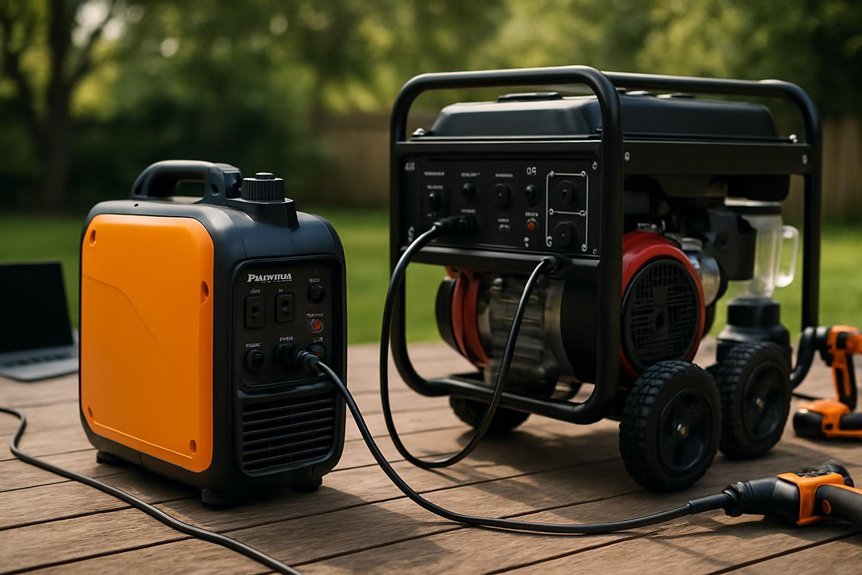
Although inverter generators may seem complex, they operate on a straightforward principle: converting raw AC power into stable, clean DC power before inverting it back to AC with precise frequency and voltage control. This inverter technology guarantees consistent power output, minimizing voltage fluctuations that can damage sensitive electronics. Because of this refined power delivery, inverter generators excel in appliance compatibility, particularly with devices that require stable current, such as laptops, smartphones, and medical equipment. Their ability to adjust engine speed based on load further enhances fuel efficiency and reduces noise. However, while they provide clean power ideal for sensitive electronics and small appliances, they typically have lower wattage capacity compared to traditional generators. This makes them best suited for powering low-to-moderate loads rather than multiple high-draw appliances simultaneously.
What High-Wattage Generators Are Built For and Their Appliance Capacity
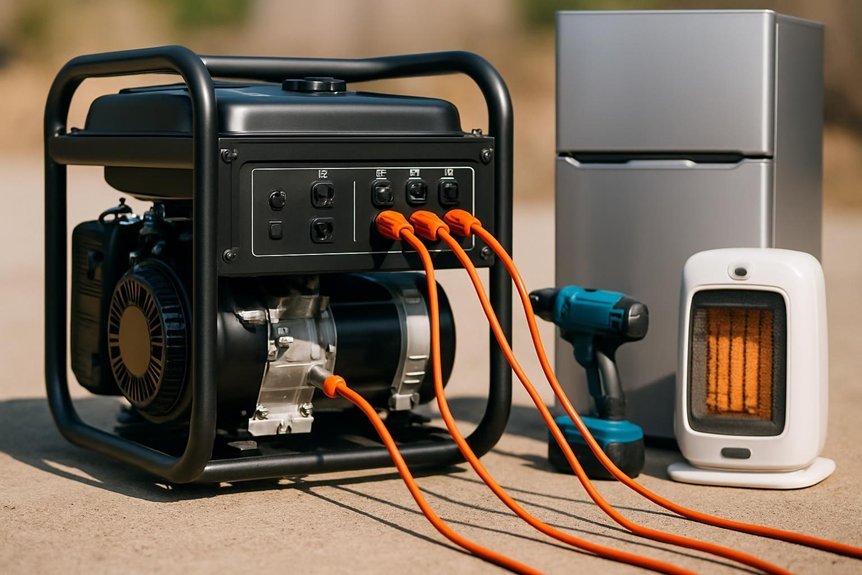
While inverter generators prioritize clean power for sensitive electronics and moderate loads, high-wattage generators serve a different purpose by delivering substantial power output for demanding applications. These generators are engineered with robust features such as larger engines, durable alternators, and enhanced cooling systems to sustain continuous heavy loads. Their design supports a broad range of appliance types, from large HVAC units and power tools to multiple household appliances running simultaneously. High-wattage generators excel in scenarios requiring sustained power delivery without compromising performance. By focusing on peak wattage and continuous power capacity, they guarantee compatibility with high-demand appliances that inverter generators might struggle to support. Understanding these generator features helps us select the right model based on the appliance types we need to power under intensive conditions.
Comparing Power Output: Inverter vs High-Wattage Generators
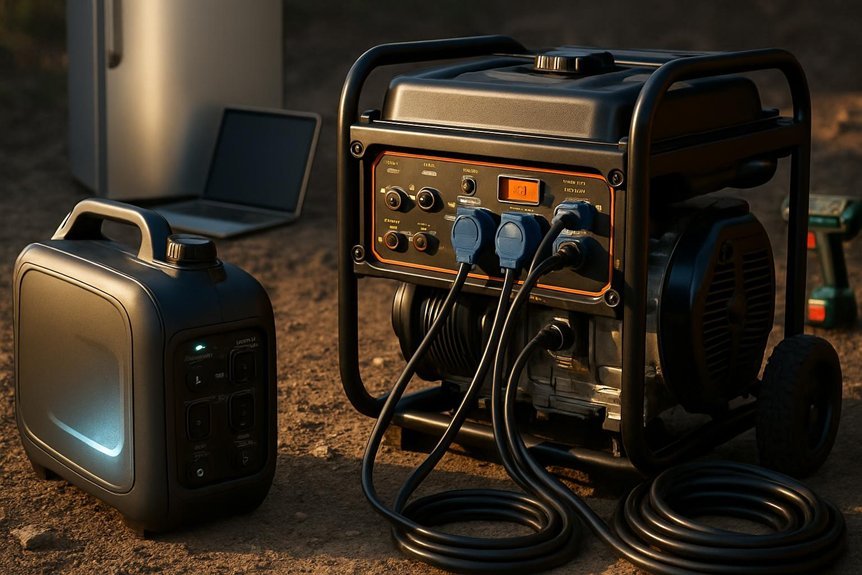
When comparing power output, we must consider how inverter and high-wattage generators deliver energy to meet different demands. High-wattage generators typically provide substantial peak power, enabling them to handle heavy loads and appliances with high surge capacity requirements. This surge capacity allows them to start motors and compressors effectively. In contrast, inverter generators produce stable, clean power with lower peak output but excel at efficiently modulating energy based on real-time demand. Their surge capacity is more limited, restricting the types of appliances they can reliably power simultaneously. Understanding these distinctions helps us evaluate which generator suits specific power needs, balancing the raw surge capability of high-wattage units against the optimized, adaptive output of inverters for varied appliance loads.
Which Appliances Need Stable Power and Why Inverter Generators Excel
The difference in power delivery between inverter and high-wattage generators directly impacts which appliances they can support effectively. Appliances with sensitive electronics—like laptops, smartphones, and medical devices—require stable voltage to operate safely. Inverter generators excel here by producing clean, low-harmonic distortion power, minimizing power surges that can damage delicate components. This stable output guarantees appliance safety and prolongs device lifespan. In contrast, conventional high-wattage generators often exhibit voltage fluctuations and higher harmonic distortion, posing risks to sensitive electronics. Additionally, inverter generators adjust engine speed to match load demands, enhancing energy efficiency and reducing fuel consumption. For these reasons, when powering sensitive electronics, inverter generators provide superior performance and protection compared to their high-wattage counterparts, making them the preferred choice in scenarios demanding stable, reliable power.
How Many and What Types of Devices Can High-Wattage Generators Handle?
How many devices can a high-wattage generator power simultaneously, and what types are best suited for its output? High wattage types typically handle multiple heavy-duty appliances without exceeding appliance limits. These generators excel at running high-demand equipment like air conditioners, electric stoves, water heaters, and power tools concurrently. Their robust output supports both resistive and inductive loads, making them ideal for construction sites and whole-house backup scenarios. However, the total appliance load must stay within the generator’s rated capacity to prevent overload and damage. While they can power several large devices at once, understanding each appliance’s starting and running wattage is essential for accurate load calculation. This guarantees peak performance and longevity of both the generator and connected devices.
Fuel Efficiency and Runtime: How Appliance Load Affects Each Generator Type
Why does fuel efficiency vary so much between inverter generators and high-wattage models under different appliance loads? Inverter generators adjust engine speed dynamically based on real-time power demand, enhancing fuel consumption and maximizing runtime efficiency, especially under light to moderate loads. Conversely, high-wattage generators typically run at a constant speed regardless of load, leading to increased fuel consumption when powering fewer appliances. This constant operation reduces runtime efficiency, particularly during partial loads. When appliance load increases markedly, the fuel consumption gap narrows because both generator types operate near maximum capacity. Understanding these differences helps us select the right generator for specific applications, ensuring we balance power needs with efficient fuel use and extended runtime.
Noise Levels and Portability: Impact on Appliance Use and Placement
Balancing fuel efficiency with power output naturally leads us to contemplate how noise levels and portability influence generator choice and placement. Inverter generators excel in noise reduction due to advanced muffler systems and enclosed designs, often operating below 60 decibels. This reduced acoustic footprint allows placement closer to living spaces without significant disturbance. Conversely, high-wattage generators typically emit higher noise levels, limiting proximity to occupied areas. Portability features further differentiate these models; inverter generators are compact, lightweight, and often include ergonomic handles, enhancing transport and storage ease. High-wattage generators, while bulkier and heavier, sometimes offer wheel kits to mitigate mobility challenges. Understanding these noise reduction and portability features helps us optimize appliance use by selecting generator types suited to specific environmental and spatial constraints.
Choosing the Right Generator Based on Your Appliance Needs and Setup
To choose the right generator, we need to analyze the power output requirements of our appliances and guarantee compatibility with their specific electrical demands. Inverter generators offer stable power for sensitive electronics, while high-wattage generators handle larger loads but may produce less consistent current. Let’s evaluate how these factors influence our setup to optimize performance and safety.
Power Output Comparison
Although both inverter and high-wattage generators serve to power our devices, their output capabilities differ markedly, influencing which one suits our specific appliance demands and setup. High-wattage generators excel in raw power capacity, ideal for heavy-duty appliances but often at lower efficiency ratings. Inverter generators provide cleaner power with higher efficiency, though with limited peak output.
Key considerations include:
- Maximum continuous power output
- Surge power capacity for startup loads
- Fuel efficiency relative to power produced
- Stability of voltage and frequency output
- Scalability to match appliance load profiles
Appliance Compatibility Factors
When selecting a generator, we must carefully evaluate the specific appliances we intend to power, as their electrical characteristics directly affect compatibility. Key factors include appliance wattage and surge capacity. Each appliance has a continuous wattage rating and a higher surge wattage requirement during startup. We need to verify the generator’s rated output meets or exceeds the combined continuous wattage of all connected devices. Additionally, the generator’s surge capacity must handle the highest startup load without tripping. Inverter generators provide clean, stable power suitable for sensitive electronics with variable loads, while high-wattage generators excel at handling heavy surge demands from large appliances like air conditioners or power tools. By analyzing these parameters, we can match the generator type and capacity precisely to our appliance setup, optimizing performance and reliability.
Frequently Asked Questions
How Do Maintenance Costs Compare Between Inverter and High-Wattage Generators?
We find inverter generators require less maintenance frequency and generally have lower repair costs due to advanced technology and efficient operation, while high-wattage generators demand more frequent upkeep and often incur higher repair expenses over time.
Can Inverter Generators Be Connected in Parallel for More Power?
While traditional generators rarely support parallel operation, inverter generators often do, allowing us to achieve power scaling by linking two units. This capability lets us efficiently increase output without investing in a single larger generator.
What Safety Features Are Common in High-Wattage Generators?
We’ve found high-wattage generators commonly include automatic shutoff and overload protection. These features prevent damage by stopping operation during low oil or excessive load, ensuring safe, reliable power delivery under demanding conditions.
How Do Weather Conditions Affect Generator Performance?
It is understood that extreme temperatures reduce generator efficiency and that moisture compromises electrical components. We must monitor temperature impact closely and protect generators from harsh weather to maintain peak performance and guarantee consistent power output.
Are There Tax Incentives for Purchasing Energy-Efficient Generators?
Yes, we can often claim tax deductions or energy credits when purchasing energy-efficient generators. These incentives vary by location and model, so we recommend verifying eligibility to maximize financial benefits while supporting sustainable energy use.
Conclusion
While high-wattage generators power more appliances simultaneously, their bulk and noise can be impractical for sensitive electronics or small setups. We recognize some might worry inverter generators lack capacity, but their stable, clean power is essential for protecting delicate devices. Ultimately, choosing between them depends on your appliance demands—if you need heavy load capacity, go high-wattage; for consistent voltage and quieter operation, inverter generators are the smarter, more precise choice.