When weighing the cost-effectiveness of inverter generators against battery backup systems, we need to evaluate factors like initial investment, fuel and maintenance expenses, and typical power demands. Inverter generators often come with higher ongoing costs due to fuel and upkeep, while battery backups usually require less maintenance and no fuel. Understanding how these variables impact your total expenses can help us determine which option truly offers better savings over time.
Key Takeaways
- Battery backup systems have higher upfront costs but offer superior energy efficiency and lower ongoing operational expenses than inverter generators.
- Inverter generators incur continuous fuel and maintenance costs, reducing long-term cost savings despite lower initial prices.
- Frequent, low-to-moderate power needs cost less with battery backups due to zero fuel expenses and minimal maintenance.
- Inverter generators are more cost-effective for high-load or extended outage scenarios where portability and extended runtime matter.
- Battery replacements every 5-15 years impact costs but are often offset by long-term savings from reduced fuel and maintenance.
How Inverter Generators and Battery Backup Systems Work Differently
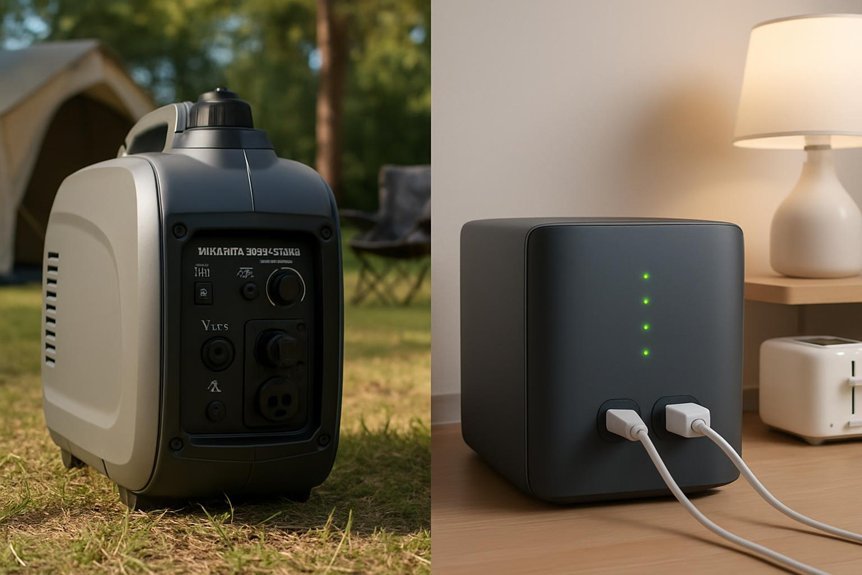
While both inverter generators and battery backup systems provide power during outages, they operate on fundamentally different principles. Inverter generators rely on internal combustion engines to convert fuel—typically gasoline or propane—into mechanical energy, which is then transformed into electrical power through an inverter. This process allows for stable, clean power generation suitable for sensitive electronics. Conversely, battery backup systems store electrical energy chemically, releasing it as direct current, which an inverter converts to alternating current when needed. Regarding energy efficiency, battery backups tend to excel since they avoid the fuel consumption and emissions associated with combustion engines. However, inverter generators offer continuous power as long as fuel is supplied, whereas battery backups are limited by stored capacity, requiring recharging after depletion. Understanding these fundamental differences helps us choose the right solution for specific power needs.
Comparing Upfront Costs and Long-Term Savings for Each Option
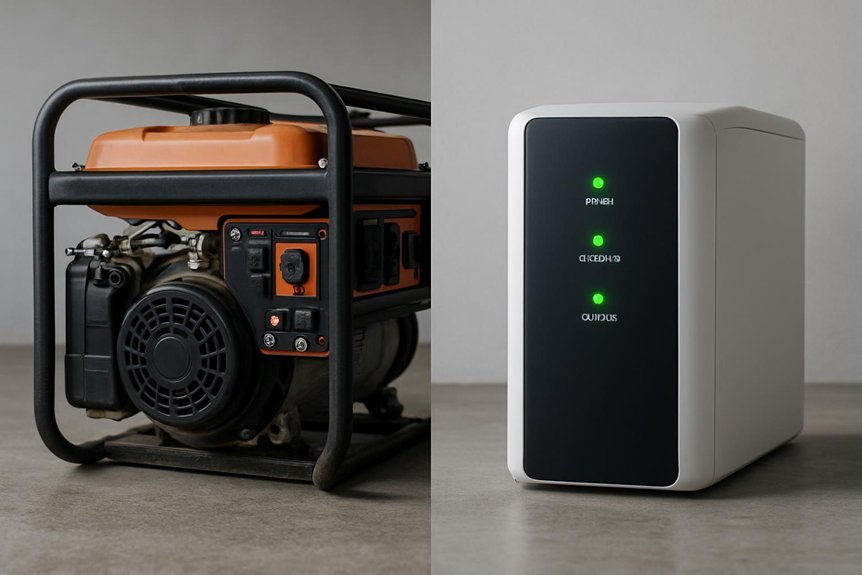
Now that we recognize how inverter generators and battery backup systems function differently, let’s examine how their costs compare both initially and over time. The upfront investment for inverter generators typically ranges from $500 to $2,000, depending on power capacity, while battery backup systems can start higher, often between $1,000 and $3,500, due to battery technology and inverter components. However, battery backups boast superior energy efficiency, converting stored electricity with minimal loss, which reduces operational expenses. In contrast, inverter generators consume fuel continuously, leading to ongoing fuel costs and maintenance. Over the long term, battery backups tend to offer savings by lowering fuel and maintenance expenses, though they require eventual battery replacements, adding to lifetime costs. Evaluating both upfront investment and ongoing energy efficiency is essential for a thorough cost comparison.
Which Option Runs Cheaper for Your Typical Power Needs?
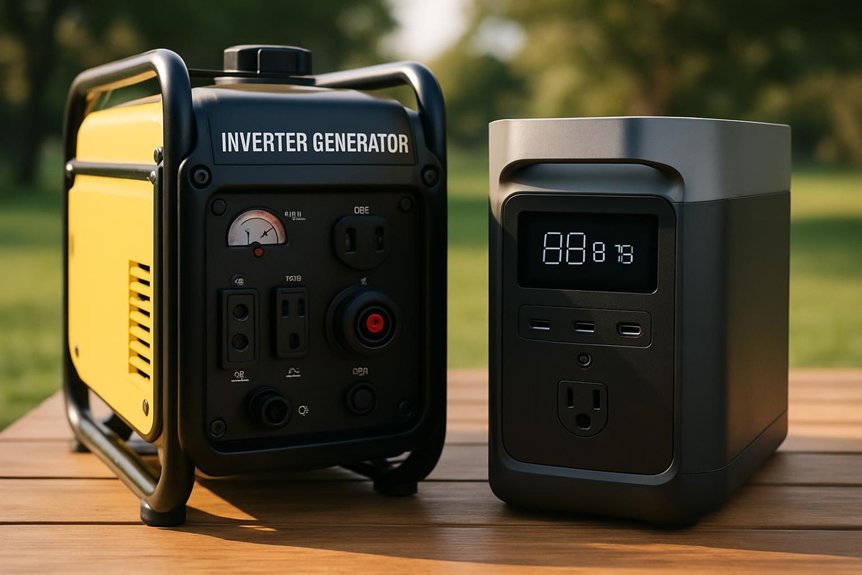
How do inverter generators and battery backup systems compare when meeting our everyday power demands? Inverter generators typically run on gasoline, with average energy consumption rates around 0.1 to 0.2 gallons per hour under moderate load, translating to variable fuel costs. Battery backup systems rely on stored electricity, which can be recharged from the grid or solar panels, often resulting in lower operational costs per kilowatt-hour. When analyzing cost efficiency, battery backups shine in scenarios with frequent, low-to-moderate power needs due to minimal incremental energy costs after initial investment. In contrast, inverter generators may become less cost-efficient over time because of ongoing fuel expenses. Consequently, for typical power needs, battery backup systems generally offer a cheaper solution, especially when factoring in energy consumption patterns and stable electricity rates.
Maintenance and Lifespan: What Affects Your Total Cost
Because maintenance demands and lifespan directly influence the total cost of ownership, understanding these factors is crucial when choosing between inverter generators and battery backup systems. Inverter generators require regular maintenance frequency, including oil changes every 50-100 hours and periodic air filter replacements. Their lifespan factors depend heavily on usage intensity and proper upkeep, typically lasting 2,000 to 5,000 hours. Battery backup systems, by contrast, have minimal maintenance frequency, mainly limited to occasional battery health monitoring and replacement every 5 to 15 years depending on battery chemistry and charge cycles. Lifespan factors for batteries hinge on charge/discharge rates, temperature, and storage conditions. Overall, inverter generators demand more active maintenance, increasing operational costs, while battery backups offer longer service with less upkeep, which can lower total cost over time despite higher initial investment.
When to Choose an Inverter Generator vs Battery Backup to Save Money?
What factors should we consider to determine whether an inverter generator or a battery backup system saves us more money? First, we need to evaluate our power demands and usage patterns. Inverter generators provide continuous portable power, ideal for high-load devices or extended outages, but they consume fuel, impacting operating costs. Battery backup systems offer higher energy efficiency with zero fuel costs and quieter operation, making them cost-effective for short-term, low to moderate power needs. We should also factor in initial investment, maintenance expenses, and potential fuel price fluctuations. If portability and extended runtime are priorities, an inverter generator may save more money over time. Conversely, for energy-efficient, low-maintenance backup during brief outages, battery backups typically reduce total cost. Analyzing these variables helps us choose the most economical solution.
Frequently Asked Questions
Are Inverter Generators Noisy Compared to Battery Backup Systems?
We’ve found inverter noise typically exceeds that of battery backup systems, despite better generator efficiency improving sound levels. Battery backups run silently, making them quieter and often preferable when noise reduction is a priority.
Can Battery Backup Systems Power Sensitive Electronic Devices Safely?
We believe battery backup systems provide power quality so precise it’s like a surgeon’s scalpel, ensuring device compatibility with sensitive electronics. Their clean, consistent output minimizes risk, making them ideal for safely powering delicate devices with confidence.
How Do Inverter Generators Perform in Extreme Weather Conditions?
We’ve found inverter generators offer strong performance reliability and weather resilience, operating efficiently in cold or hot conditions. However, extreme moisture or dust can reduce lifespan, so proper maintenance is key for consistent operation in harsh environments.
Are There Eco-Friendly Options Among Inverter Generators and Battery Backups?
Consider a cabin using solar integration with a battery backup, cutting emissions by 40%. We find battery systems generally have lower maintenance costs and offer greener options compared to fuel-dependent inverter generators, aligning with eco-friendly goals.
What Are the Space Requirements for Installing Each System?
We find installation space varies: inverter generators need 3-5 square feet due to fuel storage, while battery backup systems often require 1-2 square feet with a smaller system footprint, making them ideal for limited spaces.
Conclusion
When weighing inverter generators against battery backup systems, we see that while generators handle high loads, their fuel and maintenance costs add up over time. Battery backups, though sometimes pricier upfront, often save money long-term with minimal upkeep. Some may worry batteries can’t power everything, but for most typical needs, they provide reliable, cost-effective energy. By closely matching your usage patterns to each option’s strengths, we can choose the smarter, more economical solution.