We often assume that all generators perform similarly for home backup power, but their underlying technology creates significant differences. Inverter generators provide stable voltage and better fuel efficiency, while conventional models deliver higher peak power but with more noise and fuel consumption. Understanding these distinctions is essential to matching a generator with your specific needs, budget, and environment—so let’s explore how each option measures up across key factors like power output, noise, and maintenance.
Key Takeaways
- Inverter generators provide cleaner, stable power ideal for sensitive home electronics during backup power situations.
- Conventional generators deliver higher peak wattage, suitable for homes with heavy appliance loads.
- Inverter models operate quieter, reducing noise disturbance in residential neighborhoods.
- Inverter generators offer better fuel efficiency and longer maintenance intervals, lowering long-term costs.
- Conventional generators are preferable for prolonged outages requiring sustained high power output.
How Inverter and Conventional Generators Work Differently
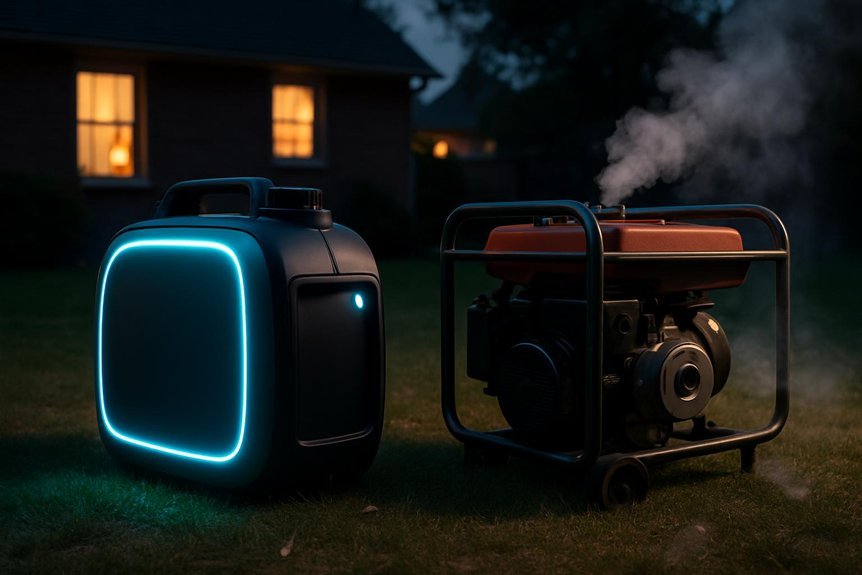
Although both inverter and conventional generators produce electrical power, they do so through fundamentally different processes that affect efficiency and output quality. Inverter technology converts the raw power generated by an engine into direct current (DC) and then inverts it back to stable alternating current (AC), ensuring consistent voltage and frequency. This multi-step conversion allows for cleaner, more reliable power suitable for sensitive electronics. In contrast, conventional mechanics rely on a direct mechanical linkage between the engine and alternator, producing raw AC power without additional conditioning. This straightforward approach results in variable voltage and frequency under load changes, which can affect sensitive equipment. Understanding these operational distinctions clarifies why inverter generators provide more stable output, while conventional generators offer a simpler, less processed power generation method.
Comparing Power Output and Fuel Efficiency
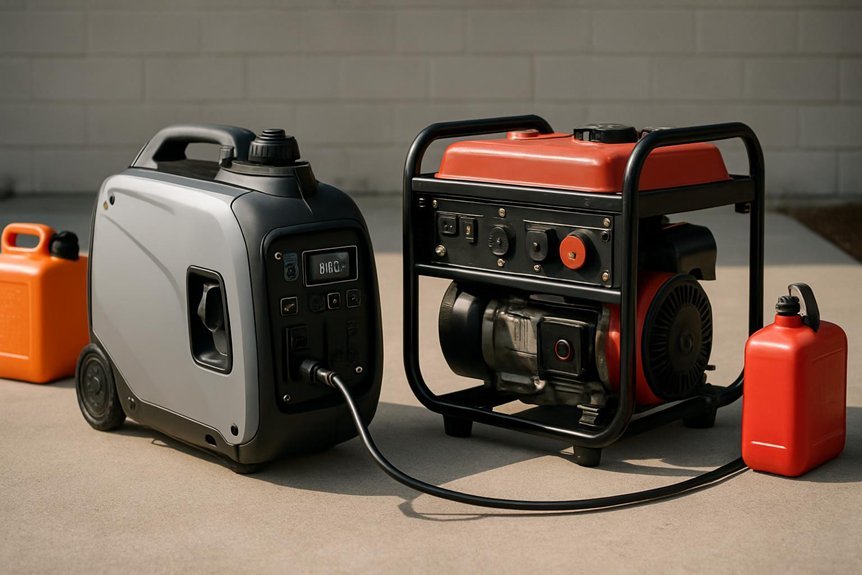
When we compare inverter and conventional generators, power output and fuel efficiency emerge as critical factors shaping their performance profiles. Conventional generators typically provide higher peak power output, making them suitable for heavy-duty applications requiring substantial wattage. However, their fuel efficiency tends to be lower, as they run at a constant speed regardless of load, consuming more fuel during partial loads. In contrast, inverter generators adjust engine speed to match the electrical demand, enhancing fuel efficiency by up to 30% in light to moderate load conditions. Though their power output is generally lower than conventional models, inverter generators deliver cleaner, more stable power ideal for sensitive electronics. Consequently, if maximizing power output is priority, conventional generators excel, but for superior fuel efficiency and optimized energy use, inverter generators hold a distinct advantage.
Which Generator Is Quieter for Home Use?
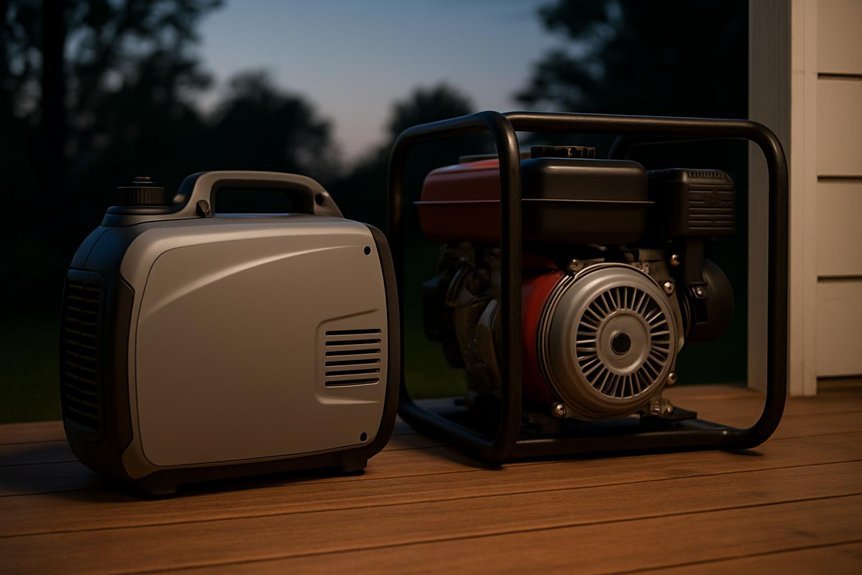
Beyond power output and fuel efficiency, noise levels play a significant role in choosing a generator for home use. For residential use, quieter operation reduces disturbance and is often mandated by local regulations. Inverter generators typically produce lower noise levels, ranging from 40 to 60 decibels, compared to conventional generators which often exceed 70 decibels. To quantify this:
- Inverter generators use advanced engine technology and soundproofing options, minimizing mechanical noise.
- Conventional generators rely on less efficient mufflers and open-frame designs, increasing sound output.
- Noise levels for inverter models remain stable under varying loads, enhancing predictability.
- Residential soundproofing options can further reduce noise but are more effective with inherently quieter inverter units.
Thus, for quiet operation in home backup power, inverter generators are generally superior.
Why Clean Energy Matters for Sensitive Electronics
We need to guarantee our generators deliver clean energy to protect sensitive electronic components from damage caused by power fluctuations. Stable voltage output minimizes electromagnetic interference, which can disrupt device performance and reduce lifespan. Understanding these factors helps us choose the right generator for reliable, safe power delivery.
Protecting Electronic Components
Because sensitive electronics require stable power input, the quality of the energy source directly impacts their performance and longevity. Inverter generators provide cleaner power with precise voltage regulation and lower total harmonic distortion compared to conventional generators, which helps protect electronic components. Here’s why this matters:
- Consistent voltage regulation prevents damage from voltage spikes and drops.
- Lower harmonic distortion reduces overheating and malfunction risks.
- Integrated surge protection safeguards circuits during power surges.
- Stable frequency output guarantees reliable operation of sensitive devices.
Using power sources with these features minimizes the risk of premature failure in electronics, maintaining their functionality and extending their service life. Consequently, inverter generators offer significant advantages in protecting home electronics during outages or backup power use.
Reducing Power Fluctuations
Maintaining stable power output is fundamental to safeguarding sensitive electronics from damage caused by fluctuations. Power stability directly impacts the performance and longevity of devices like computers, medical equipment, and home automation systems. Inverter generators excel in this area by employing advanced voltage regulation technologies, ensuring consistent frequency and voltage levels with minimal deviation—typically within ±1%. Conventional generators, however, often produce variable voltage and frequency, prone to spikes and dips that can degrade electronics over time. By delivering clean energy characterized by precise voltage regulation, inverter generators reduce the risk of malfunctions and data loss. For home backup power, prioritizing power stability means choosing a system that maintains steady current flow, thereby protecting sensitive components and minimizing costly repairs or replacements.
Minimizing Electromagnetic Interference
Although both inverter and conventional generators supply electrical power, the level of electromagnetic interference (EMI) they produce varies considerably, impacting the performance of sensitive electronics. Inverter generators typically offer superior noise reduction due to advanced electromagnetic shielding and cleaner waveform outputs. To minimize EMI effectively, consider the following:
- Use generators with built-in electromagnetic shielding to block interference.
- Opt for inverter generators that modulate engine speed, reducing electrical noise.
- Employ dedicated EMI filters or surge protectors for sensitive devices.
- Maintain proper grounding and cable management to limit signal disruption.
Portability and Size: What Fits Your Home Setup?
When choosing between an inverter generator and a conventional generator, size and portability play an essential role in determining which model best suits our home setup. Inverter generators typically feature a compact design, often weighing 30-50% less than conventional models with similar power output. This weight consideration makes inverter units easier to transport and store, especially for smaller spaces or frequent relocation. Conventional generators, while bulkier and heavier, may require dedicated installation areas due to their larger footprint. Evaluating available space and mobility needs helps us decide which generator fits our home environment. Prioritizing a compact design and manageable weight guarantees efficient use without compromising power capacity, aligning with our practical requirements for backup power during outages or emergencies.
Maintenance Needs for Inverter vs Conventional Models
Let’s compare the maintenance demands of inverter and conventional generators, focusing on routine servicing, fuel and oil management, and factors influencing longevity. Inverter models often require less frequent oil changes and feature advanced fuel efficiency systems, while conventional generators typically need more regular upkeep. Understanding these differences will help us evaluate durability and overall maintenance costs objectively.
Routine Servicing Requirements
Because inverter generators employ advanced electronics and precise engine controls, their maintenance routines differ markedly from those of conventional generators. When considering routine checks and servicing frequency, we see clear distinctions:
- Inverter generators require more frequent diagnostic checks on electronic components to guarantee stable power output.
- Conventional generators focus primarily on mechanical parts, needing oil and filter changes at regular intervals.
- Servicing frequency for inverters typically involves software updates, which conventional models don’t require.
- Both types need air filter inspection and spark plug replacement, but inverter models often have longer intervals due to optimized engine management.
Fuel and Oil Management
Although both inverter and conventional generators rely on fuel and oil for operation, their management requirements differ markedly due to engine design and efficiency. Inverter generators typically run on gasoline, requiring high-quality fuel to optimize combustion and reduce residue. Conventional models may accommodate gasoline or diesel, influencing fuel types and storage solutions. Oil changes are more frequent in conventional generators, often recommended every 50 hours, whereas inverter generators extend intervals up to 100 hours due to advanced engine technology. Maintenance schedules for both emphasize regular oil replacement and fuel system checks, but inverter models demand less frequent attention. Proper storage solutions, including fuel stabilizers and draining procedures, are essential for both to prevent degradation. Understanding these distinctions helps us maintain reliability and performance efficiently.
Longevity and Durability Factors
Fuel and oil management directly impacts the lifespan and reliability of both inverter and conventional generators, but their longevity hinges on additional mechanical and design factors. When we compare lifespan and durability, material quality plays a vital role. Here’s what we need to evaluate:
- Engine Type: Conventional generators use simpler engines, often resulting in higher wear rates versus inverter models with advanced, efficient engines.
- Component Materials: Inverter generators frequently utilize higher-grade alloys and composites, improving corrosion resistance and mechanical integrity.
- Vibration and Stress: Conventional units experience greater vibration, accelerating component fatigue and reducing lifespan.
- Maintenance Frequency: Inverter models require less frequent maintenance due to superior design and materials, positively affecting durability.
This lifespan comparison highlights that inverter generators generally offer enhanced longevity when maintained properly.
Cost Breakdown: Upfront Price and Long-Term Expenses
When comparing inverter generators and conventional generators, cost considerations extend beyond the initial purchase price to include long-term expenses like maintenance, fuel efficiency, and lifespan. Inverter generators typically have higher upfront costs, averaging 20-40% more than conventional models due to advanced electronics and quieter operation. However, their superior fuel efficiency—often 15-30% better—translates to significant long-term savings, especially during frequent or extended use. Maintenance costs also tend to be lower for inverter models, thanks to cleaner engine operation and smart load management. Conversely, conventional generators, while cheaper initially, may incur higher fuel and maintenance expenses over time. Evaluating upfront costs alongside projected fuel consumption and maintenance schedules helps us objectively determine which option offers better economic value for sustained home backup power.
Best Backup Power Situations for Each Generator Type
Because backup power needs vary widely, selecting the right generator type depends on our specific use cases and priorities. We can identify the best backup power situations for each generator type by considering their technical strengths and limitations:
- Inverter generators excel in battery backup integration due to stable, clean power output, ideal for sensitive electronics.
- Conventional generators suit prolonged emergency preparedness, providing higher continuous wattage for whole-home power during extended outages.
- Inverter models fit scenarios requiring portability and noise reduction, such as outdoor activities or small home circuits.
- Conventional generators support high starting wattage loads, beneficial for appliances like air conditioners or well pumps.
How to Decide Which Generator Fits Your Home Backup Needs?
Understanding the specific demands of our home power needs allows us to make an informed decision between inverter and conventional generators. Proper generator sizing is critical; undersizing risks outages, while oversizing wastes resources. Installation considerations, including space, noise restrictions, and fuel availability, also influence our choice.
| Criteria | Inverter Generator | Conventional Generator |
|---|---|---|
| Power Output | Typically 1,000-4,000 watts | Typically 3,000-10,000+ watts |
| Noise Level | Low (50-60 dB) | Higher (65-80 dB) |
| Installation Complexity | Moderate, portable options | Higher, often stationary |
| Fuel Efficiency | High | Moderate |
Frequently Asked Questions
Can Inverter Generators Be Used for Outdoor Recreational Activities?
Yes, we can use inverter generators for outdoor recreational activities thanks to their portability advantages and lower noise levels. These features make them ideal for camping, tailgating, and other outdoor events where quiet, efficient power is essential.
Are There Warranty Differences Between Inverter and Conventional Generators?
Like clockwork, warranty duration and coverage specifics vary between inverter and conventional generators. We’ve found inverter warranties often last longer, covering electronics extensively, while conventional ones focus more on engine parts, reflecting their differing technical complexities.
How Do Weather Conditions Affect Generator Performance?
We understand weather conditions impact generator efficiency considerably; extreme cold reduces fuel vaporization, while heat stresses cooling systems. These factors also influence environmental impact by altering emissions, so choosing weather-appropriate models improves performance and sustainability.
What Safety Features Are Unique to Each Generator Type?
When safety dances with efficiency, inverter generators boast automatic shutoff for low oil and quieter noise levels, while conventional ones focus on fuel efficiency alerts and circuit breakers—both guarding us with distinct, technical precision.
Can Inverter Generators Be Connected in Parallel for More Power?
Yes, inverter generators can be connected in parallel to increase power capacity. This parallel operation allows us to combine two units, effectively doubling output while maintaining fuel efficiency and quiet performance, ideal for scalable home backup power.
Conclusion
When it comes to home backup power, choosing between inverter and conventional generators isn’t just a minor decision—it can be the difference between a silent, fuel-efficient lifesaver and a noisy, power-hungry beast. Inverter generators excel with clean energy for sensitive devices and quieter operation, while conventional models dominate heavy loads. By analyzing your specific power needs, noise tolerance, and budget, we can confidently select the generator that keeps your home running smoothly without compromise.