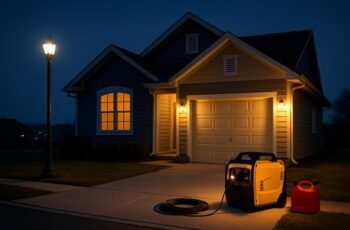
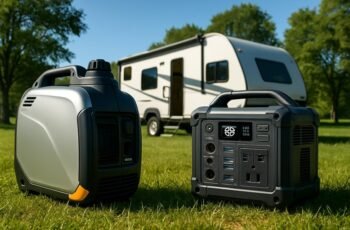
Many people don’t realize that inverter generators and battery power stations operate on fundamentally different principles, affecting their performance and suitability. While inverter generators rely on combustion engines to produce efficient, long-lasting power, battery stations store clean energy for quiet, emission-free use. Understanding these distinctions is key to choosing the right option for your needs, especially when weighing factors like noise, maintenance, and runtime. Let’s explore their strengths and limitations to determine which fits your situation best.
Key Takeaways
- Inverter generators offer fuel flexibility and longer run times but produce noise and require regular maintenance.
- Battery power stations operate silently with zero emissions, ideal for indoor or noise-sensitive environments.
- Inverter generators suit extended outdoor use where fuel availability is reliable and noise is less a concern.
- Battery stations provide instant, clean power with minimal upkeep, best for short-term use and sensitive electronics.
- Battery power stations have capacity limits and longer recharge times, while generators need fuel but can run continuously.
How Inverter Generators and Battery Power Stations Work
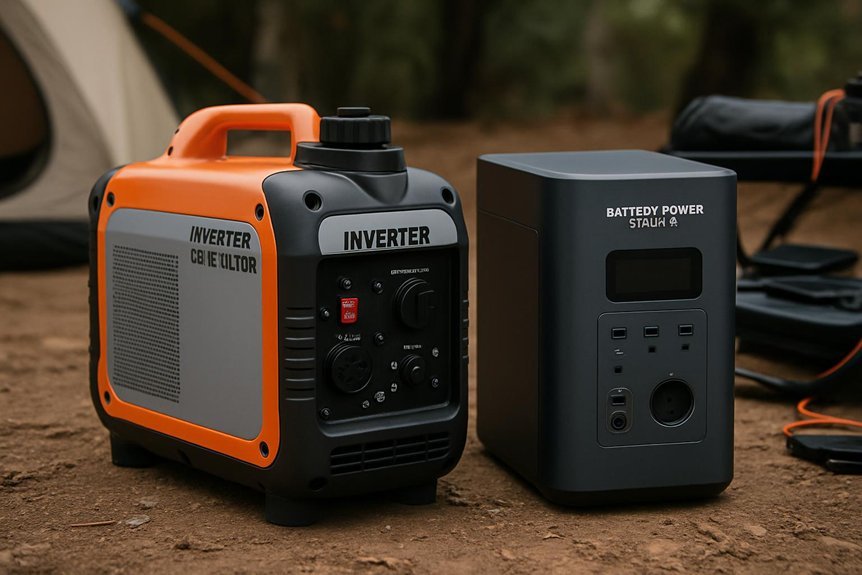
Understanding how inverter generators and battery power stations operate is essential for choosing the right portable power solution. Inverter generators utilize inverter technology to convert raw AC power produced by the engine into stable, clean sine wave electricity. This process guarantees consistent voltage and frequency, which is critical for sensitive electronics. On the other hand, battery power stations rely on advanced battery chemistry, typically lithium-ion or lithium iron phosphate, to store electrical energy. These batteries discharge DC power, which an internal inverter converts to AC power for devices. Both systems incorporate inverters, but their energy sources differ—fuel combustion versus stored chemical energy. Understanding these operational distinctions helps us evaluate efficiency, noise levels, and runtime, guiding us to select the most suitable portable power device for our specific needs.
Key Advantages of Inverter Generators for Portable Power
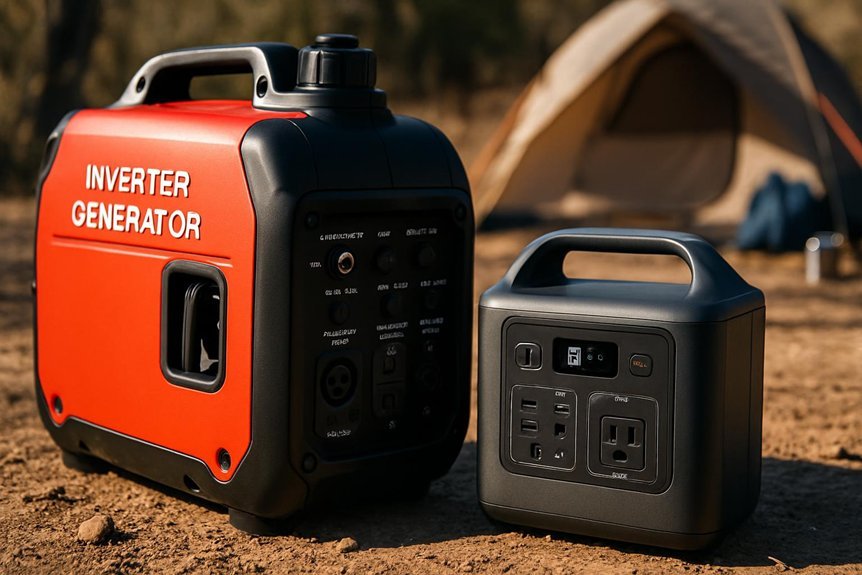
Let’s examine how inverter generators stand out in portable power applications through their quiet operation and superior fuel efficiency. These features greatly reduce noise pollution and operating costs during extended use. Understanding these advantages helps us evaluate their suitability compared to battery power stations.
Quiet Operation Benefits
How does the quiet operation of inverter generators enhance their appeal for portable power applications? Their ability to minimize noise pollution makes them ideal for outdoor activities where maintaining a peaceful environment is essential. Unlike conventional generators, inverter generators modulate engine speed based on power demand, greatly reducing sound levels. This technology not only lessens disturbance to wildlife and fellow campers but also complies with noise regulations in sensitive areas. By operating quietly, inverter generators allow us to enjoy activities such as camping, tailgating, or outdoor events without intrusive background noise. This benefit improves user experience and broadens the range of locations where portable power can be used effectively, reinforcing inverter generators’ position as a preferred choice when noise control is a priority.
Fuel Efficiency Advantages
Because inverter generators adjust their engine speed to match power demand, they achieve significantly higher fuel efficiency compared to conventional generators. This dynamic adjustment optimizes fuel consumption across various load levels, improving efficiency ratings. When evaluating fuel efficiency advantages, consider these points:
- Variable engine speed reduces unnecessary fuel use during low power demands.
- Compatibility with multiple fuel types, such as gasoline and propane, enhances operational flexibility.
- Advanced inverter technology maintains stable voltage output, minimizing energy loss.
- Higher efficiency ratings translate into longer run times per fuel unit, cutting operational costs.
Benefits of Battery Power Stations for Quiet, Clean Energy
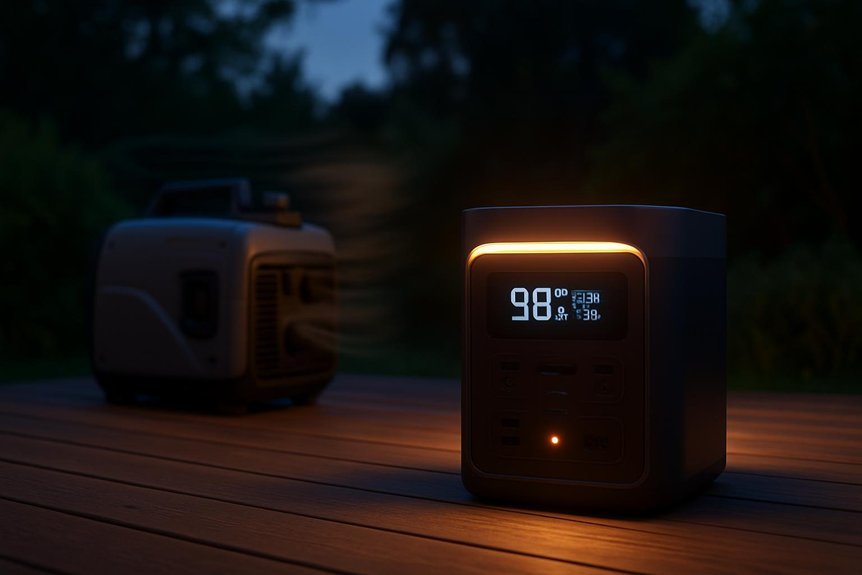
Let’s examine how battery power stations offer the advantage of silent operation, eliminating noise pollution common with traditional generators. Their energy output is also clean, producing no direct emissions, which aligns with eco-friendly goals. These features make battery power stations a practical choice for both indoor and outdoor use where quiet, green energy is essential.
Silent Operation Advantages
While inverter generators produce noticeable noise during operation, battery power stations operate almost silently, providing a significant advantage in noise-sensitive environments. This silent technology relies on advanced noise reduction methods, eliminating mechanical engines and exhaust systems that cause sound emissions. Let’s consider four key benefits:
- Enhanced usability in residential areas without disturbing neighbors.
- Ideal for indoor use where noise restrictions apply.
- Facilitates uninterrupted communication in outdoor or emergency situations.
- Supports wildlife observation or camping without disrupting natural sounds.
Eco-Friendly Energy Output
The quiet operation of battery power stations aligns closely with their environmentally conscious design, offering clean energy output without harmful emissions. Unlike inverter generators that rely on fossil fuels, battery power stations primarily use stored electricity, which can be sourced from renewable sources such as solar or wind. This markedly reduces the environmental impact associated with traditional fuel combustion, including air pollution and greenhouse gas emissions. Additionally, battery systems operate with high energy efficiency, minimizing waste. By integrating renewable energy inputs, these stations support sustainable energy use while maintaining reliable power delivery. As a result, battery power stations present a compelling eco-friendly alternative for users seeking to lower their carbon footprint without compromising energy availability in off-grid or backup scenarios.
Limitations and Drawbacks of Inverter Generators
Although inverter generators offer many advantages, we must consider their limitations to make an informed decision. These drawbacks can impact their practicality depending on the use case:
- Noise pollution: Despite being quieter than conventional generators, inverter models still produce noticeable noise, which can be disruptive in quiet environments.
- Fuel availability: Inverter generators rely on gasoline or propane, making continuous operation dependent on fuel supply and storage.
- Maintenance requirements: Regular oil changes and engine upkeep are necessary to maintain performance, increasing operational complexity.
- Limited run time: Compared to battery power stations, inverter generators often require refueling during extended use, which can interrupt power delivery.
Challenges and Downsides of Battery Power Stations
Since battery power stations depend on stored energy, we face challenges related to capacity limits and recharge times that can affect their usability in prolonged power needs. Their power capacity is finite, so once depleted, we must wait for potentially long charging times before reuse. Battery lifespan is another concern; repeated charge cycles degrade performance over time, reducing overall reliability. Weight considerations also come into play—battery power stations tend to be heavier than inverter generators with equivalent output, limiting portability. Maintenance requirements are generally low but include monitoring battery health and ensuring proper storage conditions to extend lifespan. Finally, price comparison reveals that battery power stations often carry a higher upfront cost, which can be a significant factor when evaluating total value against inverter generators.
Best Use Cases: When to Pick an Inverter Generator
Recognizing the limitations of battery power stations helps us determine scenarios where inverter generators offer distinct advantages. Inverter generators excel when continuous, high-capacity power is essential and fuel supply is manageable. Consider these use cases:
- Camping trips requiring extended power for multiple devices and appliances beyond battery capacity.
- Home backup during prolonged outages, where sustained energy output and quick refueling matter.
- Outdoor events needing reliable, scalable electricity over long durations without reliance on recharge time.
- Tailgating parties where variable power loads demand consistent, clean power to operate cooking equipment and entertainment systems.
In these contexts, inverter generators deliver consistent power with the flexibility of fuel replenishment, making them the practical choice over battery power stations.
Best Use Cases: When a Battery Power Station Is Your Best Bet
When do battery power stations outperform inverter generators? They excel in scenarios requiring quiet, clean energy with minimal maintenance. For off grid camping, battery power stations provide silent operation and zero emissions, making them ideal for environmentally sensitive areas and close quarters. Their compact design and ease of use allow for quick setup and mobility. In emergency backup situations, battery power stations deliver instant power without the need for fuel, reducing downtime and safety risks. They’re excellent for powering sensitive electronics due to stable output voltage and frequency. While limited by capacity and recharge time, their low noise and emission profiles make them preferable where noise pollution and fumes are concerns. To summarize, battery power stations are best when quiet, clean, and convenient power is a priority.
Frequently Asked Questions
How Do Maintenance Costs Compare Between Inverter Generators and Battery Power Stations?
We find battery power stations have lower maintenance costs due to better fuel efficiency and minimal repair frequency, while inverter generators require more frequent repairs and fuel management, increasing overall upkeep expenses over time.
Can Inverter Generators or Battery Power Stations Be Used Indoors Safely?
Inverter generators demand strict ventilation requirements, making indoor use unsafe due to carbon monoxide risks. Conversely, battery power stations offer indoor safety without ventilation, providing a cleaner, quieter power solution ideal for enclosed spaces where air quality is critical.
What Are the Environmental Impacts of Disposing of Inverter Generators Versus Battery Stations?
We find disposing of inverter generators poses emissions concerns due to fuel residues, while battery stations require careful recycling practices to handle toxic materials. Both demand responsible end-of-life management to minimize environmental harm effectively.
How Do Weather Conditions Affect the Performance of Each Power Source?
We notice weather extremes cause performance fluctuations in both power sources; inverter generators may struggle in cold, while battery stations face reduced capacity in extreme heat or cold, impacting efficiency and requiring careful environmental consideration.
Are There Specific Brands Known for Reliability in Inverter Generators or Battery Power Stations?
We’ve found brands like Honda and Yamaha stand out for inverter generator reliability, while Jackery and Goal Zero excel in battery power stations. Consumer reviews consistently highlight their durability and performance under varied conditions.
Conclusion
When choosing between inverter generators and battery power stations, it’s clear that each has its niche—“there’s no one-size-fits-all.” Inverter generators excel in fuel efficiency and extended operation for outdoor use, while battery power stations offer silent, clean energy ideal for indoor or emergency scenarios. By understanding their strengths and limitations, we can make informed decisions that match our specific power needs and environments, ensuring we get the most reliable and efficient portable energy solution.