Weighing efficiency against versatility, noise against portability, and upfront cost against long-term savings, choosing between inverter and dual fuel generators requires careful analysis. Each type offers distinct advantages depending on your power needs and usage scenarios. Understanding how these generators operate and perform across key factors will help us make a more informed decision—so let’s explore the critical differences that can impact your choice.
Key Takeaways
- Inverter generators produce clean, stable power ideal for sensitive electronics, while dual fuel generators use conventional alternators with less consistent output.
- Dual fuel generators can run on gasoline or propane, offering fuel flexibility, whereas inverter generators typically use gasoline only.
- Inverter generators are quieter and more fuel-efficient, optimizing consumption based on load, compared to louder, less efficient dual fuel units.
- Propane use in dual fuel generators results in cleaner emissions and longer fuel storage, unlike gasoline-only inverter generators.
- Inverter generators are lighter and more compact for easy portability, while dual fuel generators are bulkier and often require wheels.
How Inverter Generators and Dual Fuel Generators Work
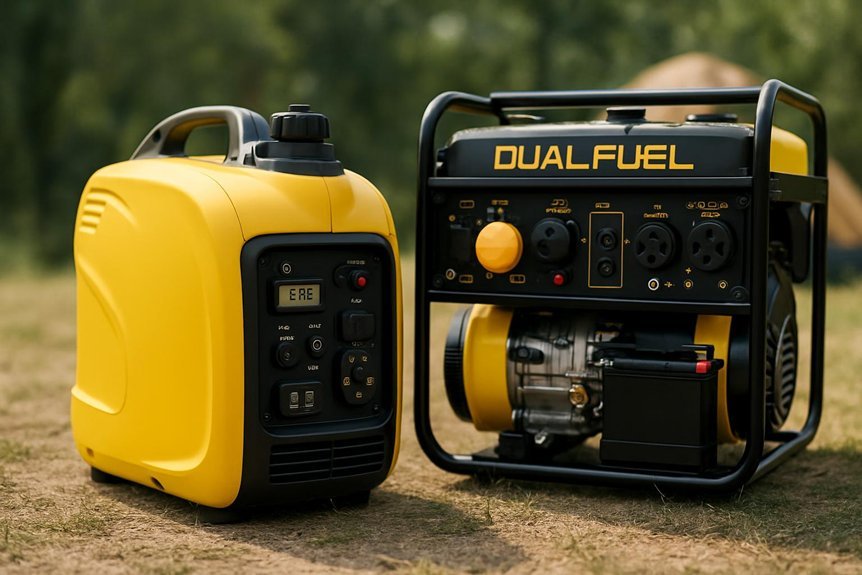
Although both inverter generators and dual fuel generators provide portable power solutions, they operate using fundamentally different mechanisms. Inverter generators convert raw AC power to DC and then invert it back to stable AC power through sophisticated electronics, which guarantees clean, consistent power output ideal for sensitive devices. This power conversion process directly impacts their efficiency ratings, often leading to higher fuel efficiency and quieter operation. Conversely, dual fuel generators primarily rely on conventional alternators driven by internal combustion engines, switching between gasoline and propane as fuel sources. Their power output is less electronically refined, resulting in fluctuating voltage and frequency. Understanding these operational differences helps us evaluate their performance, particularly regarding power conversion quality and efficiency ratings, guiding us toward the right choice for specific power needs.
Comparing Fuel Options: Gasoline vs Propane Benefits
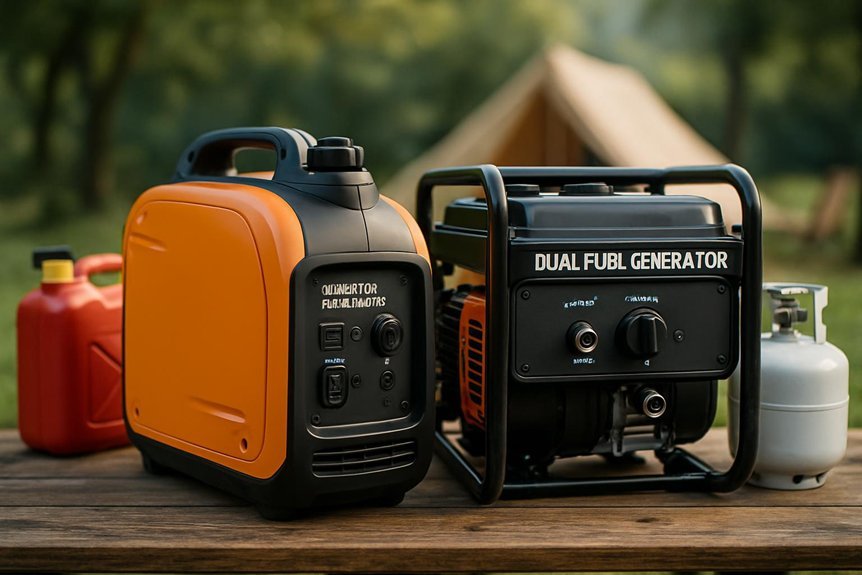
Let’s compare the core advantages of gasoline and propane as fuel sources for generators. Gasoline offers high energy density and easy accessibility, while propane provides cleaner combustion and longer storage life. Understanding these differences helps us evaluate which fuel best suits specific operational needs.
Gasoline Fuel Advantages
When we compare gasoline to propane as fuel options for generators, gasoline stands out for its high energy density, which translates into greater power output and runtime per unit volume. This key gasoline advantage makes it ideal for applications demanding higher performance. Additionally, gasoline offers:
- Wide Availability – Gasoline is accessible almost everywhere, ensuring consistent supply.
- Fuel Stability – Modern additives improve gasoline’s shelf life, though it remains less stable than propane.
- Engine Compatibility – Most generator engines are optimized for gasoline, enabling smoother operation.
- Cost Efficiency – Gasoline typically costs less upfront, making it economically attractive for short-term use.
These factors collectively highlight gasoline’s suitability when prioritizing power and accessibility in generator fuel selection.
Propane Fuel Benefits
While gasoline offers notable advantages in energy density and availability, propane presents its own set of benefits that make it a strong contender for generator fuel. Propane storage is more stable and longer-lasting compared to gasoline, reducing the risk of fuel degradation over time. This stability allows us to keep propane on hand without frequent turnover, enhancing emergency preparedness. Additionally, propane produces fewer carbon emissions and particulate matter during combustion, considerably minimizing environmental impact. This cleaner-burning characteristic aligns well with increasing regulatory demands and environmental considerations. Propane’s lower volatility also improves safety during handling and storage. While it may have slightly lower energy content per unit volume than gasoline, propane’s extended shelf life and reduced environmental footprint make it a compelling option for those prioritizing sustainability and operational reliability in generator fuel choices.
Which Generator Is More Fuel Efficient and Cost-Effective?
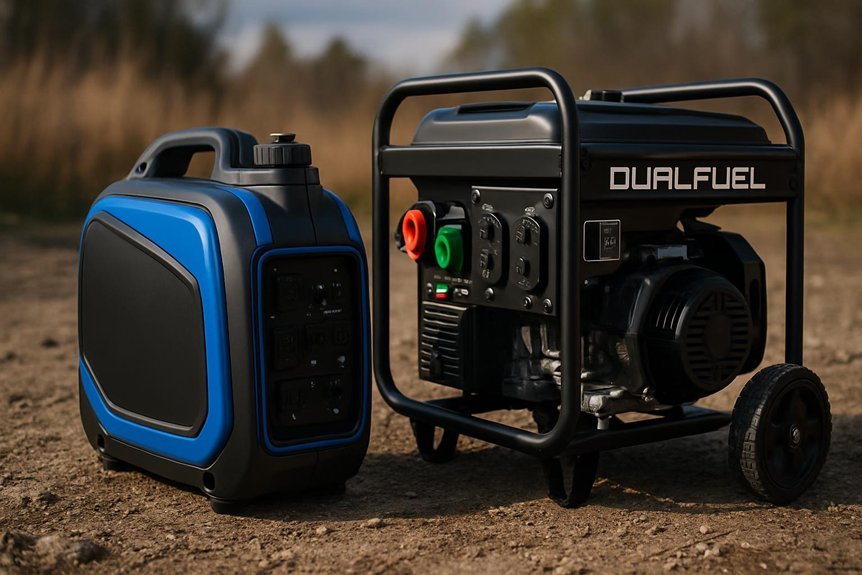
How do inverter and dual fuel generators compare regarding fuel efficiency and overall cost-effectiveness? Let’s analyze their performance through a focused cost analysis and fuel efficiency perspective.
- Inverter generators optimize fuel consumption by adjusting engine speed to load demands, enhancing fuel efficiency.
- Dual fuel generators provide flexibility but generally consume more fuel when operating on gasoline compared to propane.
- Propane in dual fuel units offers lower fuel costs and cleaner combustion, impacting long-term operational expenses positively.
- Initial purchase costs for inverter generators tend to be higher, but savings in fuel and maintenance often offset this over time.
Noise Levels: Which Generator Runs Quieter for Your Needs?
Fuel efficiency and cost-effectiveness are vital factors, but noise levels also play a significant role in choosing between inverter and dual fuel generators. Inverter generators typically operate at lower decibel levels due to advanced noise reduction technologies and superior sound insulation materials integrated into their design. These features minimize mechanical vibrations and muffler noise, resulting in quieter operation ideal for residential or recreational use. Conversely, dual fuel generators generally produce higher noise levels due to their larger engines and less emphasis on sound insulation, which can be disruptive in noise-sensitive environments. When selecting a generator, we must evaluate the noise output in decibels and consider the effectiveness of noise reduction mechanisms. This guarantees we choose a generator that aligns with our specific noise tolerance requirements without compromising performance.
Portability and Size Differences to Consider
Several key factors define the portability and size differences between inverter and dual fuel generators, directly impacting their usability in various scenarios. Let’s break down the critical aspects:
- Weight considerations: Inverter generators are typically lighter, often under 50 pounds, enhancing transport ease.
- Size advantages: Their compact design allows for convenient storage and maneuvering in tight spaces.
- Dual fuel models tend to be bulkier due to additional fuel systems, increasing overall dimensions.
- Portability features: Inverter generators often include ergonomic handles, while dual fuel units may require wheels for easier movement.
Analyzing these points, inverter generators offer superior portability and size benefits, making them preferable when ease of transport and space are priorities, whereas dual fuel generators’ heavier, larger build limits mobility.
Best Use Cases: When to Choose Inverter or Dual Fuel Generators
Although both inverter and dual fuel generators provide reliable power sources, each excels in specific scenarios based on their design and functionality. For camping trips and tailgating events, inverter generators deliver quiet, clean power ideal for sensitive electronics. Dual fuel generators shine in home backup and emergency power situations, offering fuel flexibility and extended run times.
| Use Case | Recommended Generator Type |
|---|---|
| Camping Trips | Inverter |
| Tailgating Events | Inverter |
| Home Backup | Dual Fuel |
| Emergency Power | Dual Fuel |
| Portable Power | Inverter |
Frequently Asked Questions
Can Dual Fuel Generators Run on Other Fuel Types Besides Gasoline and Propane?
It is understood that dual fuel generators primarily support gasoline and propane, limiting fuel compatibility. Their versatility hinges on these fuels, as most models aren’t designed to run safely or efficiently on other fuel types, restricting operational flexibility.
How Do Inverter Generators Handle Power Surges During Startup?
We use advanced power management in inverter generators to regulate voltage and frequency, providing effective surge protection during startup. This controlled response minimizes power surges, ensuring stable, clean electricity for sensitive electronics without risk of damage.
Are There Specific Maintenance Tips Unique to Dual Fuel Generators?
Like tuning a classic engine, we must regularly switch fuels, clean carburetors, and check seals on dual fuel generators. These steps optimize fuel efficiency and guarantee generator longevity, preventing corrosion and maintaining peak performance over time.
What Safety Precautions Are Recommended for Storing Propane Tanks?
We recommend propane storage in a well-ventilated, cool area, away from heat sources. For tank safety, always secure tanks upright, check for leaks regularly, and avoid storing them indoors or near open flames to prevent accidents.
Do Inverter Generators Support Sensitive Electronics Better Than Dual Fuel Models?
Don’t we all want ideal electronic safety? Inverter generators provide superior power stability, reducing voltage fluctuations. This precise output better supports sensitive electronics compared to many dual fuel models, which can have less consistent power delivery.
Conclusion
When choosing between inverter and dual fuel generators, we must weigh efficiency, fuel versatility, and noise levels carefully. Inverter generators offer cleaner power and quieter operation, ideal for sensitive electronics, while dual fuel models provide flexible fuel options and longer run times. Remember, “a stitch in time saves nine”—investing in the right generator now prevents costly issues later. Ultimately, understanding your specific needs guarantees you select the most practical, cost-effective solution.