When it comes to delivering power that’s less prone to fluctuations and interference, inverter generators offer a refined approach compared to traditional models. By transforming raw electrical output into a precisely controlled current, they guarantee stability and purity that many devices demand. But what exactly happens inside these machines to achieve such clean power? Understanding the mechanics behind inverter technology reveals why they’re becoming the preferred choice for sensitive electronics.
Key Takeaways
- Inverter generators convert raw AC to DC, then invert it back to stable AC with a pure sine wave output.
- Advanced electronics regulate voltage and frequency precisely, minimizing fluctuations and ensuring consistent power quality.
- Engine speed adjusts dynamically via a governor system, optimizing fuel use and maintaining stable electrical output.
- Microprocessor controls continuously monitor and modulate power, protecting sensitive electronics from irregularities.
- The technology reduces harmonic distortion and noise, delivering clean, efficient, and reliable electricity for modern devices.
What Is an Inverter Generator and How Does It Differ From Traditional Generators?
An inverter generator is a type of power generator that converts raw mechanical energy into stable, clean electrical output through advanced electronic circuits. Unlike traditional generators, which produce raw AC power directly from the engine, inverter generators refine the output to deliver consistent voltage and frequency. This precision makes them ideal for sensitive electronics and a preferred choice for portable power applications. Additionally, inverter generators operate more efficiently by adjusting engine speed based on demand, reducing fuel consumption and emissions. This efficiency aligns with our growing need for eco friendly solutions, minimizing environmental impact without sacrificing performance. By combining portability with advanced technology, inverter generators offer a reliable and sustainable alternative to conventional models, making them essential for modern power needs.
How Inverter Technology Converts Power for Cleaner Electricity
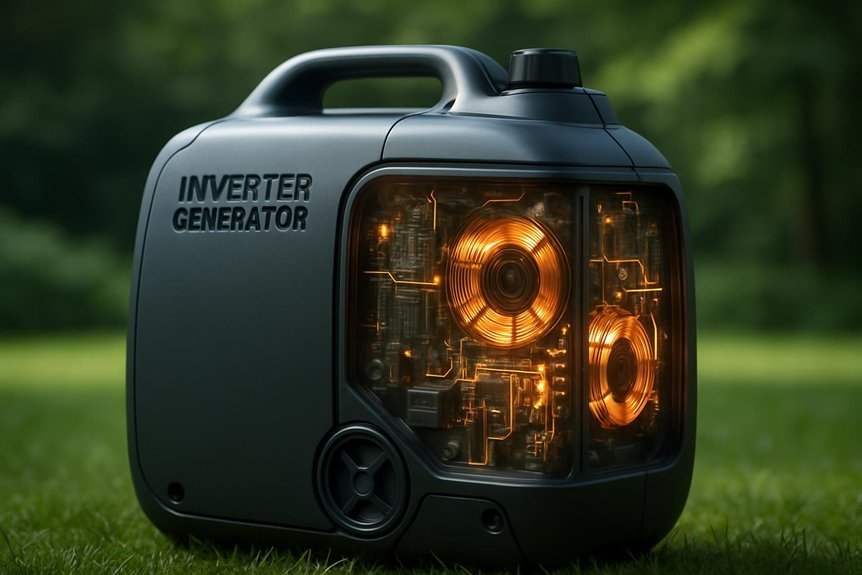
While traditional generators produce raw alternating current (AC) power directly from the engine, inverter technology takes a more sophisticated approach to guarantee cleaner electricity. Initially, the generator produces AC power, which the inverter converts into direct current (DC) through a rectifier. This DC power then undergoes a second conversion back into AC with a pure sine wave output via high-frequency switching circuits. This dual-stage power conversion process maintains voltage and frequency tightly regulated, eliminating fluctuations and harmonics common in conventional generators. By precisely controlling the waveform and frequency, inverter technology enhances energy efficiency, reducing fuel consumption and emissions. This refined output is vital for sensitive electronics, as it minimizes the risk of damage caused by unstable power, making inverter generators the preferred choice for clean, reliable electricity.
The Role of the Engine and Alternator in Producing Stable Power
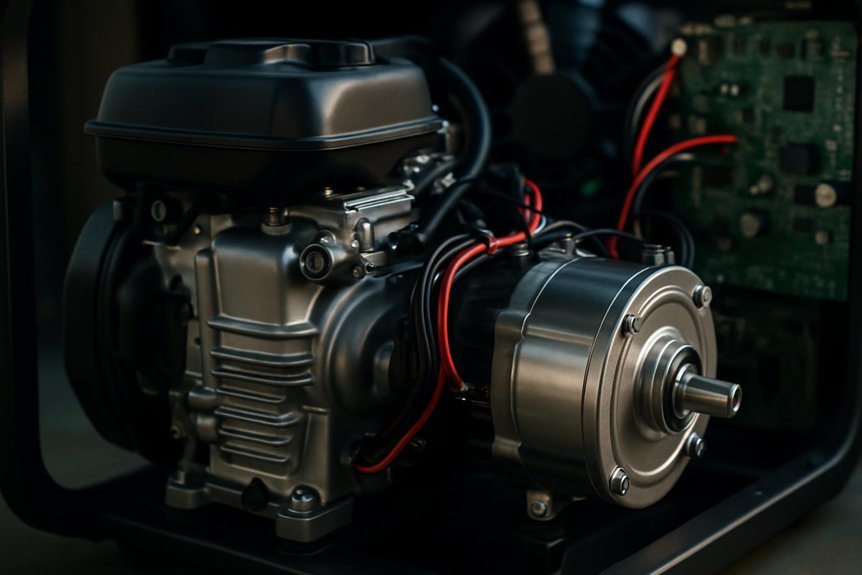
Let’s examine how the engine’s speed regulation directly impacts the alternator’s ability to convert mechanical energy into consistent electrical power. We’ll analyze how precise synchronization between these components guarantees voltage and frequency stability. Understanding this relationship is key to grasping how inverter generators maintain clean, stable output.
Engine Speed Regulation
Because engine speed directly influences the frequency and voltage of the generated power, regulating it precisely is crucial for producing stable electricity in inverter generators. We control engine speed through a governor system that adjusts fuel flow, enhancing engine performance and maintaining fuel efficiency under varying loads. This tight regulation guarantees a consistent power output, minimizing fluctuations that can harm sensitive electronics.
| Parameter | Impact on Engine Speed Regulation |
|---|---|
| Fuel Efficiency | Reduces consumption by adjusting fuel input |
| Engine Performance | Maintains ideal RPM for stable output |
| Load Variation | Governor compensates to keep speed constant |
Alternator Power Conversion
Maintaining a consistent engine speed sets the stage for effective power conversion within the alternator. As the engine drives the alternator’s rotor at a steady rate, the alternator efficiently converts mechanical energy into electrical energy with minimal fluctuation. This steady rotation directly influences alternator efficiency by stabilizing the electromagnetic induction process, which is critical for producing a clean power waveform. Variations in speed cause distortions in the waveform, reducing power quality. By controlling engine speed precisely, we guarantee the alternator’s output voltage and frequency remain constant, resulting in a stable sine wave output. This precise interaction between the engine and alternator is essential to maintain the high-quality, reliable electrical power that inverter generators are designed to deliver.
Synchronization for Stability
Although the alternator converts mechanical energy into electrical energy, it’s the precise synchronization between the engine’s speed and the alternator’s rotational frequency that guarantees the power we receive remains stable and consistent. This synchronization guarantees phase alignment between the generated voltage and the grid or connected loads, preventing destructive interference or power surges. The engine’s governor continuously adjusts fuel input to maintain a constant RPM, directly controlling the alternator’s output frequency. Effective load sharing occurs as the system balances mechanical input with electrical demand, avoiding overloads or underperformance. By tightly coupling engine speed control with alternator rotation, inverter generators maintain stable voltage and frequency, delivering clean, reliable power even under varying load conditions. This synergy is essential for producing power with minimal distortion and high stability.
How the Inverter’s Electronics Control Voltage and Frequency
The inverter’s electronics play a critical role in regulating both voltage and frequency to guarantee clean power output. By continuously monitoring the generator’s raw AC power, the inverter’s control circuitry adjusts the voltage through precise modulation techniques, ensuring tight voltage regulation despite load fluctuations. Simultaneously, the inverter maintains frequency stability by converting AC to DC and then back to AC at a consistent frequency, typically 60 Hz in North America. This dual conversion process allows the electronics to finely tune the output waveform, eliminating irregularities common in conventional generators. Through advanced feedback loops and microprocessor control, the inverter dynamically adapts to changing conditions, providing a stable and reliable power supply essential for sensitive equipment and efficient energy use.
Why Inverter Generators Are Safer for Sensitive Electronics
By controlling voltage and frequency with high accuracy, inverter generators produce a power output that remains consistently stable under varying loads. This stability protects sensitive equipment from damaging power fluctuations common with conventional generators. Such fluctuations can cause overheating, data loss, or permanent hardware damage.
| Feature | Conventional Generator | Inverter Generator |
|---|---|---|
| Voltage Stability | ±10% fluctuation | ±1% fluctuation |
| Frequency Consistency | ±5 Hz variation | ±0.1 Hz variation |
| Suitability for Sensitive Equipment | Low – risk of damage | High – safe operation |
We can rely on inverter generators to safeguard delicate electronics by minimizing electrical noise and maintaining clean, consistent power.
How Inverter Generators Adjust Power Output to Save Fuel and Reduce Noise
When we need power that adapts to varying demands, inverter generators adjust their engine speed and output electronically rather than running at a fixed rate. This dynamic response optimizes fuel efficiency by matching engine load precisely to the power required, avoiding unnecessary fuel consumption typical in conventional generators. By modulating the engine speed, inverter generators reduce mechanical strain and minimize exhaust emissions. Additionally, this variable speed operation substantially contributes to noise reduction, as the engine runs slower during low power demands, producing less sound. The electronic control system continuously monitors load changes and fine-tunes the engine’s RPM in real time, ensuring efficient power delivery without excess energy waste or loud operation. This integration of power management techniques exemplifies how inverter generators achieve both fuel savings and quieter performance.
Common Features That Enhance Power Quality in Inverter Generators
Inverter generators incorporate several key features that guarantee the power they produce maintains high quality, suitable for sensitive electronics and demanding applications. First, they use advanced microprocessor controls to regulate engine speed and output frequency, securing a consistent 60 Hz supply with minimal fluctuations. Second, the inverter technology itself converts raw AC to DC and back to AC, producing a stable sine wave that reduces harmonic distortion and noise. Third, built-in voltage regulators maintain steady voltage levels, preventing spikes or drops that could damage equipment. Finally, automatic load sensing adjusts power output dynamically, optimizing efficiency without compromising power quality. Together, these features ensure inverter generators deliver clean electricity with low total harmonic distortion, meeting the strict demands of modern electronic devices and enhancing overall reliability.
Frequently Asked Questions
How Long Do Inverter Generators Typically Last With Regular Maintenance?
We typically see inverter generators last 2,000 to 3,000 hours with regular maintenance. Prioritizing fuel efficiency and following maintenance tips like oil changes and air filter cleaning helps maximize their lifespan and performance.
What Are the Best Brands of Inverter Generators on the Market?
It is understood that “the best things come in small packages.” Honda models excel in reliability, Yamaha features precision engineering, Champion reliability stands out, Generac innovations impress, WEN performance is solid, and Ryobi offerings balance cost and function.
Can Inverter Generators Be Used Indoors Safely?
We don’t recommend using inverter generators indoors due to indoor safety risks. Proper ventilation requirements are critical to avoid carbon monoxide buildup, so always operate them outdoors in well-ventilated areas to guarantee safe use.
How Do Inverter Generators Perform in Extreme Weather Conditions?
We’ve found inverter generators maintain performance reliability well in moderate extreme temperatures, but temperature effects like overheating can reduce efficiency. Proper ventilation and protective measures are essential to guarantee consistent operation under harsh weather conditions.
What Is the Average Cost of an Inverter Generator?
We find the average cost of an inverter generator ranges from $500 to $1500. When doing a cost comparison, we focus on generator features like power output, runtime, and noise levels to assess value accurately.
Conclusion
As we’ve explored, inverter generators are like skilled conductors, orchestrating raw power into a flawless symphony of clean electricity. Through precise conversion and dynamic control, they deliver stable voltage and frequency that protect our sensitive devices. By adapting to our energy needs efficiently, they not only produce superior power quality but also reduce noise and fuel consumption. Choosing inverter technology means embracing innovation that guarantees reliability and safety in every watt we use.