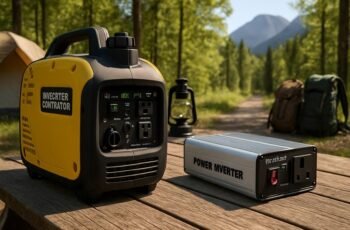
Choosing between an inverter generator and a gas generator is like deciding whether to drive a hybrid or a traditional car—both get you where you need to go, but one manages fuel and noise more efficiently. Inverter generators can run up to 10 hours at half load and operate quietly, while gas generators often cost less initially but run shorter and louder. Let’s explore how these differences affect your power needs and budget.
Key Takeaways
- Inverter generators run 8–10 hours at 50% load on 3 gallons, while gas generators last 6–7 hours at full load on the same fuel.
- Inverter generators adjust engine speed for up to 30% better fuel efficiency compared to constant-speed gas generators.
- Noise levels are lower in inverter generators (50-60 dB) versus gas generators (70-75 dB), enhancing comfort in quiet environments.
- Initial costs for inverter generators range from $700-$1,500, higher than gas generators at $300-$700, but inverter models have lower fuel expenses.
- Inverter generators provide 1,000-4,000 watts for sensitive electronics, while gas generators deliver 3,000-10,000+ watts ideal for heavy-duty tools.
How Inverter Generators and Gas Generators Work Differently
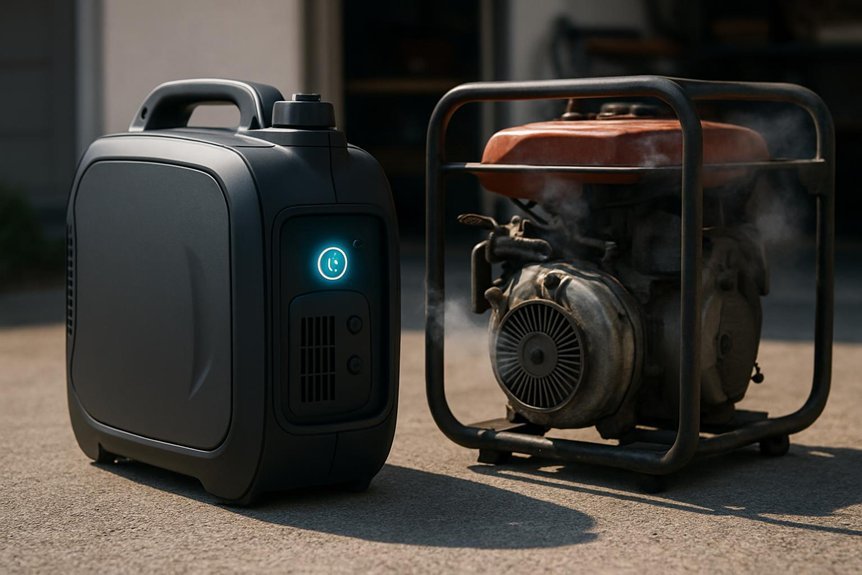
Although both inverter generators and traditional gas generators produce electricity, they operate through fundamentally different mechanisms that affect performance and efficiency. Inverter generators convert AC power to DC and then invert it back to clean AC, ensuring superior output stability and efficient power conversion. Traditional gas generators produce raw AC power directly from the engine, leading to fluctuating voltage under varying load conditions. Inverter models excel in load management, adjusting engine speed to match demand, which reduces fuel consumption and noise. They offer enhanced portability options due to compact designs and advanced technology advancements focused on noise reduction and lower emissions differences. Usage scenarios favor inverter generators for sensitive electronics and quieter environments, while gas generators suit heavy-duty, high-load tasks despite higher emissions and noise levels.
Comparing Runtime: Which Generator Lasts Longer on a Tank?
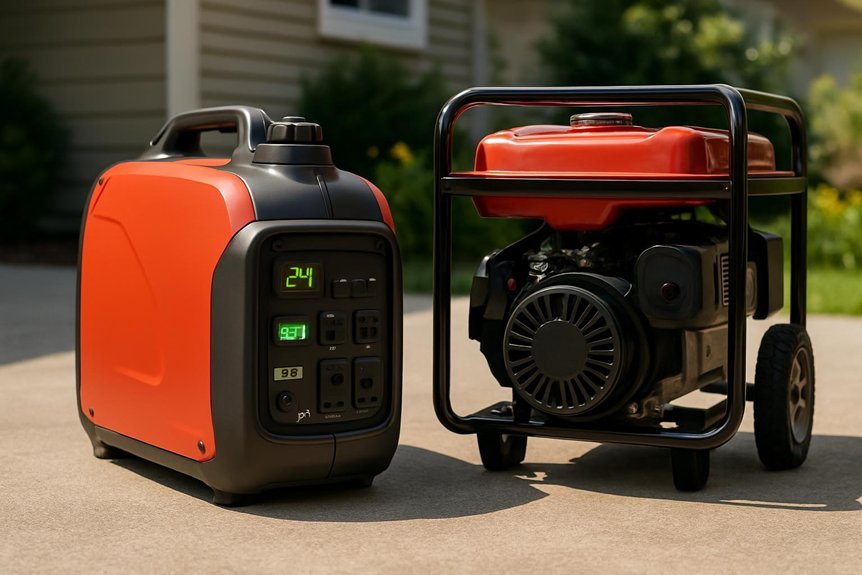
Understanding how inverter and gas generators operate differently gives us a foundation to evaluate their efficiency in real-world use, especially regarding runtime on a single tank of fuel. When we do a runtime comparison, tank capacity alone doesn’t tell the whole story. Inverter generators typically run longer on the same tank size because they adjust engine speed to match power demand, unlike gas generators that run at a constant speed.
Consider these points for clarity:
- A 3-gallon tank inverter generator may run 8–10 hours at 50% load.
- A gas generator with the same tank capacity often lasts about 6–7 hours at full load.
- Variable engine speed in inverters extends runtime, especially with fluctuating loads.
This highlights why inverters often outlast gas generators on a single tank.
Fuel Efficiency: Why Inverter Generators Save You Gas
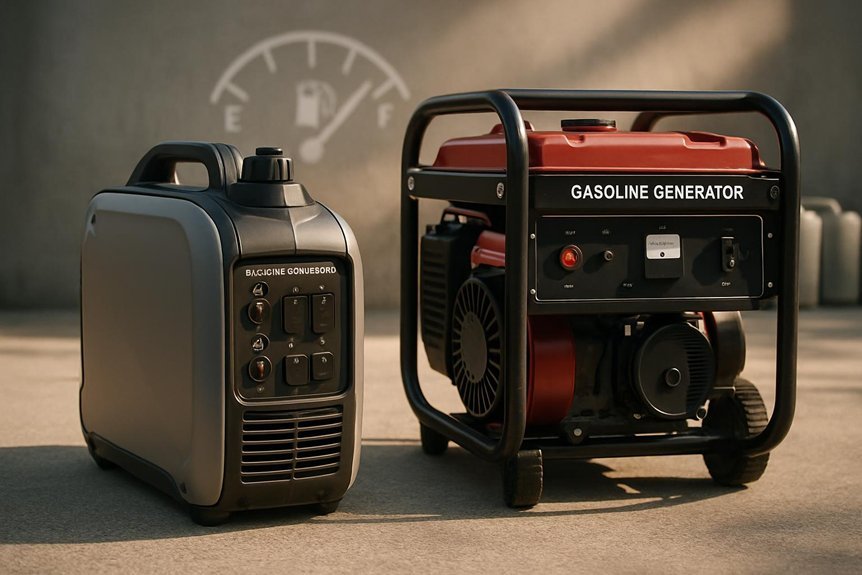
Inverter generators adjust engine speed based on power demand, unlike traditional gas generators that run at a constant rate. This variable engine speed considerably reduces fuel consumption by optimizing power output. As a result, we use less gas without sacrificing performance.
Variable Engine Speed Benefits
Because traditional gas generators run at a constant speed regardless of the load, they often waste fuel when powering smaller devices. Inverter generators, however, use variable speed engines that adjust RPMs based on demand, enabling superior fuel optimization. This variable speed feature delivers three key benefits:
- Enhanced fuel efficiency by reducing engine workload during low power draws.
- Lower emissions due to optimized combustion at varying speeds.
- Quieter operation as the engine slows down when less power is needed.
Reduced Fuel Consumption
Fuel consumption directly impacts both operating costs and environmental footprint, making it an essential factor when choosing a generator. Inverter generators outperform traditional gas generators by adjusting engine speed to match power demand, greatly improving fuel efficiency. Studies show inverter generators use up to 30% less fuel under light to medium loads, reducing emissions and lowering environmental impact. This efficiency translates to longer runtimes per gallon of fuel, cutting refueling frequency and costs. Conversely, gas generators run at a constant speed regardless of load, wasting fuel during low-demand periods. By consuming less fuel, inverter generators not only save money but also reduce carbon output, making them a smarter, greener choice for sustained power needs. Prioritizing fuel efficiency means we protect both our wallets and the planet.
Optimized Power Output
Optimized power output plays an essential role in how efficiently a generator uses gas, directly affecting both performance and cost. Unlike traditional gas generators that run at a constant speed, inverter generators adjust their engine speed through advanced power management and load balancing. This means they only consume fuel based on actual power demand, greatly reducing waste.
Here’s how inverter generators achieve this:
- Variable engine speed matches the load, avoiding excess fuel use.
- Power management systems continuously monitor and adjust output for efficiency.
- Load balancing guarantees even distribution of power, preventing spikes that increase consumption.
Compared to gas generators, inverter models can use up to 30% less fuel, delivering cleaner, more cost-effective energy without compromising performance.
Noise Levels: Which Generator Is Quieter for Your Needs?
How loud is too loud when choosing between inverter and gas generators? Inverter generators typically operate between 50-60 decibels, similar to a normal conversation, while gas generators often reach 70-75 decibels, comparable to a vacuum cleaner. This 10-15 decibel difference can greatly impact comfort, especially in residential or camping environments. Noise reduction techniques in inverter models include variable engine speeds and advanced mufflers, enhancing quiet operation. In contrast, gas generators usually rely on basic generator soundproofing, which offers less effective noise control. When evaluating for noise-sensitive settings, inverter generators stand out due to superior sound management. If minimizing noise is a priority, inverter generators are the clear choice, delivering efficient performance with greatly reduced sound levels thanks to more sophisticated noise reduction technologies.
Upfront Costs: What You Pay for Inverter vs Gas Generators
When comparing upfront costs, inverter generators typically have a higher initial purchase price than traditional gas generators. We also need to factor in additional equipment costs, like transfer switches or parallel kits, which can vary between models. Understanding these differences helps us make a clear, cost-effective choice from the start.
Initial Purchase Price
Although inverter generators generally cost more upfront than traditional gas generators, understanding the price differences helps us make informed choices. The initial purchase price reflects not just the equipment cost but also potential long term savings. Typically, inverter generators range from $700 to $1,500, while gas generators often fall between $300 and $700.
Here’s a quick comparison:
- Inverter generators have higher initial investment due to advanced electronics and quieter operation.
- Gas generators are cheaper initially but may lead to higher fuel consumption and maintenance costs.
- Over time, inverter generators’ efficiency can translate into long term savings despite the premium upfront price.
Additional Equipment Costs
Since the initial purchase price is just one part of the total cost, we need to evaluate additional equipment that each generator type requires upfront. Inverter generators generally need fewer add-ons, while gas generators often come with higher installation costs due to their size and complexity. Here’s a quick comparison of typical additional equipment and installation costs:
| Equipment/Service | Inverter Generator Cost | Gas Generator Cost |
|---|---|---|
| Transfer Switch | $200 – $400 | $300 – $600 |
| Fuel Storage | $50 – $150 | $100 – $300 |
| Installation Labor | $100 – $300 | $300 – $700 |
| Exhaust System | Usually not required | $200 – $500 |
| Mounting/Platform | $0 – $100 | $100 – $400 |
Maintenance Expenses: Ongoing Costs to Consider for Each Type
Because both inverter and gas generators rely on mechanical components, we need to factor in their ongoing maintenance expenses to understand their true cost of ownership. Inverter generators often have more complex electronics, leading to stricter maintenance schedules and potentially higher repair costs. Gas generators usually feature simpler mechanics, making parts more readily available and repairs easier with many service providers. Here’s how they compare:
Considering maintenance is key since inverter generators have complex electronics, while gas generators offer simpler, more accessible repairs.
- Maintenance schedules & cleaning requirements: Inverter units demand more frequent electronic diagnostics; gas models require regular oil changes and seasonal upkeep.
- Repair costs & parts availability: Gas generators benefit from widespread parts and lower repair fees; inverter parts can be pricier and harder to source.
- Warranty coverage & longevity factors: Inverter generators typically come with longer warranties but may face higher long-term upkeep costs due to sensitive components.
Power Output: Matching Generator Wattage to Your Appliances
Understanding maintenance costs helps us appreciate the long-term investment each generator demands, but equally important is guaranteeing the generator’s power output matches our appliance needs. Wattage compatibility is critical; selecting a generator that underperforms can cause frequent overloads and damage appliances, while oversizing leads to inefficiency and higher fuel consumption. We need to assess our appliance requirements by totaling the starting and running watts of all devices we plan to power simultaneously. Inverter generators typically offer precise power output suited for sensitive electronics with clean sine waves, often ranging from 1,000 to 4,000 watts. Gas generators provide higher wattage capacity, typically from 3,000 up to 10,000 watts or more, ideal for heavy-duty tools. Matching wattage guarantees peak performance, safeguards appliances, and maximizes fuel efficiency for both generator types.
Best Use Cases: When to Choose an Inverter or Gas Generator
When do we opt for an inverter generator over a gas generator, or vice versa? It largely depends on the use case and priorities like noise level, portability, and power consistency.
- Inverter generators excel in portable power for outdoor activities, RV travel, and home use due to their silent operation and cleaner energy output, making them ideal when noise and sensitive electronics matter.
- Gas generators are better suited for job sites and emergency backup where raw power and longer runtime are critical, despite higher noise and fuel consumption.
- For those integrating renewable energy, inverter generators often complement solar setups better, providing stable power and efficiency.
How to Decide Based on Runtime, Efficiency, and Budget
How long do you need your generator to run, and how much are you willing to spend? Our runtime comparison shows that inverter generators typically offer longer continuous operation due to better fuel efficiency. Efficiency analysis confirms inverters consume up to 30% less fuel, impacting overall cost-effectiveness.
| Factor | Inverter Generator | Gas Generator |
|---|---|---|
| Runtime (hours) | 8-10 | 5-7 |
| Fuel Efficiency | High | Moderate |
| Initial Cost | Higher | Lower |
| Maintenance Cost | Lower | Higher |
Balancing runtime, efficiency, and budget helps us choose the best fit—if longer runtime and savings matter, inverter generators excel. For upfront affordability, gas generators remain viable.
Frequently Asked Questions
Can Inverter Generators Handle Sensitive Electronics Without Damage?
Yes, we can rely on inverter generators to handle sensitive electronics safely because they provide superior power quality and voltage stability compared to traditional gas generators, minimizing risks of damage from power surges or fluctuations.
Are Inverter Generators More Environmentally Friendly Than Gas Generators?
Yes, we find inverter generators produce lower emission levels and greatly reduce noise pollution compared to gas generators. These factors make them a more environmentally friendly choice, especially for extended or sensitive use scenarios.
How Portable Are Inverter Generators Compared to Traditional Gas Generators?
Like carrying a feather instead of a brick, inverter generators boast lighter weight and compact design features. We find them considerably more portable than traditional gas generators, making transport and storage much easier for us all.
Do Inverter Generators Require Special Types of Oil or Fuel Additives?
We’ve found inverter generators typically use standard oil types but often benefit from synthetic oils for peak performance. Fuel additives aren’t required but can improve fuel stability compared to traditional gas generators, enhancing efficiency and longevity.
Can Gas Generators Run on Alternative Fuels Like Propane or Natural Gas?
Absolutely, gas generators offer fuel flexibility, supporting propane and natural gas. This fuel compatibility enhances alternative energy options, delivering longer runtimes and cleaner combustion compared to gasoline, making them a practical, efficient choice for diverse power needs.
Conclusion
So, if you love paying less upfront but don’t mind refueling more often and louder noise, gas generators might be your best friend. But if you prefer longer runtimes, quieter operation, and fuel efficiency—even if it costs more initially—inverter generators clearly win. Funny how saving money over time often means spending more at first. In the end, it’s all about balancing your power needs, budget, and patience for noise and maintenance.