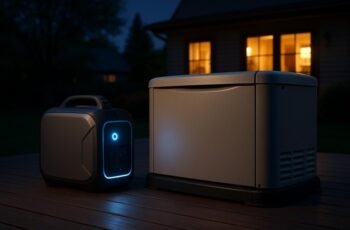
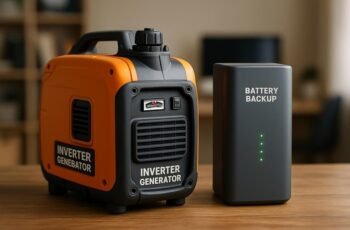
When it comes to powering our RVs in 2026, choosing between an inverter generator and a power station requires careful consideration. Inverter generators deliver robust continuous wattage, ideal for multiple high-demand appliances, but they may introduce noise and weight challenges. Power stations, on the other hand, offer silent operation and eco-friendly charging options but often have lower output. Let’s explore how these differences impact efficiency, convenience, and overall suitability for our unique travel needs.
Key Takeaways
- Inverter generators offer higher continuous power ideal for running multiple high-demand RV appliances simultaneously.
- Power stations provide silent operation and superior portability, perfect for noise-sensitive and lightweight travel needs.
- Inverter generators require fuel and manual refueling, while power stations use lithium batteries with solar recharging options.
- Power stations excel in eco-friendly, efficient energy use with automatic load management and solar integration.
- Active RVers needing extended runtime and heavy power loads prefer inverter generators; eco-conscious travelers favor power stations.
How Inverter Generators Work and Why They Suit RVs
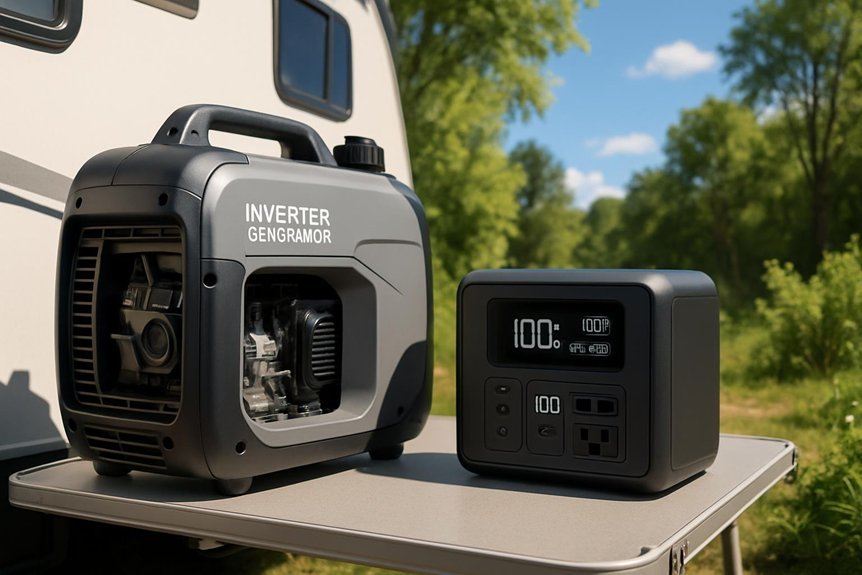
Inverter generators convert raw mechanical energy into clean, stable electricity by using advanced electronic circuitry to regulate voltage and frequency. This precise power conversion guarantees a consistent output ideal for sensitive RV appliances. Unlike conventional generators, inverter generators employ a two-step process: first generating AC power, then converting it to DC, and finally inverting it back to a pure sine wave AC. This method enhances energy efficiency by minimizing fuel consumption and reducing emissions. For RV use, their compact size and quieter operation make them convenient and less disruptive. The stable, clean power output protects electronic devices from voltage fluctuations, which is essential for maintaining the longevity of RV systems. Overall, inverter generators deliver reliable, efficient energy suited to the dynamic demands of RV living.
What Power Stations Offer for RV Energy Needs in 2026
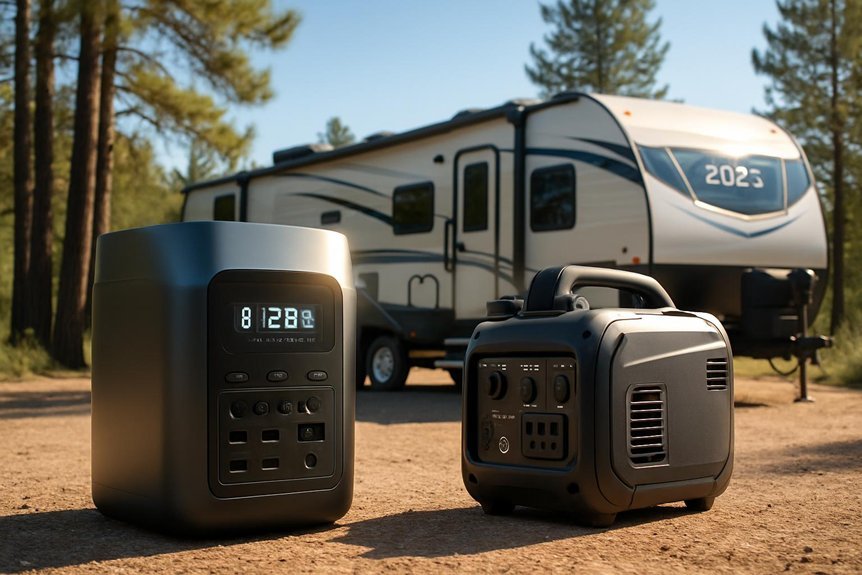
Power stations in 2026 deliver highly portable energy solutions tailored for RV users, combining compact design with substantial output capacity. Their integration of advanced battery technology enhances efficiency, runtime, and recharge speed, addressing key limitations of earlier models. Let’s analyze how these innovations meet the diverse power demands of modern RV setups.
Portable Energy Solutions
Although many RVers traditionally rely on generators for off-grid electricity, portable energy stations have rapidly advanced to meet diverse power demands in 2026. These stations integrate solar panels and robust energy storage systems, enabling quieter, cleaner, and more flexible power solutions. They excel in modularity, allowing us to scale capacity based on need. Below is a comparative overview highlighting key features:
| Feature | Portable Energy Stations | Traditional Generators |
|---|---|---|
| Power Source | Solar panels + battery storage | Gasoline/Diesel |
| Noise Level | Minimal | Loud |
| Emissions | Zero emissions | High emissions |
| Portability | Compact, lightweight | Bulky, heavy |
| Maintenance | Low, no fuel required | High, regular fueling needed |
These advancements make portable stations increasingly viable for RV energy independence in 2026.
Advanced Battery Technology
As portable energy stations continue to evolve, their battery technology plays a key role in meeting the demanding power needs of RV users in 2026. Advances in battery longevity have notably extended the lifespan of power stations, reducing the frequency and cost of replacements. These improvements stem from enhanced cell chemistry and superior thermal management systems, which optimize performance under variable load conditions typical in RV usage. Additionally, cutting-edge charging technology allows faster, more efficient recharging by integrating solar input, AC, and DC sources seamlessly. This multi-source compatibility guarantees minimal downtime, essential for extended trips. By focusing on battery longevity and innovative charging methods, modern power stations deliver reliable, sustainable energy tailored to the mobile lifestyle, making them a compelling choice for RV owners prioritizing efficiency and durability.
Comparing Noise Levels and Portability for RV Use
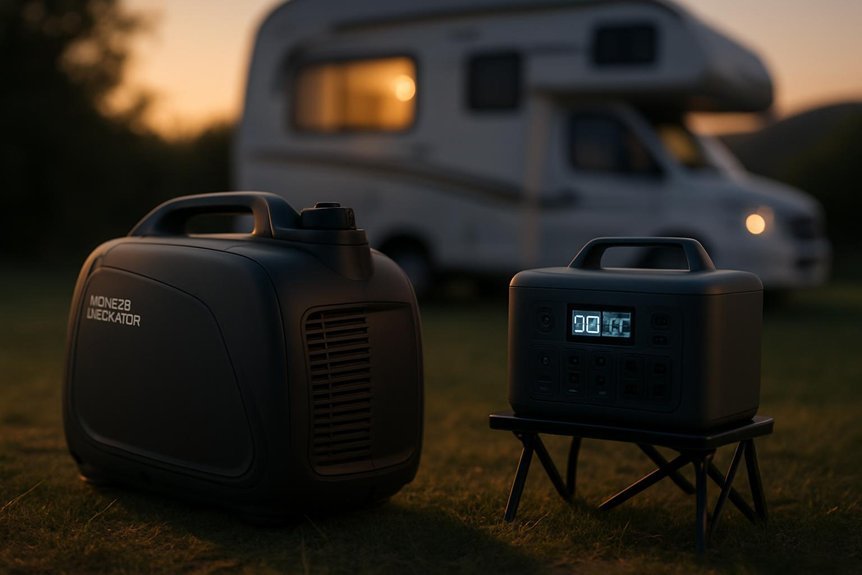
When choosing between an inverter generator and a power station for our RV, noise levels and portability often become deciding factors. Inverter generators employ advanced noise reduction technologies, such as optimized engine speed and sound-dampening enclosures, resulting in quieter operation typically around 50-60 decibels. Power stations, being fully electric, operate silently, offering a significant advantage in noise-sensitive environments. Regarding portability, weight considerations are essential; inverter generators tend to be heavier due to fuel tanks and engines, often exceeding 40 pounds. Conversely, power stations are compact and lighter, usually between 10 to 30 pounds, making them easier to carry and store. For RV use, the choice depends on balancing acceptable noise with manageable weight, but power stations clearly excel in minimizing sound and enhancing portability.
Fuel Efficiency and Runtime: Inverter Generators vs Power Stations
Since our RV adventures often span several hours or even days, understanding fuel efficiency and runtime becomes essential when choosing between inverter generators and power stations. Inverter generators typically run on gasoline, and their fuel consumption depends on load and efficiency ratings, often averaging 0.5 to 0.75 gallons per hour at 50% load. Their runtime varies accordingly but can extend up to 8-10 hours on a full tank. Power stations, on the other hand, rely on lithium batteries with fixed capacity, offering runtimes based on watt-hours and connected load. While they have zero fuel consumption, their recharging time impacts continuous use. Analyzing efficiency ratings, inverter generators excel in extended runtime with refueling, whereas power stations provide silent, emission-free operation but require careful energy management to maximize runtime.
Which Option Handles Multiple Devices and Appliances Better?
Let’s compare how inverter generators and power stations handle multiple devices by examining their power output and appliance compatibility. We need to evaluate the range of appliances each can support and how efficiently they manage varying loads. Understanding these factors will help us determine which option provides more reliable and flexible power for an RV setup.
Power Output Comparison
Comparing power output, inverter generators typically provide higher continuous wattage than most portable power stations, allowing us to run multiple high-demand appliances simultaneously without overloading the system. While power stations excel in energy efficiency and quieter operation, their power capacity often limits simultaneous use of several devices. Inverter generators, however, deliver robust output suitable for extended RV use.
| Device Type | Inverter Generator (Continuous Watts) | Power Station (Continuous Watts) |
|---|---|---|
| Small Appliances | 2000 – 4000 W | 500 – 1500 W |
| HVAC Systems | 3000 – 4000 W | 1000 – 1200 W |
| Kitchen Appliances | 1500 – 3500 W | 600 – 1000 W |
This comparison clarifies inverter generators’ superior power capacity for multi-device RV setups despite power stations’ better energy efficiency.
Appliance Compatibility Range
The ability to power multiple appliances simultaneously is essential when choosing between an inverter generator and a power station for RV use. Inverter generators generally offer higher peak power, accommodating a wider appliance wattage range, which is vital for running heavy-duty equipment like air conditioners or microwaves. Power stations, however, excel in compatibility with low to moderate wattage devices—think smartphones, laptops, and LED lights—thanks to their pure sine wave output and detailed compatibility charts. These charts help us match device wattages with power sources, ensuring safe and efficient operation. While inverter generators handle diverse and multiple high-wattage appliances better, power stations provide reliable compatibility for sensitive electronics. Evaluating appliance wattage alongside these compatibility charts enables us to select the best solution for our RV’s power demands.
Load Management Efficiency
When managing multiple devices and appliances in an RV, understanding load management efficiency becomes essential to avoid power interruptions and maximize energy use. Inverter generators and power stations differ in handling loads, especially under fluctuating demands. Power stations typically offer advanced load shedding strategies, automatically prioritizing essential devices to prevent overloads. In contrast, inverter generators require manual management but provide continuous power for high-demand appliances.
Key considerations include:
- Automatic load shedding capabilities in power stations for seamless energy distribution
- Manual load management demands on inverter generators for precise control
- Energy conservation techniques integrated in power stations to extend runtime
- Real-time monitoring features enabling proactive adjustments to avoid power spikes
Evaluating these factors helps us choose the best solution for efficient RV power management in 2026.
Matching Your RV Lifestyle With the Right Power Choice
Although both inverter generators and power stations provide portable electricity, choosing the right option depends heavily on how we use our RV. For those seeking lifestyle flexibility, power stations offer seamless solar integration, allowing us to recharge via solar panels during daylight. This capability suits extended boondocking and eco-conscious travel. Conversely, inverter generators excel when high power output and continuous runtime are priorities, such as running multiple appliances simultaneously. They’re ideal for active RVers who require reliable, on-demand power without depending on solar conditions. Our decision should analyze daily power demands, preferred recharge methods, and noise tolerance. By aligning power choice with these factors, we optimize efficiency and convenience, ensuring our RV lifestyle remains both sustainable and adaptable to varying energy needs.
Frequently Asked Questions
Can Inverter Generators Be Used Indoors Safely?
We don’t recommend using inverter generators indoors due to indoor safety risks from generator fumes. These fumes contain carbon monoxide, which is hazardous; proper ventilation or outdoor placement is essential to prevent poisoning and guarantee safe operation.
What Maintenance Is Required for Power Stations?
We monitor battery life closely and calibrate charging cycles based on usage frequency to optimize longevity. Regular firmware updates and keeping the unit clean guarantee efficient operation, preventing capacity loss and maintaining power station reliability over time.
Are There Environmental Impacts Unique to Either Option?
We’ve found inverter generators emit up to 50% more pollutants than power stations, giving power stations a smaller environmental footprint. This emissions comparison highlights their cleaner operation, making power stations a more eco-friendly choice for RV power.
How Do Warranty Terms Compare Between the Two?
Warranty duration for inverter generators typically spans 2-3 years, covering mechanical parts, while power stations often offer 1-2 years, focusing on battery and electronics. We analyze coverage specifics to guarantee reliable, long-term RV power solutions.
Can Power Stations Be Charged While Driving the RV?
Yes, we can charge power stations while driving the RV using DC charging methods, like the vehicle’s 12V outlet. However, power efficiency varies, so understanding input limits guarantees ideal charging without draining the RV’s battery system.
Conclusion
Choosing between an inverter generator and a power station for our RV is like picking the right tool for a journey: one offers the robust horsepower to tow heavy loads, the other glides silently like a breeze, conserving energy with finesse. By weighing power demands, noise tolerance, and eco-priorities, we can chart a course that aligns with our lifestyle and keeps our adventures powered efficiently and reliably in 2026 and beyond.