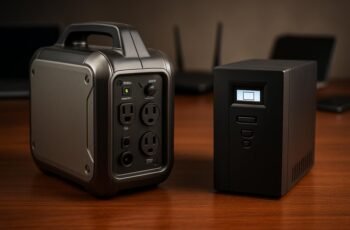
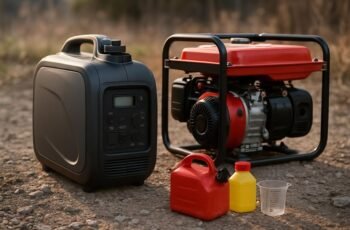
Many believe that choosing between an inverter generator and a hybrid generator is straightforward, but the reality is more complex. Each type offers unique advantages depending on your power needs, usage scenarios, and priorities like noise level, fuel efficiency, and versatility. Understanding these differences can help us make an informed decision, but it’s not always clear which option truly fits our lifestyle and budget best. Let’s explore what sets them apart.
Key Takeaways
- Inverter generators deliver clean, stable power ideal for sensitive electronics and quieter operation, perfect for camping and portable use.
- Hybrid generators combine fuel engines and battery storage, offering longer runtimes, fuel efficiency, and versatile power sources.
- Hybrids are generally more expensive upfront but provide adaptability and smart controls for optimizing fuel and emissions.
- Choose inverter generators for lightweight, quiet, and fuel-efficient needs; hybrids suit emergencies and situations requiring extended power.
- Match generator wattage capacity and specific use cases to ensure efficiency and meet power demands effectively.
What Is an Inverter Generator and How Does It Work?
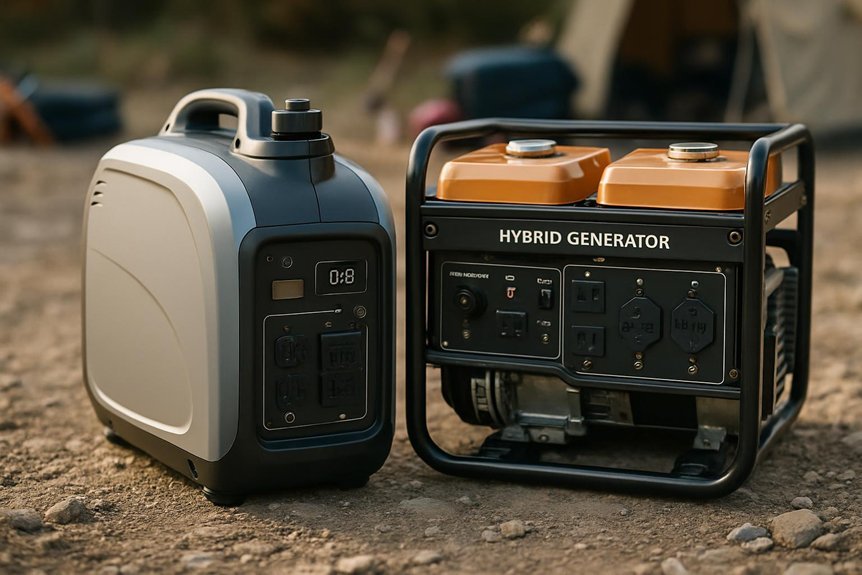
An inverter generator is a compact, efficient power source that converts raw engine output into stable, clean electricity. Unlike traditional generators, it uses electronic circuitry to produce consistent power quality, making it safe for sensitive electronics like laptops and smartphones. We appreciate how the inverter technology allows the engine to run at variable speeds, adjusting to the electrical load. This flexibility greatly improves fuel efficiency, as the engine doesn’t need to operate at full throttle constantly. Because of this, inverter generators are quieter and consume less fuel, making them ideal for camping, outdoor events, or backup power at home. In short, they deliver smooth, reliable power while maximizing fuel economy, which benefits both our devices and the environment.
How Do Hybrid Generators Combine Power Technologies?
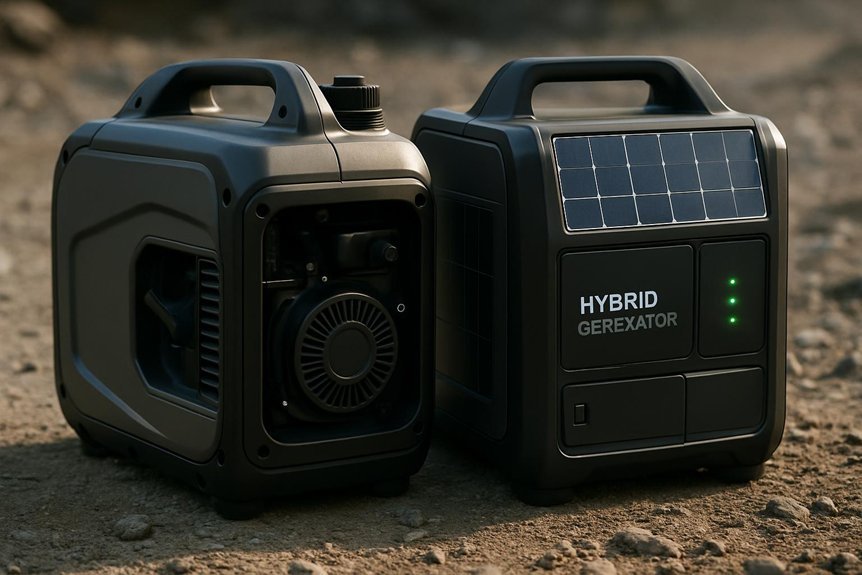
While inverter generators excel at delivering clean, efficient power, hybrid generators take versatility a step further by blending multiple power technologies. They integrate diverse power sources to maximize energy efficiency and adapt to varying power demands. Here’s how they combine these technologies:
Hybrid generators enhance versatility by blending multiple power technologies for optimal efficiency and adaptability.
- Utilize gasoline or diesel engines alongside battery storage for flexible power options.
- Switch seamlessly between power sources, optimizing fuel consumption and reducing emissions.
- Incorporate inverter technology to guarantee stable, clean electricity from both engine and battery.
- Employ smart controls that monitor load and automatically adjust power source use for peak efficiency.
Comparing Performance: Power Output, Efficiency, and Noise
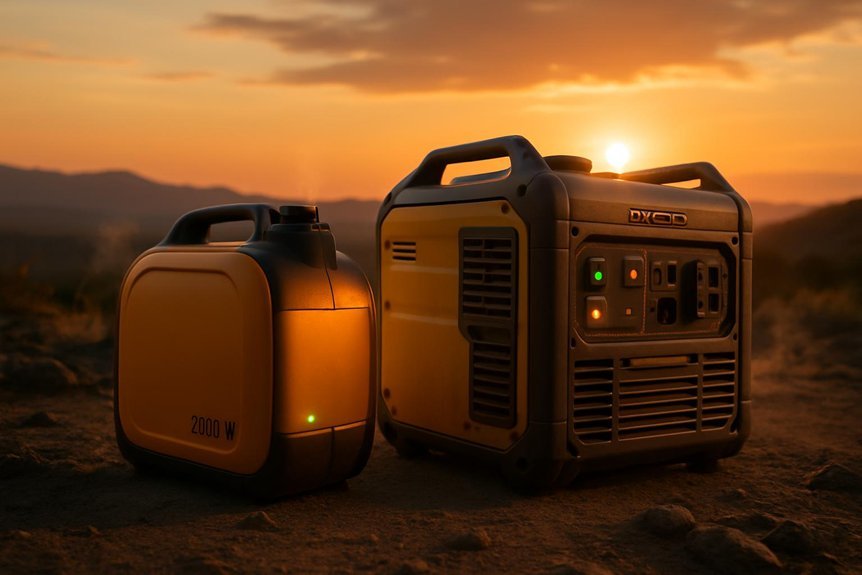
When we compare inverter generators and hybrid generators, power output, efficiency, and noise levels stand out as key factors that influence our choice. Inverter generators typically deliver clean, stable power quality, ideal for sensitive electronics, but their power output is moderate. Hybrid generators combine fuel types—gasoline, solar, or battery—to boost power output and extend run time efficiently. This blend often results in better fuel efficiency and adaptability to different situations. Noise-wise, inverter generators are quieter due to their advanced engine controls, while hybrids vary depending on the fuel source and load but generally operate with moderate noise levels. Understanding these performance aspects helps us select the right generator that balances power quality, fuel types, and operational noise according to our specific needs.
Which Generator Fits Your Needs: Camping, Emergencies, or Home Use?
How do we choose the right generator for camping, emergencies, or home use? It all comes down to understanding our specific power needs and the context in which we’ll use the generator. For camping essentials, portability and quiet operation matter most. When focusing on emergency preparedness, reliability and runtime take priority. For home safety, steady power output and compatibility with essential appliances are key. Let’s break it down:
- Camping: Lightweight, quiet inverter generators fit perfectly.
- Emergencies: Hybrid generators offer longer runtimes and versatility.
- Home use: Choose models with stable output and surge protection.
- Power needs: Match wattage capacity to your devices for efficiency.
Maintenance and Lifespan Differences Between Inverter and Hybrid Models
Because maintaining our generators properly directly impacts their lifespan, understanding the differences between inverter and hybrid models is essential. Both require preventive maintenance, but their complexity affects upkeep frequency and lifespan expectations. Inverter generators typically need less frequent servicing due to simpler mechanics, while hybrid models might demand more attention because of their combined systems.
| Feature | Inverter Generator | Hybrid Generator |
|---|---|---|
| Preventive Maintenance | Less frequent, simpler | More frequent, complex |
| Lifespan Expectations | 2,000–4,000 hours | 1,500–3,500 hours |
| Component Complexity | Lower | Higher |
Budgeting for Your Generator: Cost vs. Long-Term Value
When budgeting for a generator, we need to contemplate more than just the initial purchase price. Maintenance and operating costs can add up over time, affecting the overall value. Plus, thinking about resale potential and the generator’s lifespan helps us make a smarter investment.
Initial Purchase Price
Although both inverter and hybrid generators serve similar purposes, their initial purchase prices can vary considerably, impacting our budgeting decisions. When we look at initial costs, inverter generators generally come with a lower price tag, making them attractive for those on a tight budget. Hybrid generators, on the other hand, often cost more upfront due to their advanced technology and dual power sources. Here’s a quick price comparison to keep in mind:
- Inverter generators typically range from $500 to $2,000.
- Hybrid generators often start around $1,500 and can exceed $3,000.
- The higher initial cost of hybrids reflects added features and flexibility.
- We should weigh these initial costs against our power needs before deciding.
Understanding these price differences helps us make an informed choice that fits our budget and power requirements.
Maintenance And Operating Costs
A key factor in choosing between inverter and hybrid generators lies in understanding their maintenance and operating costs. Inverter generators typically offer better fuel efficiency, which means we spend less on fuel over time. They also tend to have a lower repair frequency due to their simpler design and fewer moving parts. Hybrid generators, while versatile, often require more regular maintenance and can incur higher repair costs because of their complex systems. When budgeting, we should consider not just the initial price but also how often the generator needs servicing and the cost of fuel consumption. By weighing fuel efficiency against repair frequency, we can better estimate long-term expenses and choose a generator that aligns with both our budget and usage needs.
Resale And Longevity
Understanding maintenance and operating costs helps us see the bigger picture of a generator’s overall value. When considering resale and longevity, we need to weigh several key factors that impact long-term satisfaction and budget.
Here’s what influences resale value and longevity factors for both inverter and hybrid generators:
- Build quality: Durable materials extend lifespan and maintain value.
- Usage patterns: Consistent, proper use preserves engine health.
- Technological updates: Newer models may depreciate slower due to advanced features.
- Maintenance history: Well-documented care boosts buyer confidence and resale price.
Frequently Asked Questions
Can Inverter Generators Charge Lithium-Ion Batteries Safely?
Yes, we can safely charge lithium-ion batteries with inverter generators because they offer excellent battery compatibility and stable power output, ensuring ideal charging efficiency while protecting battery health from voltage fluctuations or surges during use.
Do Hybrid Generators Require Special Fuel Types?
We don’t need special fuel for hybrid generators; they run on standard gasoline or propane. Their fuel efficiency is great, and maintenance requirements stay manageable, so you can count on reliable performance without extra hassle or expense.
Are Inverter Generators Better for Sensitive Electronics?
Yes, we find inverter generators provide superior power quality, making them ideal for sensitive electronics. Plus, they operate at lower noise levels, so we can use them comfortably without worrying about disturbing our surroundings or damaging devices.
Can Hybrid Generators Be Connected to Solar Panels?
We can confidently say hybrid generators often offer solar compatibility, letting us connect solar panels directly. This boosts energy efficiency and creates a seamless, eco-friendly power system that keeps us running smoothly off the grid.
How Do Warranty Options Differ Between Inverter and Hybrid Generators?
Warranty coverage for inverter generators usually focuses on basic parts and labor, while hybrid generators often include extended coverage due to complex components. Both require regular maintenance, but hybrids demand more attention to keep warranties valid.
Conclusion
Choosing between an inverter and a hybrid generator is like picking the right shoes for your journey. Inverter generators are our sleek sneakers—quiet, efficient, perfect for light, precise steps like camping or powering sensitive gear. Hybrid generators are rugged boots, ready for longer, unpredictable treks with versatile fuel options and endurance. By understanding your path and needs, we can step confidently, knowing our power choice will carry us smoothly through every adventure or emergency.