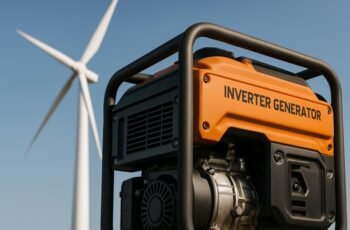
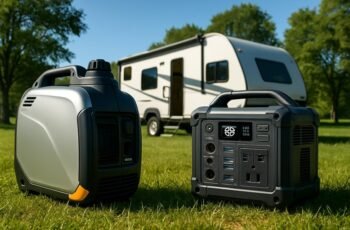
When power outages strike, choosing the right backup solution is critical for maintaining household operations. Inverter generators and grid power backup systems each offer distinct technical advantages and limitations. Understanding how these options perform under different conditions—such as outage length, power demand, and cost considerations—is essential. By examining their operational mechanisms and practical benefits, we can determine which system aligns best with varying residential needs.
Key Takeaways
- Inverter generators provide flexible, on-demand power ideal for short outages with quiet operation and fuel efficiency.
- Grid power backups ensure automatic, stable, and seamless electricity for long outages, protecting sensitive equipment with rapid changeover.
- Inverter generators have lower upfront costs but require regular maintenance and ongoing fuel purchases, unlike higher-cost, professionally serviced grid backups.
- Noise levels and portability favor inverter generators, making them suitable for residential and emergency use where mobility and quietness matter.
- Hybrid systems integrating solar power enhance sustainability and reduce fuel dependence, benefiting both inverter and grid backup solutions.
How Inverter Generators and Grid Power Backups Work During Outages
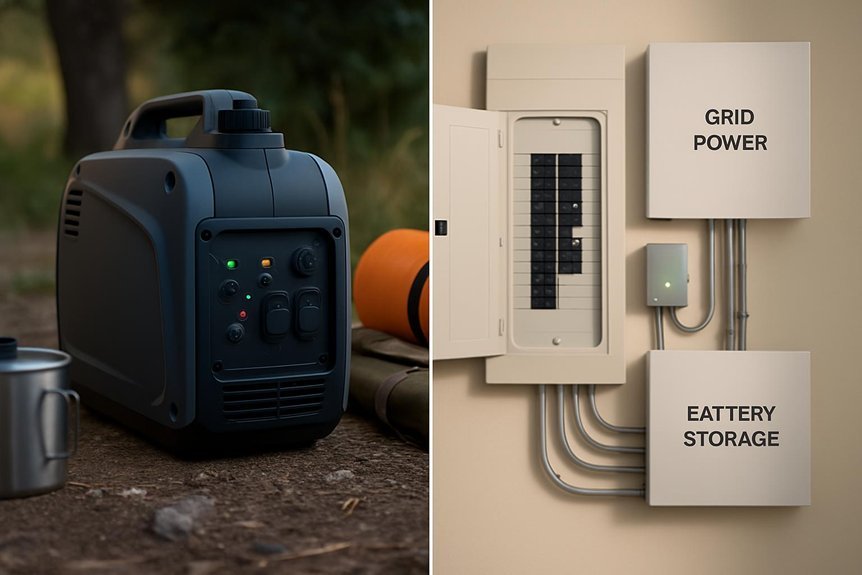
Although both inverter generators and grid power backup systems aim to provide electricity during outages, they operate through fundamentally different mechanisms. Inverter generators convert mechanical energy from a fuel-powered engine into stable electrical power using advanced electronics, allowing for rapid response and clean power output ideal for sensitive devices. Grid power backup systems, often reliant on battery storage or automatic transfer switches, engage by detecting grid failure and switching to stored or alternate power sources, supporting seamless power restoration. For effective outage preparedness, understanding these operational distinctions is essential. Inverter generators provide autonomous, on-demand power generation, while grid backups depend on pre-charged energy reserves or external sources. Both systems enhance resilience, but their differing technologies affect deployment strategies, maintenance, and reliability during prolonged outages.
Key Benefits of Using an Inverter Generator for Backup Power
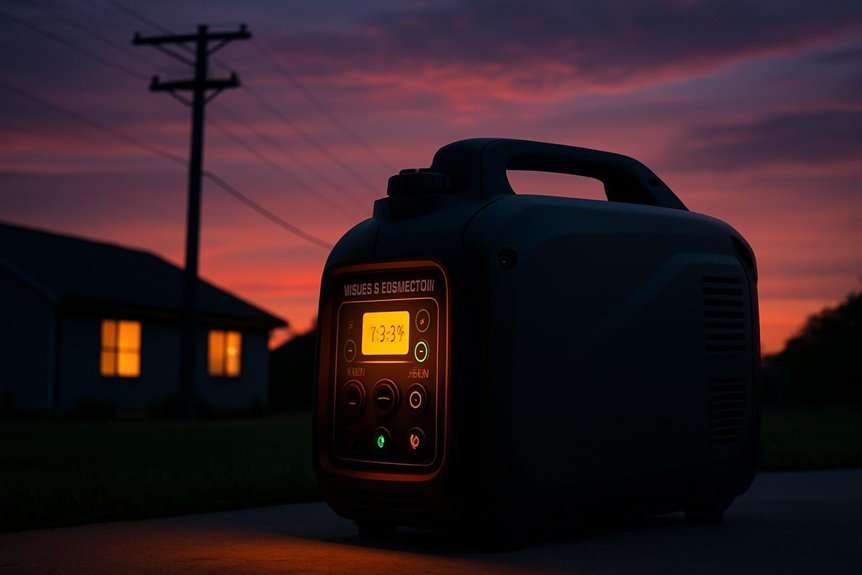
Let’s examine the key benefits of inverter generators for backup power, focusing on their efficient fuel consumption and quiet operation. These advantages directly impact operational cost and noise pollution, making them practical in various settings. Understanding these factors helps us evaluate their suitability compared to traditional grid power backups.
Efficient Fuel Consumption
When we compare fuel consumption between inverter generators and traditional backup power sources, inverter generators demonstrate superior efficiency by adjusting their engine speed to match the required load. This variable engine speed results in optimized fuel efficiency and reduced consumption rates, especially during partial loads. Traditional generators run at a constant speed regardless of load, leading to higher fuel consumption. The table below highlights typical consumption rates for both systems under various load conditions:
| Load (%) | Inverter Generator (L/hr) | Traditional Generator (L/hr) |
|---|---|---|
| 25 | 0.6 | 1.2 |
| 50 | 1.0 | 2.0 |
| 75 | 1.4 | 2.8 |
| 100 | 1.8 | 3.5 |
Using inverter generators effectively lowers fuel costs during outages.
Quiet Operation Benefits
Because inverter generators adjust their engine speed to match power demands, they operate considerably quieter than traditional generators. This noise reduction results from variable engine speeds, which lower sound levels during partial loads, unlike conventional generators that run at a constant high speed. When evaluating backup power options, quieter operation is essential, especially in residential or noise-sensitive environments. Lower sound levels reduce disturbance and improve overall user experience during outages. Additionally, inverter generators often incorporate advanced muffler designs and sound-dampening enclosures, further minimizing noise emissions. By prioritizing noise reduction, inverter generators offer a discreet power solution that integrates seamlessly into daily life without compromising performance. This technical advantage makes them a preferred choice for those valuing quiet operation alongside reliable backup power.
Advantages of Grid Power Backup Systems for Home Reliability
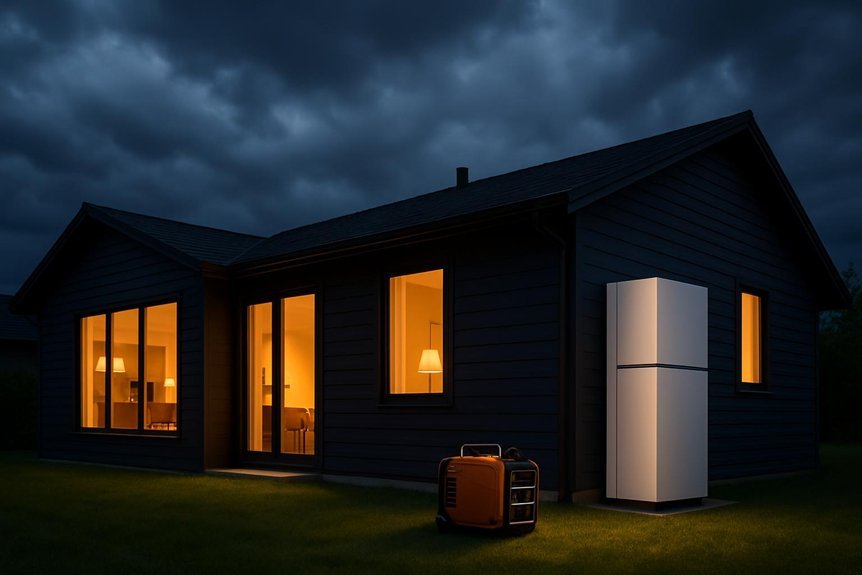
When it comes to home reliability, grid power backup systems offer a consistent power supply that minimizes interruptions. They operate automatically, switching on seamlessly during outages without manual intervention. This guarantees continuous energy delivery, which is critical for maintaining essential household functions.
Consistent Power Supply
Although power interruptions can occur unexpectedly, grid power backup systems guarantee a consistent electricity supply by automatically switching to backup sources without manual intervention. This feature notably enhances power reliability, especially in areas with high outage frequency. By maintaining steady voltage and current levels, these systems prevent disruptions that could damage sensitive equipment or interrupt critical home functions. Additionally, they support continuous operation during prolonged outages, ensuring comfort and safety.
Key benefits include:
- Stable voltage output minimizing equipment stress
- Rapid change reducing downtime
- Capacity to handle variable load demands
- Integration with utility monitoring for proactive management
- Reduction in manual oversight requirements
Together, these factors make grid power backup systems a superior choice for consistent and dependable home power during outages.
Seamless Automatic Operation
As power reliability becomes increasingly critical, grid power backup systems excel by providing seamless automatic operation that requires no user intervention. These systems utilize an automatic transfer switch (ATS) to detect outages and instantly switch the power source from the grid to the backup generator. This automatic transfer guarantees minimal disruption, maintaining continuous electricity flow without manual effort. The seamless integration between the grid, ATS, and backup generator enhances home reliability by reducing downtime and preventing electrical surges during shifts. Unlike inverter generators, which often require manual startup and monitoring, grid backup systems operate autonomously, allowing us to focus on other priorities during outages. This combination of automated responsiveness and integrated controls makes grid power backup systems a superior choice for guaranteeing uninterrupted home power supply.
Comparing Costs and Maintenance of Inverter Generators vs Grid Backups
Since both inverter generators and grid power backups serve the same fundamental purpose of providing reliable electricity during outages, it’s crucial to analyze their costs and maintenance requirements carefully. A thorough cost analysis and maintenance comparison reveal key differences influencing long-term viability.
- Initial investment for grid backups tends to be higher due to infrastructure and installation.
- Inverter generators have lower upfront costs but require regular fuel purchases.
- Maintenance for inverter generators includes oil changes, spark plug checks, and filter replacements.
- Grid backups typically need professional servicing, which can be costly but less frequent.
- Depreciation and lifespan vary; inverter generators may need replacement sooner than well-maintained grid systems.
Understanding these factors helps us make informed decisions about which backup suits our budget and upkeep capabilities.
Which Backup Option Fits Different Outage Durations and Power Needs?
When we evaluate backup power options, matching the choice to outage duration and power requirements is crucial for efficiency and reliability. For short outages, inverter generators offer flexible capacity, rapid deployment, and diverse fuel types, suiting intermittent power needs with minimal installation. In contrast, long outages demand solutions with higher capacity requirements and sustained fuel supply, making grid-tied backups with battery storage or standby generators preferable for continuous power. Usage scenarios influence emergency preparedness strategies, as user preferences dictate whether portability or fixed installation is prioritized. Environmental impact also guides selection; inverter generators typically emit fewer pollutants during short use, whereas grid backups can leverage cleaner energy sources. Ultimately, analyzing power needs alongside outage length guarantees an optimized backup plan that balances operational demands, installation options, and sustainability goals.
How Noise and Portability Affect Your Choice Between Backup Solutions
Although power capacity and fuel efficiency are critical, we also need to evaluate noise levels and portability when selecting backup solutions. Noise levels directly impact urban considerations, where quieter operation is often necessary to comply with local regulations and minimize disturbances. Portability factors influence outdoor use and user preferences, especially when size limitations restrict transport or storage. Matching these elements to your power needs and backup timing guarantees efficient deployment during outages.
Key considerations include:
- Noise levels suited to residential or outdoor environments
- Portability factors like weight and handle design
- Urban considerations limiting generator placement
- Size limitations affecting storage and mobility
- User preferences balancing convenience and operational demands
Tips for Choosing the Best Backup Power System for Your Home
Balancing noise levels and portability with power capacity sets the foundation for selecting an effective backup system. To choose the best option for your home, assess your essential power needs and duration of outages. Battery storage capacity directly impacts runtime, so prioritize systems with scalable options. Consider inverter generators for portability and quiet operation, but weigh them against larger grid-tied solutions. Solar integration enhances sustainability and reduces fuel dependence, making hybrid systems attractive for long-term resilience. Evaluate installation complexity, maintenance requirements, and cost-effectiveness to align with your technical capabilities and budget. By methodically analyzing these factors—power output, noise, portability, battery storage, and solar potential—we can identify a backup system that delivers reliable performance tailored to our home’s specific demands during outages.
Frequently Asked Questions
Can Inverter Generators Be Used Indoors Safely?
We don’t recommend using inverter generators indoors due to indoor safety risks. Proper generator ventilation is essential to prevent carbon monoxide buildup, so it’s safest to operate them outdoors with adequate airflow and exhaust management.
Do Grid Power Backups Require Professional Installation?
We believe grid power backups usually require professional installation, especially for automatic transfer switches. While manual installation might be possible, experts guarantee safety, compliance, and proper integration with your home’s electrical system, minimizing risks during outages.
How Do Inverter Generators Perform in Extreme Weather?
Though inverter generators excel in performance reliability under moderate conditions, their efficiency can drop in extreme conditions like freezing cold or heavy rain. We recommend choosing models with weatherproofing features to guarantee consistent operation.
Are There Environmental Impacts of Using Inverter Generators?
We recognize inverter generators emit lower emission levels and create less noise pollution compared to conventional generators. This makes them a more environmentally friendly option, reducing our overall ecological footprint during power outages.
Can Backup Systems Support Medical Equipment During Outages?
We understand medical device compatibility is essential, as backup systems must precisely match power requirements. Ensuring stable voltage and uninterrupted flow keeps critical equipment running, so we carefully analyze each system’s capacity before relying on it during outages.
Conclusion
When power interruptions visit, choosing between inverter generators and grid backups requires a clear view of our unique needs. Inverter generators offer quiet, efficient relief for brief disruptions, while grid backups provide steadfast continuity during extended outages. By weighing factors like outage duration, power demand, and maintenance, we can select a solution that gently cushions us from the inconvenience of darkness, ensuring our homes remain havens of comfort and reliability.