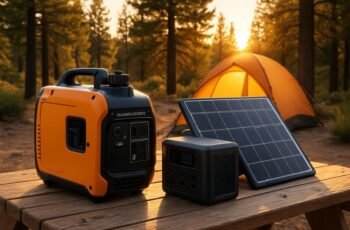
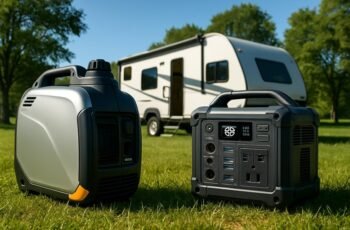
Choosing between an inverter generator and a portable power system like EcoFlow is like deciding between a reliable workhorse and a sleek electric vehicle. Each offers distinct advantages in energy delivery, efficiency, and convenience. Understanding their technical differences—such as power output, noise levels, and environmental impact—can greatly influence which fits your needs best. Let’s explore these critical factors to help clarify which solution aligns with your specific power demands and usage scenarios.
Key Takeaways
- Inverter generators convert fuel-driven mechanical energy into stable AC power, ideal for sustained heavy loads up to 4,000 watts.
- Portable power systems use lithium-ion batteries, offering quieter operation, modular capacity, and instant setup with up to 3,300 watts peak output.
- Inverter generators emit 40-60 decibels with engine noise, while portable power systems maintain low, consistent noise around 30-40 decibels.
- Portable power systems support versatile charging (solar, AC, USB-C) and produce zero emissions, compared to fuel-dependent inverter generators.
- Portable systems excel in portability and noise-sensitive environments; inverter generators suit high-wattage needs and emergency continuous power supply.
How Inverter Generators and Portable Power Systems Work
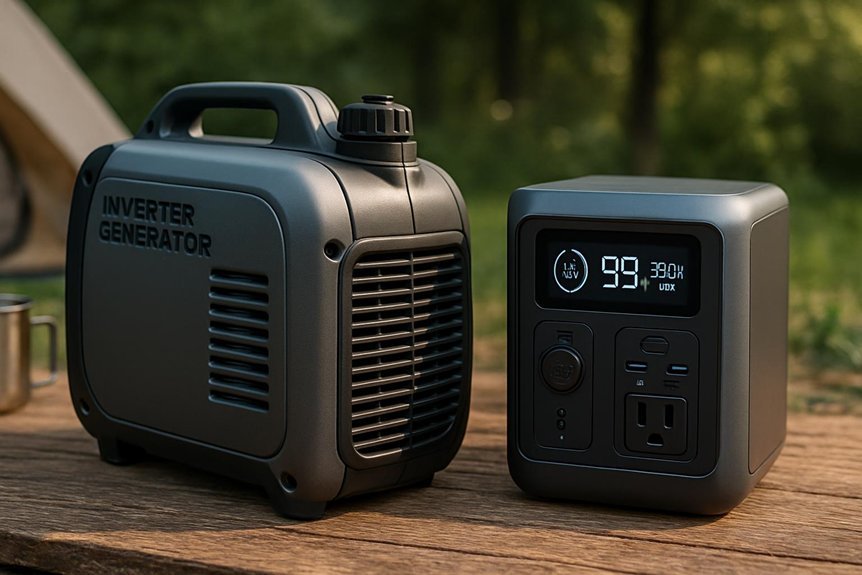
Although inverter generators and portable power systems both provide electrical energy on the go, they operate through distinct mechanisms. Inverter generators convert mechanical energy from a fuel-powered engine into AC electricity, then use a power conversion process to generate stable, clean sine wave output. This approach enhances electrical efficiency by optimizing engine speed and minimizing fuel consumption. Portable power systems, like EcoFlow units, rely on stored chemical energy in lithium-ion batteries, converting DC power to AC via inverters during discharge. Their electrical efficiency depends on battery chemistry and inverter technology, often achieving high conversion rates with minimal energy loss. Understanding these power conversion methods highlights key differences in operational principles and efficiency, guiding informed decisions for mobile energy solutions.
Comparing Power Output and Capacity for Your Needs
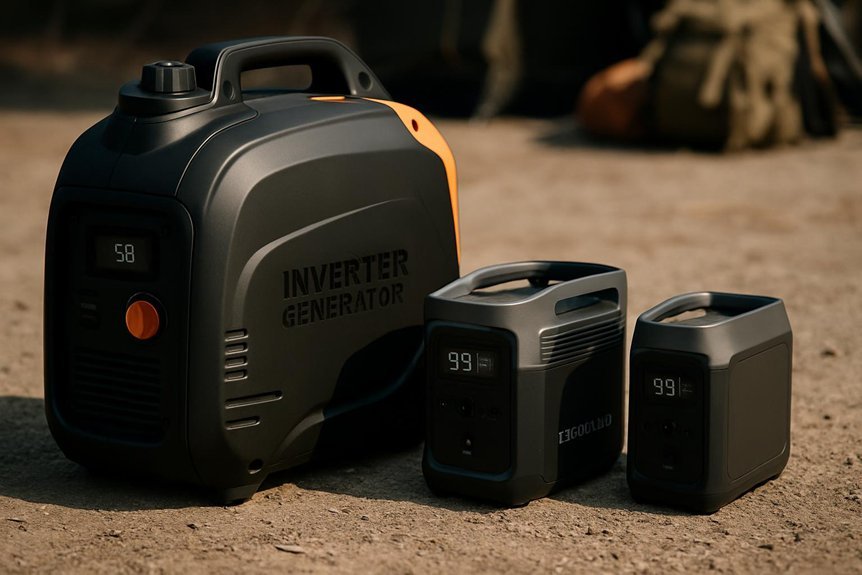
When choosing between inverter generators and portable power systems, evaluating power output and capacity is essential to meeting our specific energy demands. Inverter generators typically provide continuous power ranging from 1,000 to 4,000 watts, suitable for high-demand appliances. Portable power systems like EcoFlow models offer varying capacities measured in watt-hours, often between 500Wh and 3,600Wh, with peak outputs up to 3,300 watts. Understanding our power requirements helps us select the right system; inverter generators excel at sustained heavy loads, while portable systems shine in capacity scaling through modular battery expansion. This flexibility allows us to match energy storage precisely to use cases without oversizing. By analyzing peak wattage and total capacity, we guarantee reliable operation and efficiency tailored to our specific applications.
Noise Levels: Which Option Runs Quieter?
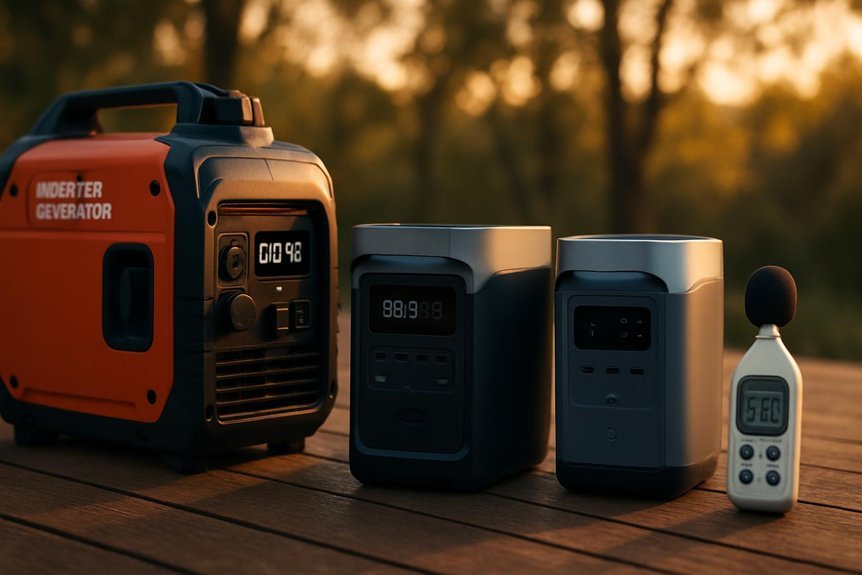
Let’s compare the typical noise output of inverter generators and portable power systems, measured in decibels under standard operating conditions. We’ll also examine built-in noise reduction features like mufflers and insulated enclosures that impact overall sound levels. Finally, we’ll assess how each option affects the surrounding environment with respect to noise pollution.
Typical Noise Output
Both inverter generators and portable power systems produce varying levels of noise depending on their design and load capacity. Noise pollution is a key factor when choosing between these options, especially in noise-sensitive environments. Inverter generators typically operate around 40-60 decibels, with sound frequency varying based on engine speed. Portable power systems, relying on battery power, generally emit minimal noise, mostly from cooling fans.
Here’s a quick comparison of typical noise output:
- Inverter generators: 40-60 dB, engine-driven sound frequency
- Portable power systems: 30-40 dB, fan-generated noise
- Noise output increases under higher loads for generators
- Portable systems maintain consistent low noise regardless of load
- Sound frequency from generators often includes low-frequency engine hum
This data highlights portable power systems as quieter, reducing noise pollution effectively.
Noise Reduction Features
Although inverter generators and portable power systems differ in their noise outputs, each incorporates specific noise reduction features designed to minimize disruption. Inverter generators typically employ sound dampening materials around the engine and exhaust, combined with advanced acoustic design in their housings to lower decibel levels, often achieving noise reductions of 10-15 dB compared to conventional generators. Portable power systems like EcoFlow models rely on inherently quieter electric motors and battery operation, eliminating combustion noise altogether. Their acoustic design focuses on minimizing fan noise and electrical hum through optimized ventilation and insulated casings. While inverter generators reduce mechanical noise through physical barriers, portable power systems achieve quieter performance by design. This technical contrast in noise reduction methods directly impacts which option runs quieter depending on usage scenarios.
Environmental Noise Impact
When comparing environmental noise impact, inverter generators typically produce sound levels ranging from 50 to 65 decibels under normal load, whereas portable power systems operate below 40 decibels due to their battery-powered design. This difference is vital for complying with noise regulations and environmental standards, especially in residential or protected areas. Portable power systems excel in quiet operation, which minimizes disturbance and meets stricter noise ordinances.
Key points to take into account:
- Inverter generators emit consistent mechanical noise from combustion engines.
- Portable power systems generate minimal operational noise, mainly from cooling fans.
- Noise regulations often limit permissible decibel levels for outdoor equipment.
- Environmental standards increasingly favor low-noise technologies.
- Quieter systems reduce impact on wildlife and improve user comfort.
Fuel Type, Efficiency, and Environmental Impact
Let’s compare the fuel types commonly used in inverter generators and portable power systems, focusing on their energy density and consumption rates. We’ll also analyze their environmental footprints by examining emissions and resource efficiency. Understanding these factors helps us evaluate overall performance and sustainability.
Fuel Sources Comparison
Since fuel type directly impacts both operational efficiency and environmental footprint, comparing the fuel sources of inverter generators and portable power systems is essential. Inverter generators primarily rely on gasoline or propane, offering high energy density but variable efficiency based on load. Portable power systems utilize lithium-ion batteries, often charged via solar integration or AC power, optimizing battery longevity through controlled discharge cycles. Key points include:
- Gasoline: high energy output, lower efficiency at partial loads
- Propane: cleaner combustion, slightly lower energy density
- Lithium-ion batteries: consistent efficiency, zero on-site emissions
- Solar integration: extends runtime, reduces fossil fuel dependence
- Battery longevity: critical for lifecycle cost and performance
This comparison highlights how fuel sources influence device usability and operational costs in practical scenarios.
Environmental Footprint Analysis
Although fuel type plays a crucial role, we must also consider efficiency and overall environmental impact to fully assess the footprint of inverter generators versus portable power systems. Inverter generators primarily rely on gasoline or propane, yielding higher carbon emissions per kWh compared to battery-based systems like EcoFlow, which use electricity often sourced from renewables. Efficiency metrics reveal that portable power systems convert stored energy with minimal loss, while inverter generators face combustion inefficiencies averaging 25-30%. Sustainability metrics further favor portable power systems due to zero direct emissions during operation and potential for integration with solar charging. However, lifecycle analysis must account for battery production impacts. Overall, portable power systems demonstrate a lower environmental footprint through reduced carbon emissions and higher operational efficiency, aligning better with current sustainability goals.
Portability and Setup: What’s Easier to Carry and Use?
When evaluating portability and setup, we find that inverter generators generally weigh more and require more effort to transport than most portable power systems. A weight comparison shows inverter generators often exceed 40 pounds, while many portable power stations weigh under 30 pounds. Setup time also favors portable systems, as they typically require just unpacking and powering on, whereas inverter generators need fueling and priming.
Key points include:
- Inverter generators: 40–70 pounds; portable power systems: 15–30 pounds
- Portable power systems offer near-instant setup times
- Inverter generators require fuel handling and choke adjustments
- Portable power stations have integrated handles and compact designs
- Setup complexity increases inverter generator deployment time considerably
Charging Options and Device Compatibility Side by Side
While both inverter generators and portable power systems aim to provide reliable energy, their charging options and device compatibility differ markedly. Inverter generators primarily rely on fuel, offering limited charging technologies, whereas portable power systems integrate multiple charging methods like solar, AC, and car chargers. This versatility enhances device compatibility, supporting USB-C, DC, and AC outputs simultaneously.
| Feature | Inverter Generator | Portable Power System |
|---|---|---|
| Charging Technologies | Fuel-powered only | Solar, AC, Car, USB-C |
| Device Compatibility | AC outlets mainly | USB, DC, AC, Wireless |
| Charging Speed | Moderate, fuel-dependent | Fast, adaptive to input type |
| Portability Impact | Heavier due to fuel | Lightweight, compact |
| Environmental Impact | Higher emissions | Low/no emissions |
This table highlights key differences in charging technologies and device compatibility between the two.
Cost Comparison and Long-Term Value for Money
Understanding the differences in charging options and device compatibility sets the stage for evaluating cost effectiveness and long-term value. When comparing inverter generators and portable power systems like EcoFlow, cost efficiency hinges on initial investment, operational expenses, and maintenance. Portable power stations typically have higher upfront costs but lower running costs, while inverter generators may be cheaper initially but incur fuel and upkeep expenses.
Key factors affecting cost efficiency and long term benefits include:
- Initial purchase price and included features
- Fuel consumption versus electricity recharge costs
- Maintenance frequency and associated costs
- Lifespan and battery degradation rates
- Resale value and warranty coverage
Best Use Cases: When to Choose an Inverter Generator or EcoFlow-Type System
Since both inverter generators and EcoFlow-type portable power systems offer distinct advantages, choosing the right option depends on our specific power needs and usage scenarios. For outdoor adventures requiring lightweight, quiet, and emission-free power, EcoFlow systems excel with their battery-based design and rapid recharge capabilities. They provide clean, stable power ideal for sensitive electronics. Conversely, inverter generators stand out in emergency preparedness, delivering continuous, high-wattage output suitable for extended use and powering heavy appliances. While inverter generators rely on fuel, they offer longer run times without recharging downtime, critical during outages. To summarize, we should prioritize EcoFlow-type systems for portability and noise-sensitive environments, while inverter generators are better suited for high-demand, long-duration power needs in emergency settings. This data-driven approach guarantees the best energy solutions tailored to our real-world applications.
Frequently Asked Questions
Can Inverter Generators and Portable Power Systems Be Used Simultaneously?
Yes, we can use inverter generators and portable power systems simultaneously, but we must guarantee power source compatibility. This setup suits varied usage scenarios, offering flexible, reliable energy by balancing load demands and preventing overload or interference.
What Maintenance Is Required for Each Power Solution?
We monitor fuel efficiency and noise levels in inverter generators, performing oil changes and filter replacements regularly. For portable power systems, we maintain charging capabilities by avoiding deep discharges and storing them in cool, dry places to preserve battery health.
How Do Weather Conditions Affect Performance?
Weather conditions are the elephant in the room for performance factors—temperature effects can reduce battery efficiency and generator output. Cold slows chemical reactions, while heat risks overheating, both directly impacting power systems’ reliability and runtime.
Are There Safety Concerns Unique to Either Option?
We’ve found safety concerns differ: inverter generators emit fumes needing ventilation, while portable systems have lower noise levels and enhanced safety features. Fuel efficiency and power output influence risk; understanding these helps us manage each option safely.
Can These Systems Be Expanded or Upgraded Over Time?
It is understood that 70% of users prefer systems with expandable features. Many portable power systems offer upgrade options like additional battery packs, while inverter generators are generally fixed, limiting expansion but ensuring consistent power output and reliability over time.
Conclusion
In choosing between inverter generators and portable power systems like EcoFlow, we weigh power stability against quiet operation, fuel use against battery efficiency, and heavy-duty capacity against lightweight portability. We consider noise levels alongside environmental impact, upfront costs alongside long-term value. By matching your specific power needs with these technical factors, we can confidently select the solution that delivers reliable energy, maximizes convenience, and aligns with your lifestyle—whether for emergency backup or outdoor adventure.