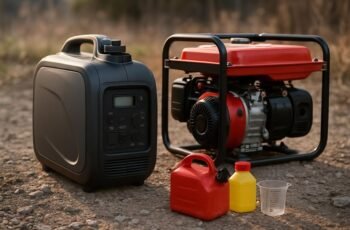
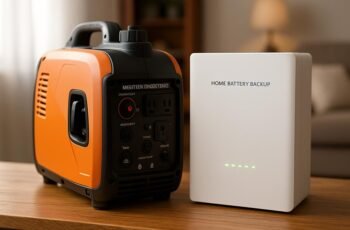
When evaluating backup power options, we need to take into account how inverter and standby generators differ in performance, cost, and usability. Each system serves distinct needs—from portable, quiet power to automatic, whole-home support. Understanding their operational mechanics and long-term implications is essential before investing. Let’s explore the technical contrasts and practical factors that influence which generator truly delivers value for your specific situation.
Key Takeaways
- Inverter generators offer portable, quieter, and energy-efficient power ideal for short-term or outdoor use at a lower upfront cost.
- Standby generators provide automatic, high-capacity power with permanent installation, suited for frequent or long-duration outages.
- Fuel choice impacts cost and convenience: inverter generators use gasoline, while standby units often run on propane, natural gas, or diesel.
- Installation and maintenance costs are higher for standby generators due to complexity and professional servicing requirements.
- Assess power needs, noise limitations, and portability to determine which generator type offers the best value for your backup power requirements.
How Inverter And Standby Generators Work Differently
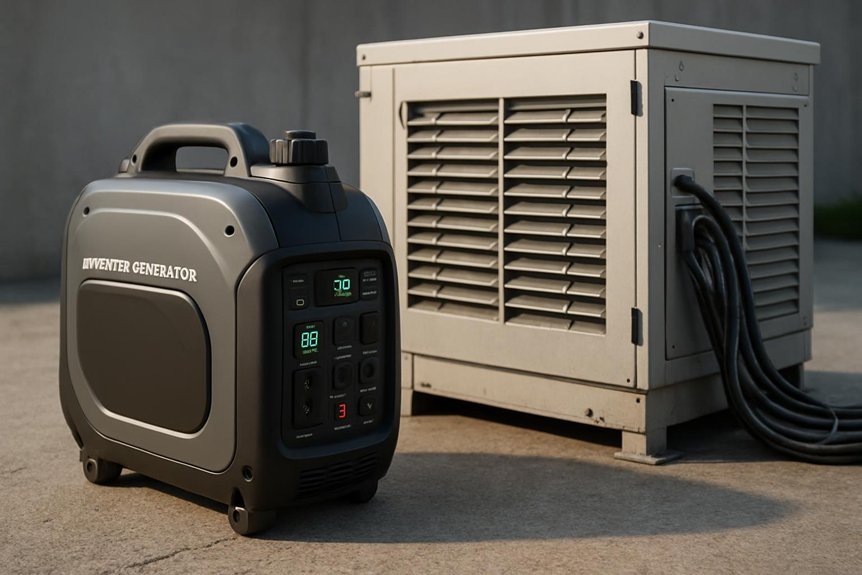
Although both inverter and standby generators provide electrical power, they operate on fundamentally different principles that affect their performance and applications. Inverter technology converts raw AC power to DC and then back to clean AC, ensuring superior power stability and energy efficiency. This design typically results in lower noise levels and a compact size, catering to user preferences favoring portability and quieter operation. Conversely, standby generators prioritize reliability, automatically activating during outages to supply consistent power to an entire home or facility. They tend to be larger and louder but excel in continuous heavy-duty usage scenarios. Understanding these operational distinctions helps us evaluate which generator aligns best with our energy needs, balancing factors like power stability, noise tolerance, and size comparison against the intended application.
Which Backup Generator Fits Your Power Needs Best?
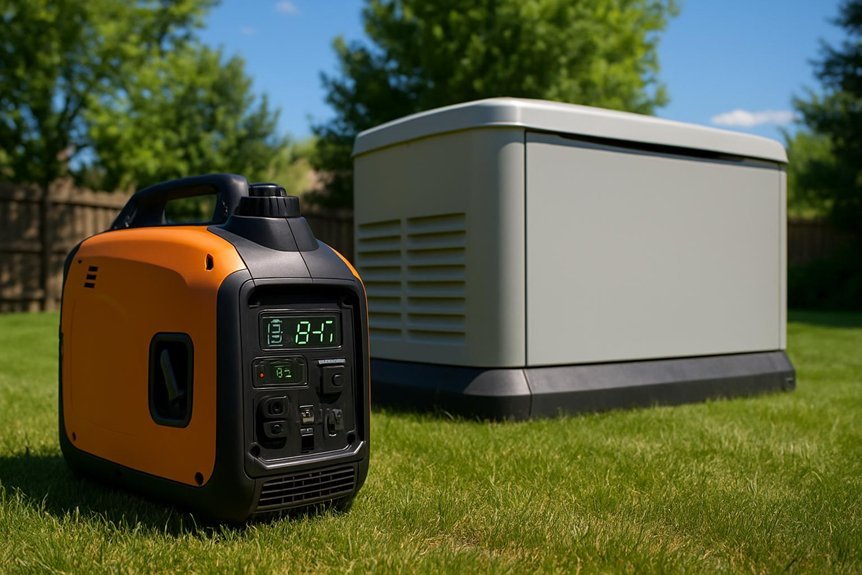
How do we determine which backup generator best suits our power requirements? We start by analyzing our specific usage scenarios and matching them with generator capabilities. Critical factors include:
- Total wattage needed for essential appliances and devices
- Duration and frequency of power outages in our area
- Portability requirements based on installation or mobility needs
- Noise level constraints, especially in residential or sensitive environments
- Fuel availability and compatibility with generator types
Comparing Costs: Upfront And Long-Term Expenses
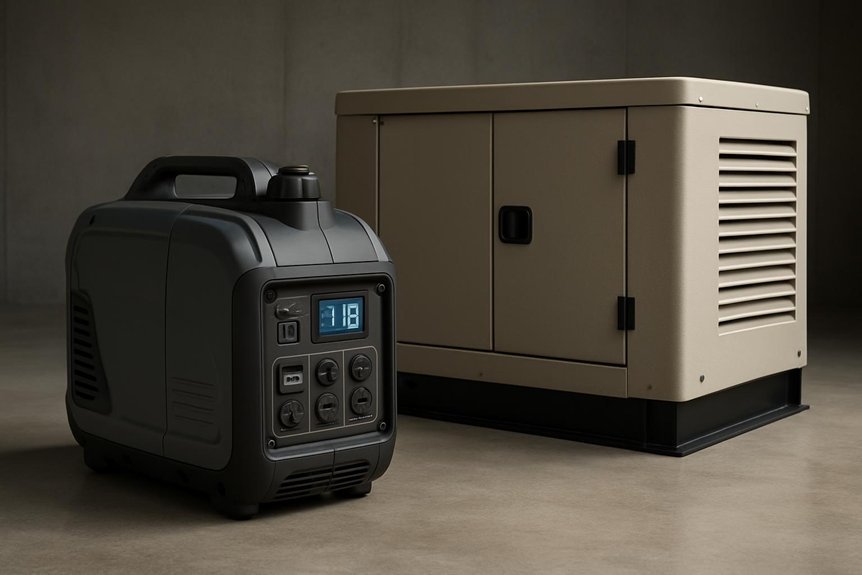
Let’s break down the costs associated with inverter and standby generators, starting with the initial purchase price and installation fees. We’ll also assess ongoing maintenance and operating expenses to understand the total cost of ownership. By analyzing these factors, we can determine which option offers better long-term value.
Initial Purchase Price
What should we expect when comparing the initial purchase price of inverter generators versus standby generators? Conducting a thorough cost analysis reveals notable differences in initial investment. Inverter generators typically offer a lower upfront cost, making them appealing for budget-conscious buyers. Conversely, standby generators demand a higher initial investment due to their capacity and built-in features.
Key factors affecting initial purchase price include:
- Power output capacity and scalability
- Brand reputation and technology integration
- Durability and expected lifespan
- Included features like noise reduction and fuel efficiency
- Warranty coverage and service agreements
Installation And Setup Costs
Installation and setup costs for inverter and standby generators vary considerably, impacting both upfront and long-term expenses. Inverter generators generally have minimal installation requirements, often involving simple plug-and-play setups, which reduce both complexity and initial labor costs. In contrast, standby generators demand extensive installation efforts, including permanent wiring, transfer switch integration, and potential fuel line connections. This increased setup complexity drives higher upfront expenses, often requiring professional electricians and permits. Additionally, standby systems may necessitate foundation work and weatherproof enclosures, further elevating installation costs. While inverter units offer cost-efficiency in setup, standby generators’ installation investments reflect their capacity for seamless, automatic power delivery. When evaluating total expenditure, we must carefully weigh these installation requirements and setup complexity against the desired backup power reliability and convenience.
Maintenance And Operating Expenses
Beyond the initial setup, maintenance and operating expenses substantially influence the total cost of ownership for both inverter and standby generators. We need to evaluate routine checks and service intervals, as these impact downtime and long-term reliability. Inverter generators generally require less frequent servicing due to their advanced technology and cleaner fuel consumption, while standby generators demand more intensive maintenance, including fuel system upkeep and battery replacements.
Key factors to examine include:
- Frequency and complexity of routine checks
- Cost and availability of replacement parts
- Fuel efficiency and consumption rates
- Service intervals dictated by manufacturer guidelines
- Labor costs associated with professional servicing
Fuel Types And Efficiency: What Powers Each Generator?
Let’s examine the common fuel sources powering inverter and standby generators, focusing on gasoline, propane, and natural gas. We’ll analyze their efficiency using metrics like fuel consumption rates and energy output consistency. Understanding these factors helps us determine which generator type delivers peak performance under various conditions.
Common Fuel Sources
While both inverter and standby generators serve the purpose of providing backup power, their fuel sources and efficiency profiles differ considerably. Inverter generators typically rely on gasoline due to its accessibility and favorable gasoline efficiency in smaller engines. Standby generators, however, often use propane fuel, natural gas, or diesel options, which provide longer runtimes and easier fuel storage.
- Gasoline: Common in inverter generators, emphasizing portability and quick refueling.
- Propane fuel: Popular in standby units for cleaner combustion and extended storage life.
- Natural gas: Offers continuous supply potential, ideal for permanent standby installations.
- Diesel options: Known for high energy density and durability, favored in heavy-duty standby generators.
- Hybrid fuels: Some units accommodate multiple fuels, enhancing operational flexibility.
Understanding these fuel types helps us evaluate generator suitability for specific backup needs.
Efficiency Comparison Metrics
Since fuel type directly influences generator performance, we need to examine how each fuel’s energy density, combustion efficiency, and consumption rate affect overall generator efficiency. Efficiency ratings and power output vary considerably between gasoline, diesel, and propane due to these factors. Inverter generators typically use gasoline or propane, optimizing combustion for lower emissions and fuel consumption. Standby generators often run on diesel or natural gas, favoring higher energy density and sustained power output.
| Fuel Type | Energy Density (MJ/kg) | Typical Efficiency Rating (%) |
|---|---|---|
| Gasoline | 44 | 25-30 |
| Diesel | 45 | 30-35 |
| Propane | 50 | 20-25 |
Evaluating these metrics helps us understand how fuel choice impacts generator efficiency and operational costs.
Portability Vs Permanence: Where Each Generator Shines
Although both inverter and standby generators serve the purpose of providing power, their design fundamentally diverges with respect to mobility and installation. Inverter generators excel in portability benefits and outdoor versatility, making them ideal for emergency readiness in various environments. Standby generators, conversely, offer permanent solutions with fixed installation, ensuring continuous power without manual setup. We should consider:
- Portability benefits favor inverter units for flexible deployment.
- Permanent solutions provide seamless indoor safety through automatic operation.
- Outdoor versatility suits inverter generators for camping or job sites.
- Emergency readiness demands quick, transportable power sources.
- Power flexibility varies: inverter generators adapt loads efficiently, standby units handle higher, steady demands.
Installation And Maintenance: What To Expect For Each Option
When we look at installation and maintenance, inverter and standby generators demand distinctly different approaches that affect time, cost, and technical involvement. Installation requirements for inverter generators are minimal, often plug-and-play, while standby generators require professional setup, including transfer switches and fuel connections. Maintenance schedules also differ: inverter generators need less frequent servicing, whereas standby units demand regular inspections to guarantee readiness.
| Aspect | Inverter Generator | Standby Generator |
|---|---|---|
| Installation | Simple, portable, minimal setup | Complex, professional installation |
| Installation Time | Hours | Days |
| Maintenance Frequency | Quarterly or biannual | Monthly or quarterly |
| Technical Skill | Basic user maintenance | Professional servicing required |
Deciding Which Backup Generator Is Worth Your Investment?
How do we determine which backup generator truly justifies our investment? To make an informed choice, we must evaluate key factors that impact backup power efficiency and generator reliability. These criteria guide us in balancing upfront costs with long-term benefits.
Choosing the right backup generator means weighing efficiency, reliability, and cost for lasting value.
- Power output requirements tailored to your essential loads
- Frequency and duration of power outages in your area
- Fuel efficiency and operational costs over time
- Installation complexity and ongoing maintenance demands
- Noise levels and environmental considerations
Frequently Asked Questions
Can Inverter Generators Operate Sensitive Electronics Safely?
Yes, we can confidently say inverter generators provide superior power quality, ensuring electronic compatibility by producing stable, clean sine waves. This makes them ideal for operating sensitive electronics safely without risking damage or performance issues.
How Loud Are Inverter Generators Compared to Standby Generators?
We’ve found inverter generators produce around 50-60 decibels, considerably quieter than standby generators at 65-75 decibels. Their advanced sound insulation and design reduce noise levels, making them ideal for noise-sensitive environments.
Are There Tax Incentives for Purchasing Standby Generators?
Yes, we’ve found that tax deductions sometimes apply to standby generators, especially if they’re for emergency power. We should analyze installation costs carefully, as certain expenses might qualify, reducing our overall financial burden effectively.
Can Inverter Generators Be Used During Camping or Outdoor Events?
Of course, lugging heavy gear is our idea of camping convenience! Seriously, inverter generators offer exceptional outdoor versatility—they’re lightweight, quiet, and provide stable power, making them perfect for camping or outdoor events without sacrificing performance or reliability.
What Are Common Safety Features in Standby Generators?
We rely on automatic shutoff, overload protection, and low-oil sensors to enhance safety in standby generators. These features, combined with fuel efficiency and manageable maintenance requirements, guarantee reliable, safe operation during power outages for us.
Conclusion
When choosing between inverter and standby generators, consider that standby units can power an entire home automatically, supporting up to 22,000 watts, while inverter generators typically max out around 3,000 watts for portable use. This stark difference highlights the trade-off between robust, permanent power and compact, quiet efficiency. By analyzing your power needs, budget, and installation preferences, we can make an informed choice that balances cost with reliability and convenience.