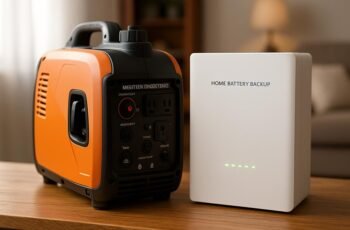
Choosing between inverter and traditional generators is like selecting the right engine for a complex machine—each has its unique rhythm and demands. As we explore their maintenance routines, lifespan variances, and performance nuances, we uncover critical factors that influence reliability and efficiency. Understanding these will help us determine which generator truly aligns with our power needs and operational expectations. Let’s examine what sets them apart.
Key Takeaways
- Inverter generators require regular oil changes, air filter care, and spark plug inspections for optimal performance and longevity.
- Traditional generators need frequent fuel stabilization, filter changes, and more intensive mechanical servicing to prevent wear and overheating.
- Inverter generators typically last 2,000–4,000 hours, while traditional generators last 1,500–3,000 hours, depending on maintenance and usage.
- Inverter generators offer better fuel efficiency by adjusting engine speed to load, whereas traditional generators run at constant speed, consuming more fuel.
- Inverter generators provide stable, clean power for sensitive electronics with lower noise (50-60 dB), unlike louder (65-75 dB) traditional models.
How Inverter and Traditional Generators Work Differently
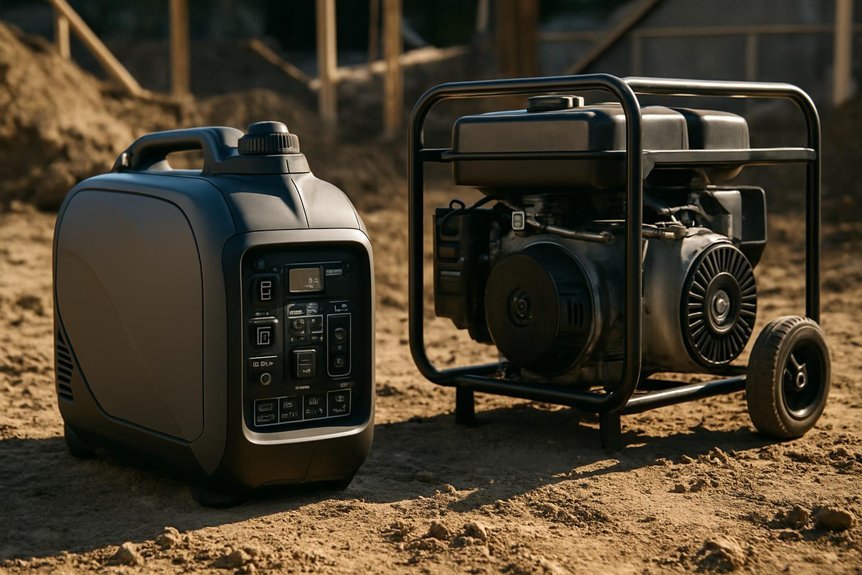
Although both inverter and traditional generators produce electricity by converting mechanical energy, they do so through fundamentally different processes. Traditional generator types rely on a direct mechanical link between the engine and the alternator, producing AC power at a fixed speed. This approach often causes fluctuations in frequency and voltage, impacting power stability. In contrast, inverter generators first convert AC to DC, then invert it back to clean AC power with precise electronic control. This multi-stage conversion allows inverter generators to adjust engine speed based on load, improving fuel efficiency and delivering consistent voltage and frequency. Understanding these distinctions helps us appreciate why inverter generators provide superior power stability, especially for sensitive electronics, while traditional generators excel in raw power output for less sensitive applications.
Key Maintenance Tasks for Inverter Generators
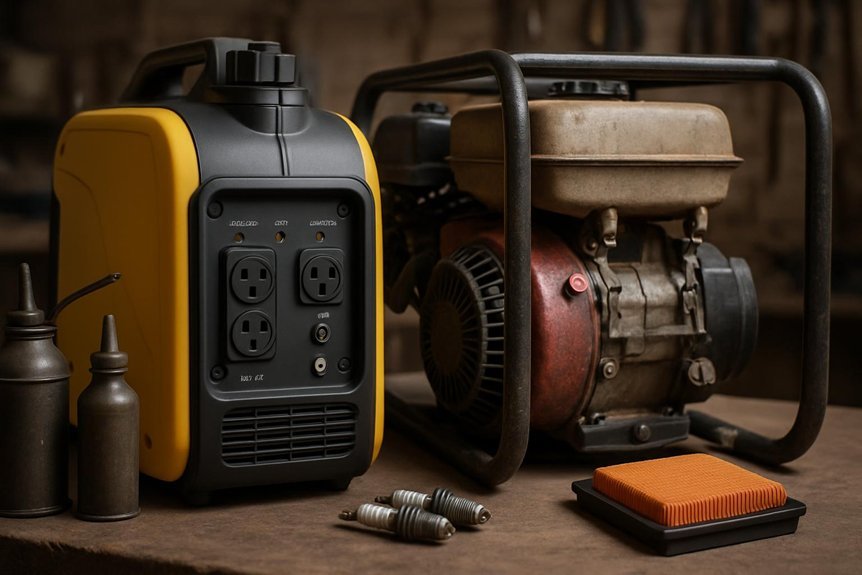
To keep our inverter generators running efficiently, we need to prioritize regular oil changes, proper air filter care, and consistent spark plug inspections. Each task plays a critical role in maintaining engine performance and longevity. Let’s examine how these maintenance steps impact reliability and operation.
Regular Oil Changes
Since inverter generators rely on finely tuned engines to deliver stable power output, we must perform regular oil changes to maintain peak performance and longevity. Monitoring oil viscosity is critical, as it affects lubrication efficiency and engine wear. Sticking to manufacturer-recommended change intervals prevents contaminants from degrading engine components. Neglecting oil quality compromises the generator’s reliability and may shorten its lifespan.
Key considerations for regular oil changes include:
- Selecting the correct oil viscosity based on operating temperature ranges
- Adhering strictly to specified oil change intervals
- Draining the oil completely to remove sludge and particulates
- Inspecting the oil for discoloration or metal shavings
- Using high-quality synthetic or semi-synthetic oils for ideal engine protection
Air Filter Care
Maintaining an inverter generator’s engine oil quality sets the foundation for reliable operation, but protecting airflow through proper air filter care keeps that engine running efficiently. We must recognize the importance of selecting the right air filter type—foam, paper, or cotton gauze—each offering distinct filtration efficiency and maintenance requirements. Foam filters, for instance, require regular washing and oiling, while paper filters necessitate replacement once clogged. Implementing appropriate cleaning techniques is critical; gentle tapping or compressed air can remove loose debris, but aggressive methods risk damaging the filter media. Consistent inspection and timely maintenance prevent airflow restriction, which could lead to overheating or reduced power output. By prioritizing air filter care, we guarantee ideal combustion, prolong engine life, and maintain the inverter generator’s performance at peak levels.
Spark Plug Inspection
Although often overlooked, spark plug inspection plays a critical role in ensuring the efficient operation of inverter generators. Regularly examining spark plug types and their condition helps us maintain peak combustion and engine performance. Neglecting this task can lead to misfires, increased fuel consumption, and engine wear. When inspecting, we focus on electrode wear, carbon deposits, and proper gap size. Spark plug replacement is necessary when signs of damage or excessive fouling appear.
Key inspection steps include:
- Identifying the correct spark plug type for the generator model
- Cleaning carbon deposits without damaging electrodes
- Measuring and adjusting the electrode gap precisely
- Checking for cracks, corrosion, or wear on the plug body
- Scheduling timely spark plug replacement based on usage hours
This disciplined approach extends inverter generator lifespan and sustains performance.
Maintenance Needs of Traditional Generators Compared
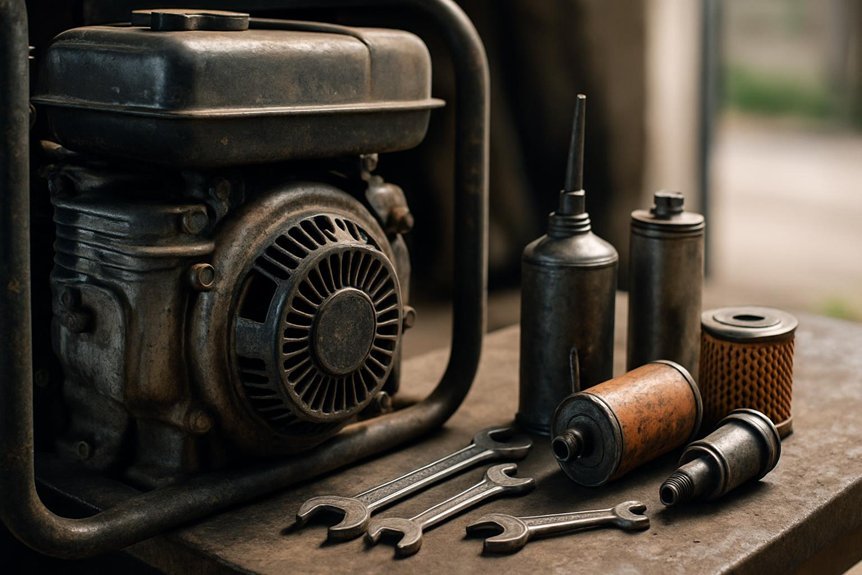
When we examine the maintenance needs of traditional generators, several key factors demand our attention. Traditional generators primarily run on gasoline or diesel, and the fuel type greatly influences their upkeep. Gasoline generators require more frequent fuel stabilization to prevent degradation, while diesel units need regular fuel filter changes to avoid clogging. Adhering to a strict maintenance schedule is vital; this includes periodic oil changes, air filter replacements, and spark plug inspections. Neglecting these tasks accelerates wear and compromises reliability. Additionally, traditional generators often require more intensive mechanical servicing due to their simpler, less efficient engines. Monitoring exhaust systems and cooling components is also essential to prevent overheating. Overall, the maintenance demands of traditional generators are more hands-on and time-sensitive compared to inverter models, necessitating diligent adherence to manufacturer guidelines.
Expected Lifespan of Inverter Generators and What Affects It
Inverter generators typically have a lifespan ranging from 2,000 to 4,000 hours of operation, depending on usage and maintenance practices. To understand their durability aspects better, we need to examine key lifespan factors that influence performance degradation over time. These include:
- Frequency and quality of oil changes
- Load consistency and operating temperature
- Air filter cleanliness and replacement intervals
- Proper storage conditions during inactivity
- Manufacturer build quality and component robustness
Each factor directly impacts wear rates on internal components, affecting overall reliability and longevity. By managing these lifespan factors diligently, we can extend the durability aspects of inverter generators and maximize their operational life. This technical approach highlights the importance of preventive maintenance and usage patterns in sustaining generator performance over thousands of hours.
How Long Do Traditional Generators Typically Last?
Traditional generators typically last between 1,500 and 3,000 hours under normal operating conditions, depending heavily on maintenance routines and load management. In usage scenarios involving frequent heavy loads or irregular servicing, lifespan tends toward the lower end. Conversely, well-maintained units running at ideal loads can approach or exceed 3,000 hours. Cost considerations often influence maintenance frequency, with budget constraints sometimes leading to deferred upkeep, which accelerates wear. It is crucial to monitor oil changes, filter replacements, and spark plug condition to maximize longevity. Additionally, operating the generator within its rated capacity prevents undue stress on components, enhancing durability. By understanding these factors, we can better predict when a traditional generator will require replacement or major servicing, aligning operational demands with financial planning.
Fuel Efficiency and Noise Levels: Inverter vs Traditional
Let’s compare how inverter and traditional generators perform in fuel consumption under varying loads, as this directly impacts operational costs and runtime. We’ll also analyze their noise emissions, measured in decibels, to understand which model offers quieter operation suitable for sensitive environments. These factors are critical in deciding the most efficient and user-friendly generator type for your needs.
Fuel Consumption Comparison
Although both generator types serve the same fundamental purpose, their fuel consumption and noise output differ considerably due to their design and operational mechanisms. When comparing fuel efficiency and consumption rates, inverter generators typically outperform traditional models by adjusting engine speed to match load demands, reducing unnecessary fuel use.
Key points include:
- Inverter generators modulate engine RPM, optimizing fuel efficiency.
- Traditional generators run at a constant speed, increasing consumption rates.
- Fuel consumption varies considerably under partial load conditions.
- Inverter technology minimizes fuel waste during low-demand periods.
- Consumption rates directly impact operational costs and environmental footprint.
Noise Output Differences
Since noise levels directly affect user comfort and regulatory compliance, understanding the differences between inverter and traditional generators is essential. Inverter generators employ advanced noise reduction technologies, resulting in considerably lower sound levels compared to traditional models. This reduction is achieved via optimized engine speeds and insulated casing, minimizing acoustic impact.
| Generator Type | Average Sound Level (dB) | Noise Reduction Features |
|---|---|---|
| Inverter Generator | 50-60 dB | Variable engine speed, insulated casing |
| Traditional Generator | 65-75 dB | Fixed engine speed, minimal insulation |
Performance Differences in Power Output and Stability
When comparing inverter generators to traditional generators, we find significant differences in power output consistency and stability. Inverter generators use advanced electronics to produce clean, stable power with minimal fluctuations, while traditional generators often deliver raw power with more variance. This impacts sensitive electronics and overall performance.
Key points include:
- Inverter generators maintain superior power stability through pulse width modulation.
- Traditional generators may have voltage and frequency fluctuations under load.
- Output consistency in inverter models guarantees compatibility with delicate devices.
- Traditional generators provide steady power but with less precise regulation.
- Inverter generators adapt engine speed to load, optimizing fuel efficiency and reducing power spikes.
Understanding these differences helps us evaluate which generator type meets specific performance demands effectively.
Which Generator Type Fits Your Power Needs Best?
How do we determine which generator type best suits our power requirements? First, we must analyze our specific usage scenarios. Inverter generators excel in providing stable, clean power ideal for sensitive electronics and intermittent use. Their variable engine speeds adapt efficiently to fluctuating loads, optimizing fuel consumption for light to moderate power needs. Conversely, traditional generators deliver consistent power output at a fixed engine speed, making them better suited for heavy, continuous loads like construction equipment or whole-house backup. If our priority is portability and noise reduction, inverter generators stand out. However, if maximum raw power and simpler maintenance are critical, traditional generators may fit better. By aligning our power requirements with these operational characteristics, we can select a generator that maximizes efficiency and reliability for our intended applications.
Frequently Asked Questions
Can Inverter Generators Be Used Indoors Safely?
We can’t use inverter generators indoors safely due to carbon monoxide risks. However, their portability benefits and lower noise levels make them ideal for outdoor use, allowing us to operate efficiently while minimizing disturbance and maximizing convenience.
Are Inverter Generators More Expensive to Purchase Initially?
Yes, inverter generators typically have a higher initial cost. When we analyze price comparison, their advanced technology and quieter operation justify the premium, despite traditional generators offering lower upfront expenses but less efficiency and versatility.
Do Traditional Generators Require Special Storage Conditions?
Like a delicate clock, traditional generators need careful storage to maintain fuel stability and avoid humidity effects. We must keep them dry and sealed, preventing fuel degradation and corrosion that compromise their reliability and lifespan.
How Quickly Can an Inverter Generator Switch Load Demands?
We’ve found inverter generators excel at rapid load transfer, with response times typically under a few milliseconds. This swift reaction minimizes power interruption, ensuring stable performance even during sudden load changes or fluctuating demands.
Can Traditional Generators Run on Alternative Fuels?
Like sailors adjusting sails, traditional generators can run on alternative fuels, improving fuel efficiency and reducing environmental impact. However, compatibility depends on engine design, requiring precise modifications to maintain performance and avoid damage.
Conclusion
Choosing between inverter and traditional generators is like selecting the right tool for a precise craft versus heavy-duty construction. Inverter generators, with their efficient modulation and quiet hum, suit delicate electronics and extended use, promising a longer, smoother journey. Traditional generators, robust and loud, handle rugged demands but require more care and shorter lifespans. By understanding their maintenance, lifespan, and performance, we can power our needs with clarity and confidence, striking the perfect balance.